By Lauren Holland
Updated November 2026
When an RV is not getting power from battery, the usual suspects are a dead or sulfated battery, a blown fuse or breaker, a loose or corroded connection, or a converter that has stopped feeding the 12-volt system. Campers who want to narrow that down quickly tend to look for a few things: a clear view of battery and charging voltage, a charger or converter that holds the battery at the right stage, and enough monitoring to catch a problem before the fridge and lights go dark. The four picks below were chosen on published specifications, brand reputation and common owner feedback patterns. None of them were tested in our own setup, so treat the specs as what manufacturers state and confirm details against your own rig.
Our top picks at a glance
- 1
 TOP CHOICEBest overallWF-8975-AD 75 AMP RV Power Converter, Power Center – 75 AmpView on Amazon
- 2
 Best for a portable backupChampion 4000-Watt Dual Fuel RV Ready Portable Inverter GeneratorView on Amazon
- 3
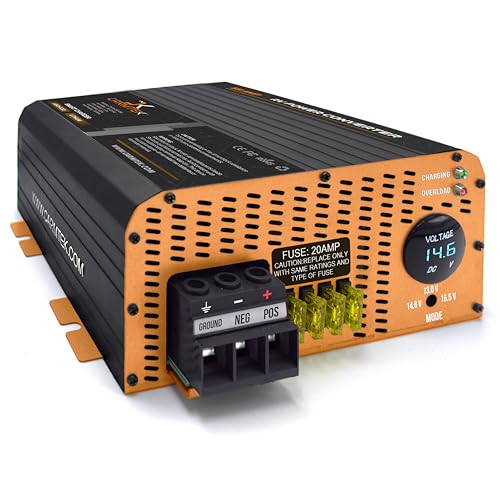
 Best budget pick75 amp Power Converter for rv Camper with Handle and 15ft CablesView on Amazon
- 4
 Best for remote monitoringPower Watchdog RVM21S Remote RV Monitoring SystemView on Amazon
Our Top Picks
Before the list, a quick note on how these products relate to the no-power problem. A converter or charger moves shore power into the battery and supplies the 12-volt loads when you are plugged in. A generator covers the gap when you are not. A monitor tells you what the battery is doing so you can act early. If your RV has no power from the battery at all, start with the troubleshooting steps in RV Not Getting Power When Plugged In: A Step-by-Step Fix (2026) and No Power From Battery to RV: How to Diagnose and Fix It, then use the gear below to prevent a repeat.
Quick Comparison
| Product | Best for | Key feature |
|---|---|---|
| WF-8975-AD 75 AMP RV Power Converter | Keeping the 12-volt battery charged on shore power | 75-amp output with 105–130 VAC input |
| Champion 4000-Watt Dual Fuel RV Ready Portable Inverter Generator | Backup power when no hookup is available | Dual fuel (gas or propane) with RV-ready design |
| 75 amp Power Converter for rv Camper with Handle and 15ft Cables | Budget-minded charging setups | 3-stage smart charging with voltage display |
| Power Watchdog RVM21S Remote RV Monitoring System | Catching voltage faults remotely | WiFi and Bluetooth alerts for low/high voltage and polarity |
WF-8975-AD 75 AMP RV Power Converter, Power Center – 75 Amp
WF-8975-AD 75 AMP RV Power Converter, Power Center – 75 Amp, Battery Chargers for rv,Camper, Trailer,rv Lithium Converter Charger,105-130 VAC, 1280W
Best for: Keeping the 12-volt battery charged and the house loads supplied while plugged into shore power.
This suits owners of mid-size to large travel trailers and motorhomes who run a lithium or lead-acid house battery and want a converter with plenty of headroom above typical fridge and lighting loads.
Key specs
- 75-amp rated output
- 105–130 VAC input range
- 1280 W listed capacity
- Designed for RV, camper and trailer battery charging
Pros
- High amperage leaves room to recharge a battery quickly after heavy use
- Wide input voltage range helps with weak campground pedestals
- Commonly described by owners as a straightforward drop-in replacement for older converters
Cons
- Installation involves 12-volt and AC wiring, so a technician is often a safer choice than a DIY install
- Output well above what a small battery bank needs, which may be more than some setups require
Bottom line: A strong choice for owners whose main problem is a battery that never gets fully charged on shore power.
View on AmazonChampion 4000-Watt Dual Fuel RV Ready Portable Inverter Generator
Gas & Propane Powered, LPG Hose, RV Ready, Recoil Start, Parallel Ready, Quiet Technology, Free 3-Year Warranty Champion 4000-Watt Dual Fuel RV Ready Portable Inverter Generator
Best for: Backup power when the battery is low and there is no shore power or other hookup.
This is for campers who boondock or dry-camp and need a way to recharge the battery and run AC loads without relying on a hookup.
Key specs
- 4000-watt rated class
- Dual fuel: gasoline or propane
- RV-ready design with LPG hose connection
- Recoil start and parallel-ready capability
Pros
- Dual fuel gives flexibility when gasoline is hard to find
- Inverter design typically produces cleaner power suited to sensitive electronics
- Parallel capability lets owners add a second unit later for more output
Cons
- Generators are heavier and louder than a converter, and need to be run outside with proper ventilation
- Running costs and noise can be a drawback at quiet campgrounds
Bottom line: The right pick for owners who want an independent source to recharge the battery when no hookup is available.
View on Amazon75 amp Power Converter for rv Camper with Handle and 15ft Cables
75 amp Power Converter for rv Camper with Handle and 15ft Cables,Battery Chargers with 3 Stage Smart Charging Mode for rv 110/120 VAC to DC 12V, with Voltage Display
Best for: A budget-friendly converter-charger that handles battery charging on shore power.
This suits campers who want a 75-amp class charger with a three-stage charging profile and are comfortable doing a careful install or having one done.
Key specs
- 75-amp class output
- 110/120 VAC to 12 VDC conversion
- 3-stage smart charging mode
- Integrated voltage display and 15 ft cables
Pros
- Three-stage charging helps protect the battery from overcharging
- Built-in voltage display makes it easy to see whether the battery is receiving charge
- Long cables simplify placement during installation
Cons
- Brand-level support and long-term durability information is less established than for larger RV electrical brands
- Like any converter, it needs correct wiring and fusing to perform safely
Bottom line: A sensible option for owners who want the three-stage charging and voltage readout of a higher-end unit at a lower-cost point.
View on AmazonPower Watchdog RVM21S Remote RV Monitoring System
Power Watchdog RVM21S Remote RV Monitoring System, WiFi & Bluetooth | Get text or email alerts for low/high voltage, polarity faults, and other issues.
Best for: Getting alerts about low voltage, high voltage and polarity faults before the battery dies.
This suits owners who leave the RV unattended, store it at home, or want to know about power problems from a phone rather than discovering them at 2 a.m.
Key specs
- WiFi and Bluetooth connectivity
- Text or email alerts for low and high voltage
- Polarity fault detection
Pros
- Early warning on voltage drops can prevent a dead battery and a no-power situation
- Polarity alerts can flag wiring mistakes that would otherwise go unnoticed
- Remote access is useful for winter storage or unattended campers
Cons
- Monitoring alerts only work as well as the connectivity at the site, so WiFi or Bluetooth range can limit it
- It reports problems but does not fix them, so it works best alongside a charger or converter
Bottom line: The best pick for owners who want to know about trouble early, especially when the RV is parked out of sight.
View on AmazonBuying Guide
Battery Chemistry and Size
Lead-acid and lithium batteries accept charge differently. Lithium batteries generally need a charger with a suitable lithium profile, while flooded or AGM lead-acid batteries often expect a multi-stage charge. Check your battery label for the required charging voltage and maximum charge current before choosing a converter. For background on how RV batteries charge from shore power, see Does Shore Power Charge RV Batteries? Yes, Here's How (2026).
Good picks for this: WF-8975-AD 75 AMP RV Power Converter, 75 amp Power Converter for rv Camper
Output Amperage
Converter amperage should be matched to your battery bank and typical loads. A 75-amp class unit has ample headroom for most house battery banks, while a smaller unit may take much longer to restore a deeply discharged battery. Also confirm that the total draw from the 12-volt loads plus the charge current stays within the converter’s rating.
Good picks for this: WF-8975-AD 75 AMP RV Power Converter, 75 amp Power Converter for rv Camper
Charging Stages and Battery Protection
Multi-stage charging (bulk, absorption and float) reduces the risk of overcharging and sulfation. Look for a charger that lists three-stage or smart charging. Stage behavior matters more for long-term battery health than raw amperage, so check that the unit suits your battery type.
Good picks for this: 75 amp Power Converter for rv Camper, WF-8975-AD 75 AMP RV Power Converter
Backup Power Source
If you camp where there is no hookup, a charger alone cannot help. A generator or other independent source can recharge the battery, but it needs fuel, ventilation and quiet-hours planning. Confirm the generator’s output and fuel type match your camping style.
Good picks for this: Champion 4000-Watt Dual Fuel RV Ready Portable Inverter Generator
Monitoring and Alerts
Voltage monitoring catches problems that a dash display or a dim light will not. A monitor that alerts on low voltage, high voltage or reversed polarity gives you time to respond. Consider connectivity range and whether alerts reach your phone when the RV is parked away from home.
Good picks for this: Power Watchdog RVM21S Remote RV Monitoring System
Installation and Wiring
Converters and monitors involve both 120-volt AC and 12-volt DC wiring. Correct gauge wire, proper fusing and a secure ground are essential. Many owners have a qualified RV technician or electrician handle the install, especially for high-amperage units. Consult a professional if you are unsure.
Good picks for this: WF-8975-AD 75 AMP RV Power Converter, Power Watchdog RVM21S Remote RV Monitoring System
Durability and Care
Keep battery terminals clean and tight, check the converter’s cooling vents for dust, and store the RV with the battery charged or on a maintainer. Regular inspection prevents many no-power problems. For a broader check of what to look for when a battery stops delivering, see RV Battery Charged But No Power: 6 Causes and Fixes That Work.
Good picks for this: Power Watchdog RVM21S Remote RV Monitoring System, 75 amp Power Converter for rv Camper
FAQ
Why is my RV not getting power from the battery?
Common causes include a discharged or failing battery, a blown fuse or tripped breaker in the 12-volt system, corroded or loose terminals, or a disconnect switch that is off. Start by checking the battery voltage with a meter and inspecting the fuses before assuming a bigger fault.
Can a converter charge a battery that has no power at all?
Many converters will not start feeding a battery that is deeply discharged or has a shorted cell. Some units need a minimum voltage before they engage. If the battery reads very low, it may need a separate charger or replacement.
How do I know if the battery or the converter is the problem?
Measure battery voltage with the RV unplugged, then plug into shore power and measure again. If the voltage does not rise, the converter or its supply is the likely issue. If the battery holds voltage but the 12-volt loads still fail, check fuses and wiring.
Does a monitoring system replace a charger?
No. A monitor reports voltage and faults; it does not charge the battery. It is most useful alongside a converter or charger, giving you early warning when charging is not working.
Can I run a generator to charge the battery?
Yes, with a suitable charger or converter connected to the generator’s output. Run the generator outdoors with adequate ventilation and never run it in an enclosed space. Carbon monoxide is a serious hazard.
When should I call a professional?
If you smell burning, see scorched wiring, or cannot identify the fault after basic checks, stop and consult a qualified RV technician or electrician. Electrical faults can cause fires and personal injury.
Conclusion
If your RV is not getting power from the battery, begin with the basic checks and then choose gear that matches your camping style. The WF-8975-AD 75 AMP RV Power Converter suits owners who want strong shore-power charging. The Champion 4000-Watt Dual Fuel RV Ready Portable Inverter Generator fits boondockers who need an independent source. The 75 amp Power Converter for rv Camper with Handle and 15ft Cables is a sensible budget-minded charger with smart stages. The Power Watchdog RVM21S Remote RV Monitoring System is the choice for early warning and remote alerts.
Sources
- Background on battery types, charging behavior and safe energy storage practices (energy.gov)
- Consumer safety guidance on electrical equipment, portable generators and carbon monoxide hazards (cpsc.gov)
- Standards and safety codes for electrical wiring and fire prevention in recreational vehicles (nfpa.org)
Related reading
About Lauren Holland
Lauren Holland is part of our editorial team and reviews and edits our off-grid power for camping, RV & vanlife guides, checking product details against manufacturer specifications and owner feedback.