
 By Lauren Holland
Updated November 2026
When an RV battery not charging when connected to shore power problem shows up, the usual cause is the 12V converter/charger rather than the battery itself. The right replacement depends on whether you run lead-acid or lithium batteries, how much charging current you need, and whether you also want solar or a DC-to-DC input. This guide compares three products that address different parts of the charging chain, using manufacturer specifications, brand reputation and common owner feedback as the selection criteria. We did not bench-test these units ourselves.
Our top picks at a glance
- 1
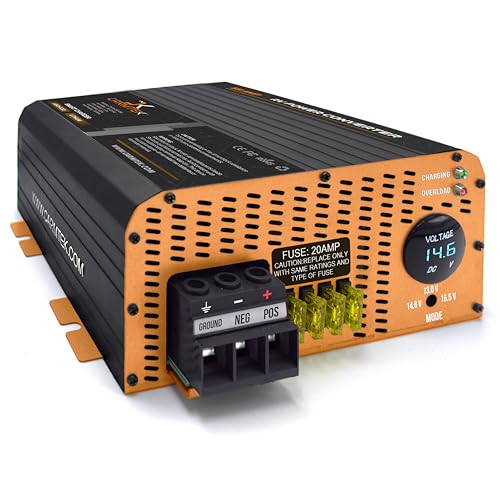 TOP CHOICEBest overallCARMTEK RV Converter 55 AmpView on Amazon
- 2
 Best for multi-source chargingATEM POWER 60A DC to DC Battery ChargerView on Amazon
- 3
 Best for shore inlet repairsHeavy-Duty 20A 125V RV Shore Power InletView on Amazon
Our Top Picks
Quick Comparison
| Product | Best for | Key feature |
|---|---|---|
| CARMTEK RV Converter 55 Amp | Most RVs running lead-acid or lithium batteries from shore power | 120VAC to 12VDC, adjustable 13V to 16.5V range |
| ATEM POWER 60A DC to DC Battery Charger | Rigs that charge from the tow vehicle or solar as well as shore power | 60A DC-to-DC charging with solar input |
| Heavy-Duty 20A 125V RV Shore Power Inlet | Campers whose shore inlet is damaged or loose and not delivering power | Waterproof outlet box, 12AWG heavy-duty wiring |
Each product is covered below, starting with the option that best fits the general case of a battery that will not charge on shore power.
CARMTEK RV Converter 55 Amp
CARMTEK RV Converter 55 Amp | RV Power Converter & Battery Charger | Lithium and Lead Acid Charging | 120VAC to 12VDC | 13V to 16.5V Adjustable Operating Range For a deeper look, Solar Battery Safety: Charging, Temperature, Enclosures and Storage covers this in detail.
Best for: Most RVs where the converter is the suspected cause of a battery that will not charge on shore power.
This is a replacement converter and battery charger for owners whose original unit has failed, or who want a current-generation unit with lithium-compatible charging profiles. Because the battery charge output is the piece that actually moves current into the battery, a converter that cannot hold the correct voltage is a common reason the house batteries stay flat even while the RV has power inside.
Key specs
- 55 amp rated output
- 120VAC input to 12VDC output
- Adjustable operating range of 13V to 16.5V
- Supports lithium and lead-acid charging
Pros
- Adjustable voltage range suits both lead-acid and lithium battery chemistries
- Fits the common need of replacing a failed converter without changing the whole electrical system
- Clearly labeled specifications make it easier to match to an existing 12V system
Cons
- Voltage settings must be configured correctly for your battery type, or charging will be incomplete
- Installation requires working knowledge of RV 12V wiring
Bottom line: The most direct fit for owners whose converter is no longer charging the batteries from shore power.
View on AmazonATEM POWER 60A DC to DC Battery Charger
ATEM POWER 60A DC to DC Battery Charger with Anderson Plug Solar Input MPPT, Trailers Multi-Protection On-Board Charger for AGM, Gel, Calcium, Lead Acid, LiFePO4 Batteries of 4WDs, RVs, Campers
Best for: Rigs that need to charge house batteries from more than one source, including solar and the tow vehicle.
This unit is aimed at owners who want charging that does not depend only on shore power. It accepts DC input, which lets it charge from a tow vehicle or a solar array, and it lists support for a wide range of battery chemistries including AGM, gel, lead-acid and LiFePO4.
Key specs
- 60 amp rated charging output
- DC-to-DC charging with solar input
- Supports AGM, gel, calcium, lead-acid and LiFePO4 batteries
- Anderson-style plug connection
Pros
- Useful as a backup charging path when shore power is unreliable or unavailable
- Broad battery chemistry support for mixed or upgraded battery banks
- High output rating helps batteries recover faster after heavy use
Cons
- Overkill if shore power charging is the only need
- Requires careful wiring to the vehicle or solar source and proper fusing
Bottom line: A good choice for campers who want a second, non-shore charging path in addition to fixing shore charging.
View on AmazonHeavy-Duty 20A 125V RV Shore Power Inlet
Heavy-Duty 20A 125V RV Shore Power Inlet, 5-in-1 Daul T Adapter | 17" Extension Cord, Waterproof Outlet Box & Cap, 12AWG Heavy-Duty, 5-in-1 Dual T-Blade Adapter for Outdoor RV, Trailer, Boat
Best for: Campers whose shore power inlet is loose, corroded or otherwise delivering weak or no power to the RV.
Sometimes the battery is not charging because the RV is not receiving proper shore power at all. A damaged inlet, a poor connection or a dirty plug can cut the current the converter needs. This inlet and cord set is designed for outdoor RV use and includes a waterproof outlet box and cap.
Key specs
- 20 amp, 125V rating
- 17-inch extension cord
- 12AWG heavy-duty wiring
- Waterproof outlet box and cap, 5-in-1 dual T-blade adapter
Pros
- Addresses a common, overlooked cause: a failing shore inlet connection
- Waterproof cap and box suit outdoor, wet-weather campsites
- Adapter flexibility helps when pedestals use different outlet styles
Cons
- 20A rating is lower than the 30A or 50A service many RVs use, so it may not suit high-draw rigs
- Replacing an inlet involves 120V wiring; hire a qualified RV technician if you are not confident
Bottom line: Pick this if the inlet or cord is the weak link. It will not fix a failed converter.
View on AmazonBuying Guide
Charger or converter output rating
Check the amp rating against your battery bank size. A converter that outputs too little current will leave batteries undercharged, especially after boondocking. The CARMTEK unit and the ATEM charger both list their output clearly, which makes sizing easier.
Good picks for this: CARMTEK RV Converter 55 Amp, ATEM POWER 60A DC to DC Battery Charger
Battery chemistry compatibility
Lead-acid, AGM, gel and lithium batteries want different charge voltages. Use a charger with adjustable or chemistry-specific profiles. Charging lithium batteries with a lead-acid profile can prevent full charge or cause long-term damage.
Good picks for this: CARMTEK RV Converter 55 Amp, ATEM POWER 60A DC to DC Battery Charger
Shore inlet and cord condition
Inspect the inlet for scorching, looseness or green corrosion. A poor connection can drop voltage enough to stop charging even when the pedestal is live. Replace worn parts before assuming the converter has failed.
Good picks for this: Heavy-Duty 20A 125V RV Shore Power Inlet
Amperage and wiring capacity
Match the inlet and cord to your service. A 30A RV needs wiring rated for that load, and a 20A inlet on a 30A rig can become a bottleneck. Confirm ratings before buying.
Good picks for this: Heavy-Duty 20A 125V RV Shore Power Inlet, CARMTEK RV Converter 55 Amp
Alternative charging sources
If you camp off-grid often, a unit that accepts DC input from solar or the tow vehicle gives you a backup when shore power is unavailable.
Good picks for this: ATEM POWER 60A DC to DC Battery Charger
Durability and weather protection
Outdoor components face rain, dust and UV. Look for sealed or waterproof housings and corrosion-resistant contacts, especially on inlets and cords that stay exposed.
Good picks for this: Heavy-Duty 20A 125V RV Shore Power Inlet
Installation and care
Turn off shore power and disconnect the batteries before working on 12V or 120V wiring. Periodically clean contacts, check torque on terminals and confirm the battery voltage after each change.
Good picks for this: CARMTEK RV Converter 55 Amp, Heavy-Duty 20A 125V RV Shore Power Inlet
FAQ
Why is my RV battery not charging when connected to shore power?
The most common causes are a failed converter or charger, a poor shore inlet connection, a tripped breaker, or a battery type that does not match the charging profile. Start by confirming the RV has power inside, then check the converter output voltage.
How do I know if the converter is the problem?
With shore power connected and the batteries disconnected from loads, measure the voltage at the battery terminals. A healthy converter typically holds battery voltage in the charging range for your battery type. If it stays low, the converter or its wiring is suspect.
Can a bad shore inlet stop the battery from charging?
Yes. Corroded or loose connections can reduce voltage enough that the converter does not charge correctly, and the RV may show power problems at the same time. Inspect and clean the inlet first.
Do lithium batteries need a different charger?
Usually, yes. Lithium batteries generally need a specific charge voltage and cutoff. Confirm that your charger lists lithium support or an adjustable voltage range that matches the battery manufacturer’s specifications.
Can I charge my RV battery from the tow vehicle instead?
Some DC-to-DC chargers allow this. Check that the charger and wiring are rated for the load and include proper fusing.
Should I hire a technician?
If the fault involves 120V wiring, a damaged inlet or a converter you cannot test, consult a qualified RV technician or electrician. Working on mains-voltage wiring carries real shock and fire risk.
Conclusion
For most RVs with a battery not charging when connected to shore power, the CARMTEK RV Converter 55 Amp is the most direct fix, provided the converter is the actual fault. If you need an additional charging path from solar or the tow vehicle, the ATEM POWER 60A DC to DC Battery Charger fills that role. If the shore inlet is loose or damaged, the Heavy-Duty 20A 125V RV Shore Power Inlet addresses the root cause. Diagnose before buying: confirm the inlet first, then the converter output.
For a broader diagnosis, read RV Battery Not Charging on Shore Power: 6 Causes and Fixes and Do RV Batteries Charge When Plugged Into Shore Power? A Clear Answer (2026). If the RV has no power at all, see RV Not Getting Power When Plugged In: A Step-by-Step Fix (2026).
Sources
- Guidance on battery types, charging basics and energy storage safety (energy.gov)
- Electrical product safety information and recall notices relevant to RV power equipment (cpsc.gov)
- National Electrical Code and fire-safety standards that apply to RV and campground electrical systems (nfpa.org)
Related reading
- How Long to Charge Rv Battery on Shore Power (2026): Which Should You Choose?
- Does Shore Power Charge RV Batteries? Yes, Here's How (2026)
About Lauren Holland
Lauren Holland is part of our editorial team and reviews and edits our off-grid power for camping, RV & vanlife guides, checking product details against manufacturer specifications and owner feedback.






