By Lauren Holland
Updated November 2026
Yes, do RV batteries charge when plugged into shore power in most coaches, because the built-in converter-charger turns campground electricity into 12-volt power for the batteries. This guide explains how that charging happens, how to confirm it is working, and what to check when it isn’t. You will be able to verify charging in a few minutes with a multimeter or your RV’s monitor panel.
How Shore Power Charges the Batteries
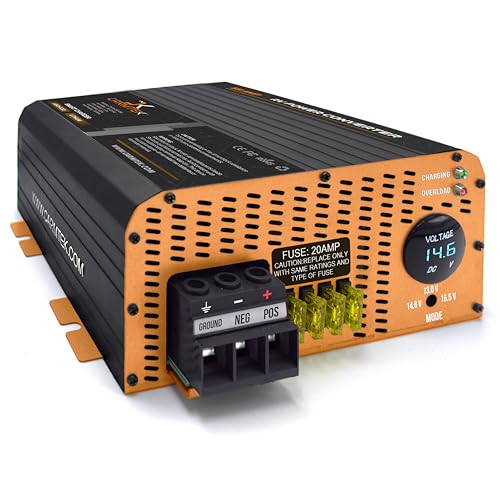
Shore power enters the RV as 120-volt AC. The converter (sometimes called a converter-charger or power converter) converts that to 12-volt DC to run the coach’s lights, pump and fans, and it also sends a charging current to the house batteries. Most converters switch to a charging profile automatically when shore power is present. Many RV owners find the process is simply hands-off once the cord is connected.
Charging speed depends on the converter’s output rating, the battery bank size, and how discharged the batteries are. A bank that is nearly empty takes much longer to reach full than one that is only partly used. For a sense of timing, see How Long to Charge Rv Battery on Shore Power (2026): Which Should You Choose?.
How to Confirm Your Batteries Are Charging
Don’t assume charging is happening just because the lights are on. Check it directly with these steps:
- Confirm the shore power cord is fully seated at the pedestal and at the RV inlet, and that the campground pedestal is energized.
- Turn on the RV’s main power and look at the converter or battery monitor panel. Many show a charging indicator or a positive amperage reading.
- With a multimeter set to DC volts, measure across the house battery terminals. A reading that rises toward roughly 13 to 14 volts while shore power is connected usually means the charger is active. Readings that stay near 12 volts or drop may indicate a problem.
- Check the reading again after an hour. A steady or rising voltage suggests charging is working.
Readings vary by battery chemistry and charger settings, so compare against your battery manufacturer’s specifications when possible.
When Batteries Don’t Charge on Shore Power
If the batteries are not charging, the cause is usually one of three things: no power reaching the converter, a converter that has failed or been switched off, or a battery that cannot accept charge. Start with the simplest checks. Confirm the breaker for the converter has not tripped, and confirm the converter is not in a “battery only” or “off” mode on its control panel. If you are not comfortable working with 120-volt wiring or the converter’s internals, consult a qualified RV technician. For a fuller troubleshooting path, read RV Battery Not Charging on Shore Power: 6 Causes and Fixes.
Common Mistakes to Avoid
- Assuming the batteries are charged because the coach has power. Lights can run from the converter even when the battery bank is low.
- Using a damaged or underrated extension cord, which can cause low voltage and poor charging. Use a cord rated for your RV’s amperage.
- Leaving the RV plugged in with a failing converter for long periods, which can overheat batteries.
- Ignoring a converter that runs but never shows charge current. Persistent low voltage often signals a fault.
- Expecting a full recharge overnight from a deeply discharged bank. Large or depleted banks can take many hours.
Recommended Gear
A digital multimeter is the most useful tool for confirming charging. A battery monitor shows real-time state of charge and charge current, which makes it easier to tell whether shore power is actually doing the work.
- Digital multimeter: lets you measure battery voltage directly so you can verify charging without guessing. View on Amazon
- Battery monitor: tracks charge current and state of charge, showing whether the converter is feeding the batteries. View on Amazon
FAQ
Do RV batteries charge when the RV is plugged in but the lights are off?
Not always. If the converter is not working or the breaker is tripped, the batteries will not charge even with shore power connected. Check the converter panel and breakers first.
Can I charge RV batteries with an extension cord?
Yes, but use a cord rated for your RV’s amperage and keep the run short. Undersized or long cords can cause voltage drop and reduce charging.
How do I know if my converter is charging?
Look for a charging indicator or positive amperage on the monitor panel, or measure battery voltage with a multimeter. Steady or rising voltage while plugged in suggests charging is active.
Conclusion
Most RV batteries do charge when plugged into shore power, provided the converter-charger is powered and working. Verify it with the panel display or a multimeter rather than assuming. If readings stay low, work through the checks above and consult a qualified RV technician for converter or wiring faults.
Related reading
- Does Shore Power Charge RV Batteries? Yes, Here's How (2026)
- RV Not Getting Power When Plugged In: A Step-by-Step Fix (2026)
- RV No Power When Plugged In: 6 Causes and Fixes That Work
- How Much Solar Power to Charge RV Battery: A Step-by-Step Guide
Ready to choose one?
About Lauren Holland
Lauren Holland is part of our editorial team and reviews and edits our off-grid power for camping, RV & vanlife guides, checking product details against manufacturer specifications and owner feedback.