By Lauren Holland
Updated November 2026
Choosing a power station with RV plug support comes down to three things: whether the port matches your rig’s shore power or 30-amp outlet, how many watt-hours the battery holds, and how much surge power the inverter can handle when your air conditioner or fridge compressor kicks on. The picks below are based on manufacturer specifications, listing details and common owner feedback patterns. We have not tested these units ourselves.
Our top picks at a glance
- 1
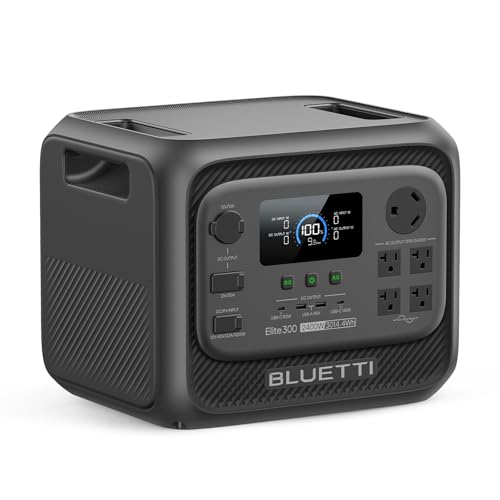 TOP CHOICEBest overallBLUETTI Elite 300 Portable Power Station for RV & Home Backup 3014.4WhView on Amazon
- 2
 TOP CHOICEBest for high-capacity off-grid useGROWATT INFINITY 2000 Pro Portable Power Station, 2048Wh Solar GeneratorView on Amazon
- 3
 TOP CHOICEBest for quiet overnight runningRenogy Portable Power Station, 2048Wh 2400W Solar Generator RV Home BackupView on Amazon
- 4
 Best for whole-home backup at the campsiteJackery HomePower 3600 Plus Power Station, 3584Wh, 3600W AC OutputView on Amazon
- 5
 Best for expandable capacityPECRON Portable Power Station F3000LFP, 3072Wh Solar GeneratorView on Amazon
- 6
 Best budget pick for light loadsPortable Power Station 300W MARBERO 237Wh Camping Solar GeneratorView on Amazon
Our Top Picks
Quick Comparison
| Product | Best for | Key feature |
|---|---|---|
| BLUETTI Elite 300 | Overall RV and home backup | 3014Wh LiFePO4, TT-30 port |
| GROWATT INFINITY 2000 Pro | High-capacity off-grid use | 2048Wh, 2400W AC output |
| Renogy 2048Wh Power Station | Quiet overnight running | 25dB operation, TT-30 port |
| Jackery HomePower 3600 Plus | Whole-home campsite backup | 3584Wh, 3600W AC output |
| PECRON F3000LFP | Expandable capacity | Expands to 10752Wh |
| MARBERO 300W | Budget light loads | 237Wh, pure sine wave |
BLUETTI Elite 300 Portable Power Station for RV & Home Backup 3014.4Wh
BLUETTI Elite 300 Portable Power Station for RV & Home Backup 3014.4Wh | 2400W (4800W Surge), LiFePO4 Battery, Smallest 3kWh Solar Generator for Emergency, RV Power with TT-30 RV Port & 12V/30A DC
Best for: Overall RV and home backup
This suits campers who want a single unit that handles RV plug-in, 12V DC loads and household backup with enough surge capacity for a small air conditioner.
Pros
- Large 3014Wh capacity with LiFePO4 chemistry
- Includes a TT-30 RV port and 12V/30A DC output
Cons
- Heavy enough that it is best left in one spot
GROWATT INFINITY 2000 Pro Portable Power Station, 2048Wh Solar Generator
GROWATT INFINITY 2000 Pro Portable Power Station, 2048Wh Solar Generator | 2400W AC Output, EPS emergency function. Delivers steady electric power for home backup, camping, RVs
Best for: High-capacity off-grid use
Good for longer stays where you want steady 2400W output and an emergency power function for tripping-prone campsite circuits.
Pros
- 2400W AC output handles most RV appliances
- EPS function supports emergency switchover
Cons
- Capacity is lower than the largest units on this list
Renogy Portable Power Station, 2048Wh 2400W Solar Generator RV Home Backup
Renogy Portable Power Station, 2048Wh 2400W Solar Generator RV Home Backup | TT-30 RV Port, 20ms Power Restoration, 3600W Surge Power, Quiet 25dB, 80% Recharge in 1H for Solar Off-Grid Backup Solution
Best for: Quiet overnight running
Fits campers who run the unit next to a sleeping area and want low noise with a TT-30 RV port.
Pros
- Listed at 25dB, quiet for overnight use
- Rated 3600W surge power for motor startup
Cons
- Recharge time depends heavily on solar input
Jackery HomePower 3600 Plus Power Station, 3584Wh, 3600W AC Output
Jackery HomePower 3600 Plus Power Station, 3584Wh, 3600W AC Output | LFP Battery, Expandable to 21kWh, Solar Generator, Essential Home Backup for Home Use, Emergencies, RV (Solar Panel Optional)
Best for: Whole-home campsite backup
A fit for larger rigs or base camps that need to run several household loads at once.
Pros
- 3600W AC output for multiple appliances
- Expandable battery capacity
Cons
- Solar panels are sold separately
PECRON Portable Power Station F3000LFP, 3072Wh Solar Generator
PECRON Portable Power Station F3000LFP, 3072Wh Solar Generator, 3600W LiFePO4 Battery Home Backup, Fast Charging Power Station Expand Capacity to 10752Wh, Solar Generators for Home Use, Camping, RV
Best for: Expandable capacity
Works for campers who expect their power needs to grow and want room to add batteries later.
Pros
- Expands to 10752Wh with extra batteries
- Fast charging support
Cons
- Full expansion adds significant weight and cost planning
Portable Power Station 300W MARBERO 237Wh Camping Solar Generator
Portable Power Station 300W MARBERO 237Wh Camping Solar Generator Backup Lithium Battery with Pure Sine Wave 110V AC Outlet, USB C, USB A, DC for Outdoors Camping CPAP Home Blackout Emergency
Best for: Budget light loads
Suited to weekend campers who mainly charge phones, run a CPAP or power small lights rather than an RV air conditioner.
Pros
- Compact and easy to carry
- Pure sine wave output for sensitive electronics
Cons
- Too small for an RV air conditioner or large fridge
Buying Guide
Match the RV Plug to Your Rig
Check whether your camper uses a 30-amp TT-30 connection or a 50-amp outlet, since the port on the station needs to match what you plug into. RV Power Plug Types: A Guide to 30A, 50A and 15A Connections (2026) explains the differences in detail.
FAQ
Can a portable power station with an RV plug run my whole RV?
Some models with a TT-30 port can power a good share of an RV, but whole-rig operation depends on your battery capacity, your inverter output, and what appliances you run at the same time. Most owners use these units to cover the essentials like lights, phone and laptop charging, a fridge, and fans, rather than everything at once. Check your RV’s total draw before assuming a unit will handle it.
What is the difference between a TT-30 port and a standard 120V outlet?
A TT-30 port is a 30-amp, 120V connector designed to feed the RV’s electrical system, while a standard household outlet is typically 15 or 20 amps. Using a TT-30 port lets you connect the station more like a campground pedestal, which can support higher loads. Make sure your adapter cable and the station’s port rating both match your RV’s inlet.
What does surge power mean, and why does it matter for an air conditioner?
Surge power is the short burst of extra output a station can deliver when a motor starts up, such as an air conditioner compressor or a fridge compressor. Starting loads can be several times higher than the steady running draw, so a unit with a higher surge rating is less likely to shut down when those appliances kick on. Look at the surge figure alongside the continuous output rating.
How much battery capacity do I need for a weekend of camping?
It depends on what you plug in and for how long. Add up the watts each device uses and multiply by the hours you expect to run it, then compare that total to the station’s watt-hour rating, leaving some margin for inverter losses. A smaller unit may be enough for phones, lights, and a CPAP, while a larger one is better for a fridge and fans over several days.
Can I recharge these power stations with solar panels while camping?
Many of the units listed support solar input, and some can recharge fairly quickly from a compatible panel array, though solar panels are often sold separately. Charging speed depends on panel wattage, sunlight, and the station’s maximum solar input rating. Plan for reduced output on cloudy days and keep the panels oriented toward the sun for the best results.
Are LiFePO4 batteries better for RV use?
LiFePO4 (lithium iron phosphate) batteries are generally known for a longer cycle life and better thermal stability than some other lithium chemistries, which appeals to frequent campers. They tend to be heavier for their capacity and can cost more up front. For regular RV trips, the longer lifespan often makes them a practical choice, but confirm the chemistry in each listing before you buy.
Conclusion
If you want the most capacity and power for a full-size RV or home backup, the larger units with TT-30 ports and high surge ratings are the better fit. Buyers who mainly need lights, charging, and a CPAP or small fridge on shorter trips can get everything they need from a smaller, lighter station.
Before you commit, match the port to your rig, add up your real daily watt-hour use, and confirm the surge rating covers your largest appliance. Doing those three checks will point you to the right model for your camping style.
Related reading
- 7 Best Power Stations with 30 Amp RV Plug for Campers in 2026
- Using a Portable Power Station in an RV or Camper Van
- Top 5 Portable Power Stations for RV Options Compared (2026)
About Lauren Holland
Lauren Holland is part of our editorial team and reviews and edits our off-grid power for camping, RV & vanlife guides, checking product details against manufacturer specifications and owner feedback.