
 By Lauren Holland
Updated November 2026
Finding a power station with 30 amp RV plug compatibility is less about the brand name and more about matching a few specific features to how you camp. Some units include a TT-30 port that connects directly to your RV’s shore power cord, while others need an adapter or a transfer switch. This list compares seven models built for RV and camping use, with each one judged on whether it offers a 30-amp-capable output, enough watt-hour capacity for a few nights off-grid, and a realistic ability to run common RV loads like a fridge, lights, fans and a microwave. The selection is based on published specifications, brand reputation and common owner feedback, not on hands-on testing.
Our top picks at a glance
- 1
 TOP CHOICEBest overallPECRON Portable Power Station F3000LFP, 3072Wh Solar Generator, 3600WView on Amazon
- 2
 TOP CHOICEBest for RV plug-in useBLUETTI Elite 300 Portable Power Station with AC Cable 3014.4Wh 2400W LFPView on Amazon
- 3
 TOP CHOICEBest for small RVsRenogy Portable Power Station, 2048Wh 2400W Solar Generator RV Home BackupView on Amazon
- 4
 Best for expandable capacityJackery HomePower 3600 Plus Power Station, 3584Wh, 3600W AC OutputView on Amazon
- 5
 Best for compact buildsDJI Power 2000 Portable Power Station, 2048Wh LFP BatteryView on Amazon
- 6
 Best for home backup crossoverGROWATT INFINITY 2000 Pro Portable Power Station, 2048Wh Solar GeneratorView on Amazon
- 7
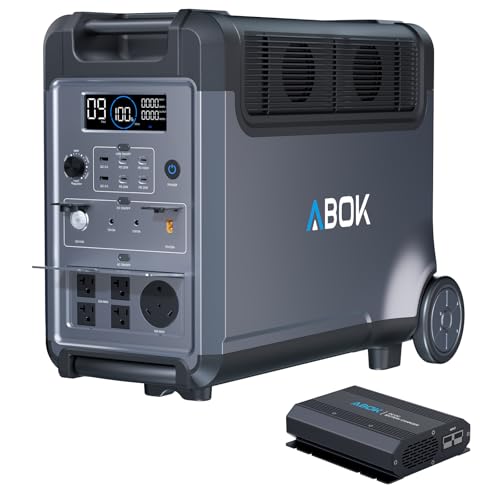 Best budget pickABOK Ark3600 Portable Power Station 3840Wh with 500W Alternator ChargerView on Amazon
Our Top Picks
Quick Comparison
| Product | Best for | Key feature |
|---|---|---|
| PECRON Portable Power Station F3000LFP | Best overall | 3072Wh LiFePO4 battery, expandable capacity |
| GROWATT INFINITY 2000 Pro Portable Power Station | Best for home backup crossover | 2048Wh with 2400W AC output and EPS function |
| BLUETTI Elite 300 Portable Power Station | Best for RV plug-in use | TT-30 RV port and 12V/30A DC output |
| Jackery HomePower 3600 Plus Power Station | Best for expandable capacity | 3584Wh LFP battery, expandable to 21kWh |
| Renogy Portable Power Station 2048Wh | Best for small RVs | TT-30 RV port and 20ms power restoration |
| DJI Power 2000 Portable Power Station | Best for compact builds | 2048Wh LFP in a compact body |
| ABOK Ark3600 Portable Power Station | Best budget pick | 3840Wh with alternator charger input |
PECRON Portable Power Station F3000LFP, 3072Wh Solar Generator, 3600W LiFePO4 Battery Home Backup
PECRON Portable Power Station F3000LFP, 3072Wh Solar Generator, 3600W LiFePO4 Battery Home Backup, Fast Charging Power Station Expand Capacity to 10752Wh, Solar Generators for Home Use, Camping, RV
Best for: Best overall
This unit suits campers who run an RV with a fridge, lights, fans and occasional microwave use, and who also want a backup option at home. The large capacity gives extra margin across multiple nights.
Key specs
- 3072Wh LiFePO4 battery capacity
- 3600W AC output (per listing)
- Expandable capacity listed up to 10752Wh
Pros
- Large watt-hour capacity for multi-night camping
- LiFePO4 chemistry is generally associated with long cycle life
- Expansion options suit longer trips or home use
Cons
- Heavy and bulky for a small camper van
- Higher capacity units cost more to add to a setup
Bottom line: A strong pick for full-size RV owners who want maximum runtime and room to expand.
View on AmazonGROWATT INFINITY 2000 Pro Portable Power Station, 2048Wh Solar Generator
GROWATT INFINITY 2000 Pro Portable Power Station, 2048Wh Solar Generator | 2400W AC Output, EPS emergency function. Delivers steady electric power for home backup, camping, RVs
Best for: Best for home backup crossover
Owners who split time between camping and home emergency use may prefer this model, which lists an EPS emergency function alongside its RV and camping use.
Key specs
- 2048Wh capacity (per listing)
- 2400W AC output (per listing)
- EPS emergency function
Pros
- Useful for both campsite and home backup
- Solid continuous output for common RV appliances
- Emergency power function adds flexibility
Cons
- Capacity is moderate for multi-day boondocking
- Confirm the plug type you need before buying
Bottom line: Good for campers who also want reliable backup at home.
View on AmazonBLUETTI Elite 300 Portable Power Station with AC Cable 3014.4Wh 2400W LFP
BLUETTI Elite 300 Portable Power Station with AC Cable 3014.4Wh 2400W LFP | 2400W (4800W Surge) , Smallest 3kWh Solar Generator for RV, Home Backup, Emergency, RV Power with TT-30 RV Port & 12V/30A DC
Best for: Best for RV plug-in use
This is one of the more RV-oriented options on the list, given its TT-30 RV port and 12V/30A DC output. It suits owners who want to connect directly to a 30-amp RV circuit setup.
Key specs
- 3014.4Wh LFP battery (per listing)
- 2400W continuous AC output, 4800W surge (per listing)
- TT-30 RV port and 12V/30A DC output
Pros
- Built-in TT-30 port aligns with RV shore power cords
- High surge rating helps start compressor loads
- Substantial capacity for multi-night use
Cons
- Heavier than smaller portable units
- Full runtime depends on how many appliances are running
Bottom line: A practical choice for RV owners who want a direct 30-amp-style connection.
View on AmazonJackery HomePower 3600 Plus Power Station, 3584Wh, 3600W AC Output
Jackery HomePower 3600 Plus Power Station, 3584Wh, 3600W AC Output | LFP Battery, Expandable to 21kWh, Solar Generator, Essential Home Backup for Home Use, Emergencies, RV (Solar Panel Optional)
Best for: Best for expandable capacity
Campers who expect their power needs to grow over time may appreciate the expansion path. It is also suited to buyers planning a larger home backup system later.
Key specs
- 3584Wh LFP battery (per listing)
- 3600W AC output (per listing)
- Expandable up to 21kWh (per listing)
Pros
- Strong capacity and output in one unit
- Expansion options for future needs
- LFP chemistry suits frequent cycling
Cons
- Check RV-specific outlet availability, as an adapter may be needed
- Full expansion adds significant cost
Bottom line: Best for buyers who want room to grow without switching brands.
View on AmazonRenogy Portable Power Station, 2048Wh 2400W Solar Generator RV Home Backup
Renogy Portable Power Station, 2048Wh 2400W Solar Generator RV Home Backup | TT-30 RV Port, 20ms Power Restoration, 3600W Surge Power, Quiet 25dB, 80% Recharge in 1H for Solar Off-Grid Backup Solution
Best for: Best for small RVs
This model works well for smaller trailers and camper vans where weight and size matter. Its TT-30 RV port makes it a direct fit for many RV setups.
Key specs
- 2048Wh capacity (per listing)
- 2400W rated output, 3600W surge (per listing)
- TT-30 RV port
Pros
- Manageable size for smaller rigs
- TT-30 port supports direct RV connection
- Quiet operation is listed in the product description
Cons
- Capacity is limited for heavy multi-day AC use
- Solar recharge speed depends on panel setup
Bottom line: A balanced pick for small RVs and weekend camping.
View on AmazonDJI Power 2000 Portable Power Station, 2048Wh LFP Battery
DJI Power 2000 Portable Power Station, 2048Wh LFP Battery | Compact Size, 3000W Stable Output, Fast Recharge, Electric Generator for Home, Camping & RVs, Off-Grid
Best for: Best for compact builds
Owners who want a smaller footprint for a van or a limited storage space may prefer this unit. It is a practical choice for lighter loads.
Key specs
- 2048Wh LFP battery (per listing)
- 3000W stable output (per listing)
Pros
- Compact design for tight storage
- Stable output for sensitive electronics
- Fast recharge is listed in the product description
Cons
- Verify the 30-amp plug type before purchase
- Less capacity than the largest models
Bottom line: A good fit for compact camper setups with moderate loads.
View on AmazonABOK Ark3600 Portable Power Station 3840Wh with 500W Alternator Charger
ABOK Ark3600 Portable Power Station 3840Wh with 500W Alternator Charger | Expandable to 11520Wh, 3H Fast Charge, 15 Outlets, UPS 10ms, 3600W Solar Generator for Home Backup, Hurricane, Camping, RV
Best for: Best budget pick
Buyers who want high capacity and an alternator charging option may find this model appealing for longer camping trips and emergency backup.
Key specs
- 3840Wh capacity (per listing)
- 3600W solar generator output (per listing)
- 500W alternator charger (per listing)
Pros
- High listed capacity
- Alternator charging helps while driving
- Expansion option listed
Cons
- Brand has less widespread owner feedback than major names
- Confirm RV plug compatibility in the listing
Bottom line: A value-focused choice for campers who want a lot of capacity.
View on AmazonBuying Guide
Plug type and RV compatibility
A 30-amp RV plug is a TT-30 or similar connector. Some power stations include a TT-30 port, while others use standard outlets that require a cord or adapter. Check whether the unit includes a built-in RV port before buying. Refer to RV Shore Power Receptacle: How to Identify, Test and Use Yours Safely (2026) for identifying your RV’s connection.
Good picks for this: BLUETTI Elite 300 Portable Power Station, Renogy Portable Power Station 2048Wh
Watt-hour capacity
Capacity in watt-hours (Wh) tells you how long a unit can run a load. Divide watt-hours by your average wattage to estimate runtime, then reduce for inverter losses. For sizing guidance, see When You Need a Large Power Station for Camping.
Good picks for this: PECRON Portable Power Station F3000LFP, ABOK Ark3600 Portable Power Station
Surge and running watts
Running watts are what the unit delivers continuously. Surge watts cover the brief startup spike of motors and compressors. Understanding both helps prevent tripping. Running Watts vs Surge Watts: Why Appliances Trip a Power Station explains the difference.
Good picks for this: BLUETTI Elite 300 Portable Power Station, GROWATT INFINITY 2000 Pro
Battery chemistry
LiFePO4 (LFP) batteries are commonly associated with longer cycle life than some other lithium chemistries. Look for LFP if you plan frequent cycling.
Good picks for this: Jackery HomePower 3600 Plus Power Station, PECRON Portable Power Station F3000LFP
Size and weight
Measure the storage space in your RV or van before buying. Larger units offer more capacity but add weight and require secure mounting.
Good picks for this: DJI Power 2000 Portable Power Station, Renogy Portable Power Station 2048Wh
Charging options
Solar input, wall charging and alternator charging all affect how quickly you can recover between uses. Plan your charging method around your typical camping style.
Good picks for this: ABOK Ark3600 Portable Power Station, Jackery HomePower 3600 Plus Power Station
Expansion and future needs
Some units accept additional battery modules. If you expect longer trips, expansion can be a practical path. Consider whether your RV can accommodate a larger system before committing.
Good picks for this: PECRON Portable Power Station F3000LFP, Jackery HomePower 3600 Plus Power Station
FAQ
Can a power station plug directly into a 30 amp RV outlet?
Not usually as a load. A power station is typically an output source, not a shore power input. Units with a TT-30 port can supply power to the RV’s circuit, but you should confirm the wiring and consult an RV electrician if unsure.
How many watt-hours do I need for a camping trip?
It depends on your loads. A small fridge, lights and phone charging may use a few hundred watt-hours per day, while air conditioning uses far more. See Small Power Stations for Tent Camping: What Under 500 Wh Can Run for smaller-scale estimates.
Do I need a transfer switch?
A transfer switch can be useful when combining a power station with shore power or a generator. Installation involves electrical work, so consult a licensed electrician. RV Power Surge Protectors: How to Choose and Install One (2026) covers related protection.
Is LiFePO4 better than other batteries for RV use?
LiFePO4 is generally associated with longer cycle life and stable chemistry, which suits frequent use. Other chemistries may be lighter or cheaper, so weigh the tradeoffs.
Can a power station run an RV air conditioner?
Most portable units can run an AC for limited periods, but running an air conditioner typically requires large capacity and solar input. See Solar Power for RV Air Conditioning: How Many Panels You Really Need.
What should I check before buying?
Confirm the plug type, running and surge watts, watt-hour capacity, and the weight and dimensions. Read the manufacturer’s specifications for your exact model.
Conclusion
For a power station with 30 amp RV plug compatibility, the BLUETTI Elite 300 and Renogy 2048Wh stand out for built-in TT-30 ports. Campers wanting maximum capacity may prefer the PECRON F3000LFP or Jackery HomePower 3600 Plus. Smaller rigs may find the DJI Power 2000 easier to fit, while budget-minded buyers may consider the ABOK Ark3600. Match the unit to your watt-hour needs, plug type and storage space.
Sources
- Guidance on battery storage and energy efficiency basics (energy.gov)
- Safety recalls and product safety information for portable power equipment (cpsc.gov)
- Standards and fire safety guidance for electrical equipment (nfpa.org)
About Lauren Holland
Lauren Holland is part of our editorial team and reviews and edits our off-grid power for camping, RV & vanlife guides, checking product details against manufacturer specifications and owner feedback.

