 By Lauren Holland
Updated November 2026
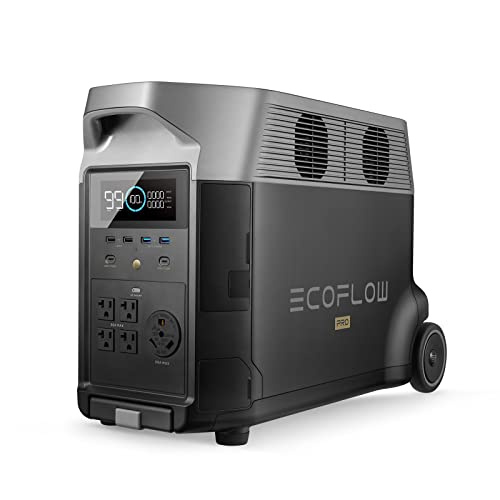
A portable power station can run an RV air conditioner, but only if you match its capacity and surge rating to the unit’s real power draw. This guide shows you how to read your AC’s specs, size a portable power station for RV air conditioner use, and estimate how many hours it will actually run. Most campers find that a single unit can cover a short cooling session, but running AC all night usually takes more battery or a different plan.
Step 1: Find Your AC’s Running and Starting Watts
Start with the nameplate on your air conditioner or its manual. Look for the rated running watts (often listed as cooling watts or input watts) and the startup or locked-rotor amps. Many rooftop units run at roughly 1,000 to 1,500 watts once the compressor is going, and they can spike well above that for a moment when it starts. Note both numbers. The running figure drives your runtime, and the surge figure decides whether the station will trip when the compressor kicks on.
Step 2: Match Surge Capacity Before Battery Size
Many campers focus on watt-hours first, but surge capacity is what stops a shutdown. Check that the power station lists a surge rating comfortably above your AC’s startup draw. If the manufacturer’s specs are unclear on how long the surge can be held, treat that as a warning sign and look at a larger model. A soft-start kit can reduce the startup spike and is sometimes recommended for rooftop units, but confirm compatibility with your specific model before installing.
Step 3: Estimate Runtime from Watt-Hours
Divide the station’s usable watt-hours by your AC’s average draw to get a rough runtime. For example, a 2,000 Wh station running an AC that averages 1,000 watts would theoretically last about two hours. In practice, inverter losses and the fact that AC cycles on and off mean real results vary. Manufacturers usually publish their conversion efficiency, so apply it to be more accurate. Plan for less runtime than the simple math suggests.
| AC Average Draw | Station Capacity | Rough Runtime |
|---|---|---|
| 600 W | 1,000 Wh | About 1.5 hours |
| 1,000 W | 2,000 Wh | About 2 hours |
| 1,000 W | 3,000 Wh | About 3 hours |
These figures ignore inverter losses and cycling, so treat them as ceilings rather than guarantees. For a fuller breakdown, see RV Air Conditioner Power Usage: How Many Watts and Amps You Really Need.
Step 4: Plan for Recharging
A power station is only as useful as its recharge plan. Solar input, shore power and a generator can all refill the battery, but each has limits. Solar panels need enough area to make a difference, and the sun rarely cooperates for full AC loads. If you rely on solar, read Solar Power for RV Air Conditioning: How Many Panels You Really Need before buying. A typical rig with a power station may also want to know how it compares to a dedicated setup, which is covered in 4 Best RV Solar Power Air Conditioners for Off-Grid Camping in 2026.
Common Mistakes
- Ignoring surge rating and buying on watt-hours alone.
- Assuming the AC runs continuously when the compressor cycles on and off.
- Forgetting inverter losses when estimating runtime.
- Running the AC on a power station that is already partly drained at the start of the day.
- Plugging the AC into an inverter that is undersized, which can overheat or shut down.
Recommended Gear
A soft-start device can reduce the compressor’s startup spike, which may let a smaller station handle your AC. Check compatibility first. View on Amazon
A plug-in watt meter helps you measure actual draw at the outlet rather than relying on nameplate figures. View on Amazon
A solar panel kit adds recharging capacity when you are parked for several days. View on Amazon
FAQ
Can a portable power station run an RV air conditioner all night?
Usually not from a single standard station unless it has very high capacity and you limit the AC’s runtime. Most campers use the AC for shorter cooling periods or pair the station with another charging source.
What surge rating do I need for an RV AC?
Check your AC’s startup amps and convert them to watts at your system voltage, then choose a station whose surge rating exceeds that figure. Manufacturers’ surge ratings and duration vary, so read the specs carefully.
Is a soft-start device necessary?
It is not always required, but it can lower the startup spike enough to let a smaller station work. Confirm it is compatible with your specific AC model before installing.
Conclusion
To run an RV air conditioner from a portable power station, match the surge rating first, then size watt-hours against your AC’s real average draw. Build in margin for inverter losses and plan a recharge method so you are not stuck with a dead battery. For a consultation on electrical installation, speak with a qualified RV technician.
Related reading
- Using a Portable Power Station in an RV or Camper Van
- RV Air Conditioner Power Draw: How Many Watts You Need (2026)
Ready to choose one?
About Lauren Holland
Lauren Holland is part of our editorial team and reviews and edits our off-grid power for camping, RV & vanlife guides, checking product details against manufacturer specifications and owner feedback.