 By Lauren Holland
Updated November 2026
RV air conditioner power usage depends on the unit’s size, the outside temperature and how hard the compressor has to work. Most rooftop units pull roughly 1,300 to 1,800 watts while running, but their startup surge can be several times higher. This guide shows you how to estimate that draw, match it to your power source and plan how many hours of cooling you can actually get.
Step 1: Read the nameplate and the spec sheet
Start with the label on the unit or the manufacturer’s spec sheet. Look for the rated running watts or amps, and note the voltage, which is almost always 120V AC on a standard RV. Manufacturers usually list running draw at a specific test condition, so treat the number as a baseline rather than a guarantee. Many units also list a maximum amperage, which is the figure to use when checking breaker and cord capacity.
Shopping for one? See our guide: 4 Best RV Solar Power Air Conditioners for Off-Grid Camping in 2026.
Step 2: Account for startup surge
When a compressor starts, it can briefly draw two to four times its running current. This surge is what trips breakers and overloads inverters, so it matters more than the running number when you are sizing equipment. Soft-start kits, sometimes called soft starters, reduce this spike and are popular with owners running air conditioners from inverters or generators. Check whether your unit already has one before you buy.
Step 3: Measure real draw on your own rig
Spec numbers assume ideal conditions. To see what your unit actually uses, plug the air conditioner into a watt meter or a clamp-style meter on your power pedestal or inverter output. Run it at the thermostat setting you normally use, on a hot afternoon if possible, and note the average draw after the compressor has settled. Owners often find that a unit cycling in mild weather uses far less than one running continuously in heat above 95°F.
Step 4: Estimate runtime from your power source
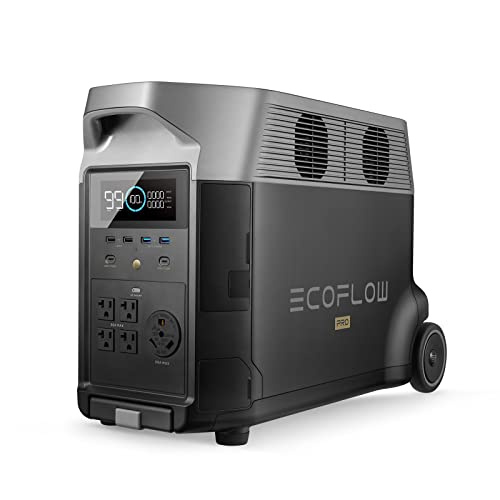
Divide your usable battery capacity by the average draw to get a rough runtime. For example, a 2,000 watt-hour power station supplying an average 1,000 watts gives about two hours, and real results will be shorter once inverter losses and the battery’s usable depth are factored in. A more accurate check is to measure your daily consumption, which is discussed in the sections below. Keep in mind that runtime drops quickly when the compressor runs more often in hot weather.
| Power source | What to watch |
|---|---|
| Shore power (30A or 50A) | Check total load so you stay under the pedestal’s rated amperage. |
| Generator | Size for the startup surge, not just the running watts. |
| Battery and inverter | Inverter losses and battery depth limit real runtime. |
| Solar | Cooling hours depend on panel output during the day. |
Common mistakes
- Sizing an inverter to the running watts and ignoring startup surge.
- Running the air conditioner on an undersized extension cord, which causes heat and voltage drop.
- Assuming a full battery gives the full spec runtime. Lead-acid batteries deliver far less usable capacity.
- Forgetting that fans and the fridge add to the total load.
- Pre-cooling late in the day instead of starting early, when the unit has to work hardest.
Recommended gear
A plug-in watt meter helps you measure your actual draw before you commit to a power plan. View on Amazon
A soft-start device can reduce the startup spike that overloads inverters and generators. View on Amazon
Related guides
For sizing an inverter around your unit’s surge, see Power Inverter for RV Air Conditioner: How to Size It and Run It (2026). To understand how many panels you need to keep cooling running off-grid, read Solar Power for RV Air Conditioning: How Many Panels You Really Need. The wattage figures behind these calculations are covered in RV AC Power Draw: How Many Watts Your Air Conditioner Really Uses.
FAQ
How many watts does an RV air conditioner use?
Most rooftop units run at roughly 1,300 to 1,800 watts, with startup surges considerably higher. Check your unit’s label for the exact rating.
Can a portable power station run an RV air conditioner?
Some large units can run briefly, but startup surge and battery capacity limit how long they last. Confirm the station’s surge rating and its usable watt-hours before trying it.
Is a soft starter worth it?
For inverter or generator setups, a soft starter often makes the difference between a stable start and a tripped breaker. If you plug into shore power with ample amperage, it is usually not required. For electrical work beyond plugging in, consult a qualified RV technician.
Conclusion
To estimate RV air conditioner power usage, combine the rated running draw, the startup surge and your measured average on hot days. Compare those numbers against your shore power, generator or battery capacity to find realistic cooling hours. Measuring your own rig is the most reliable way to plan.
Ready to choose one?
About Lauren Holland
Lauren Holland is part of our editorial team and reviews and edits our off-grid power for camping, RV & vanlife guides, checking product details against manufacturer specifications and owner feedback.