By Colin Foster
Updated November 2026
Finding the right 12V DC power for RV use comes down to matching your equipment to your battery bank and your camping style. A converter that works well for a weekend in a full hookup campground may be the wrong choice for a month of boondocking. This guide covers seven products across two categories: AC-to-12V converters that charge your batteries and power DC loads when you are plugged in, and 12V-to-120V inverters that let you run household AC appliances from the battery. Each pick is judged on rated output, charging behavior, compatibility with common battery chemistries, fit for the job, and the patterns owners tend to report.
Our top picks at a glance
- 1
 TOP CHOICEBest overallVEVOR RV Power Converter, 100 AmpView on Amazon
- 2
 TOP CHOICEBest for small campersYaheeda New Version Converter, 600W 50AView on Amazon
- 3
 TOP CHOICEBest for lithium batteriesWAVLINK 80A RV Power ConverterView on Amazon
- 4
 Best budget pickEAGWELL 110V AC to 12V DC Converter 600WView on Amazon
- 5
 Best for running AC appliancesBELTTT 2000W Pure Sine Wave InverterView on Amazon
- 6
 Best for heavier loadsBELTTT 3000W Pure Sine Wave InverterView on Amazon
- 7
 Best mid-size chargerWAVLINK 55 Amp RV Power ConverterView on Amazon
Our Top Picks
Quick Comparison
| Product | Best for | Key feature |
|---|---|---|
| VEVOR RV Power Converter, 100 Amp | Large battery banks and full-time RVs | 100 A output with multi-stage smart charging |
| Yaheeda New Version Converter, 600W 50A | Small campers and DC accessories | 50 A output in a compact housing |
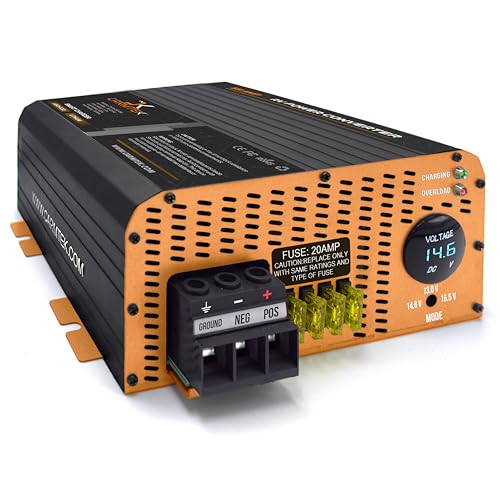
| WAVLINK 80A RV Power Converter | Lithium battery owners | 13V–16.5V adjustable range |
| EAGWELL 110V AC to 12V DC Converter 600W | Budget-minded setups | 600W universal SMPS design |
| BELTTT 2000W Pure Sine Wave Inverter | Running AC appliances from batteries | Pure sine wave output with LCD display |
| BELTTT 3000W Pure Sine Wave Inverter | Heavier loads and off-grid setups | 6000W peak with 23 ft wired remote |
| WAVLINK 55 Amp RV Power Converter | Mid-size battery banks | Three smart charging modes |
VEVOR RV Power Converter, 100 Amp
VEVOR RV Power Converter, 100 Amp, 110V AC to 12V DC RV Converter Battery Charger, Multi Stage Smart Charging, 13V to 16.5V Operating Range, Compatible with Lithium & Lead Acid Battery, for Camper
Best for: Large battery banks and full-time RVs
This converter suits RVers who run big battery banks or need fast recharge times between stops. Its high output makes it a strong fit for rigs with a lot of 12V draw while plugged in.
Key specs
- 110V AC input to 12V DC output
- 100 A rated output
- 13V to 16.5V operating range
- Multi-stage smart charging
- Compatible with lithium and lead-acid batteries
Pros
- High output for large battery banks
- Multi-stage charging suits multiple battery types
- Adjustable voltage range
Cons
- Larger footprint than small converters
- Overkill for very small battery setups
Bottom line: The right choice for RVers with substantial battery capacity who want the fastest charge rate available in this lineup.
View on AmazonYaheeda New Version Converter, 600W 50A
Yaheeda New Version Converter, 110V AC to 12V DC Converter Power Supply 12V 600W 50A DC Switch Transformer for RV,Pump,LED Strip, LCD Monitor
Best for: Small campers and DC accessories
A good match for compact trailers and small vans that run a modest battery bank plus 12V accessories such as LED strips, small pumps and monitors.
Key specs
- 110V AC input to 12V DC output
- 600W rated power
- 50 A output
Pros
- Compact and easy to mount
- Suitable for mixed 12V accessory loads
- Straightforward to install
Cons
- Not a dedicated battery charger profile
- Limited for large lithium banks
Bottom line: A sensible pick for small rigs that need reliable 12V output for accessories rather than serious battery charging.
View on AmazonWAVLINK 80A RV Power Converter
WAVLINK 80A RV Power Converter 120V AC to 12V DC Battery Charger | 3 Smart Charging Modes, 13V-16.5V Adjustable Range, Multi-Stage Charging
Best for: Lithium battery owners
Lithium users benefit from an adjustable voltage window and multi-stage charging, which help match the battery’s preferred profile.
Key specs
- 120V AC input to 12V DC output
- 80 A rated output
- 13V to 16.5V adjustable range
- Three smart charging modes
Pros
- Adjustable voltage suits lithium chemistry
- Three charging modes add flexibility
- Solid mid-to-high output
Cons
- Settings require checking against your battery manufacturer’s specs
- Not the highest output in this list
Bottom line: Best for lithium owners who want charging control and a capable output level without going to the top of the range.
View on AmazonEAGWELL 110V AC to 12V DC Converter 600W
EAGWELL 110V AC to 12V DC Converter 600W Power Supply 50A | New Version Universal SMPS Transformer for RV, Pump, LED Strip, CCTV, Car Stereo,Diesel Heater Power Supply
Best for: Budget-minded setups
Works well for basic 12V loads and users who want a simple, universal converter for pumps, LED lighting and similar accessories.
Key specs
- 110V AC input to 12V DC output
- 600W rated power
- 50 A output
- Universal SMPS transformer design
Pros
- Simple, no-frills operation
- Covers a wide range of 12V devices
- Easy to integrate with existing wiring
Cons
- Lacks dedicated multi-stage battery charging
- Build quality varies by unit in owner reports
Bottom line: A practical budget option for users who mainly need DC output rather than a full battery charging system.
View on AmazonBELTTT 2000W Pure Sine Wave Inverter
LCD Display, Dual AC and 20A Outlets, 23ft Remote, Hardwire Port, USB, Power Inverter for Solar, RV Truck, 93% Max Efficiency 2000W Pure Sine Wave Inverter 12V DC to 120V AC, 4000W Surge
Best for: Running AC appliances from batteries
Suited to RVers who want to run laptops, small kitchen appliances or a CPAP from the battery bank without a generator.
Key specs
- 12V DC input to 120V AC output
- 2000W continuous, 4000W surge
- Pure sine wave output
- LCD display, remote, and USB port
Pros
- Pure sine wave suits sensitive electronics
- Remote and display aid monitoring
- Good balance of output and size
Cons
- Drains batteries quickly under high loads
- Requires heavy-gauge cabling for full output
Bottom line: The right inverter for RVers who need reliable household AC for everyday devices and a moderate load.
View on AmazonBELTTT 3000W Pure Sine Wave Inverter
LCD Display, 23 ft Wired Remote, Dual AC and 20A Outlets, Hardwire Port, USB, Power Inverter for Solar, Off-Grid, RV, Truck 3000W Pure Sine Wave Inverter 12V DC to 120V AC, 6000W Peak
Best for: Heavier loads and off-grid setups
A step up for users running more demanding AC loads, such as power tools or multiple appliances, from a larger battery bank.
Key specs
- 12V DC input to 120V AC output
- 3000W continuous, 6000W peak
- Pure sine wave output
- 23 ft wired remote and hardwire port
Pros
- Higher output for heavier loads
- Long remote cable adds placement flexibility
- Hardwire port suits permanent installs
Cons
- Requires a substantial battery bank and thick cabling
- Larger and heavier than the 2000W model
Bottom line: Best for off-grid users with a capable battery bank who need more AC output than a 2000W unit provides.
View on AmazonWAVLINK 55 Amp RV Power Converter
WAVLINK 55 Amp RV Power Converter, 120V AC to 12V DC Battery Charger | 3 Smart Charging Modes, 13V-16.5V Adjustable Range, Multi-Stage Charging
Best for: Mid-size battery banks
A middle-of-the-road converter for RVers with moderate battery capacity who want smart charging without the highest output rating.
Key specs
- 120V AC input to 12V DC output
- 55 A rated output
- 13V to 16.5V adjustable range
- Three smart charging modes
Pros
- Good output for mid-size banks
- Adjustable range and charging modes
- Reasonable size for tight compartments
Cons
- Slower charging than the 80A and 100A options
- May be undersized for very large battery banks
Bottom line: A balanced choice for RVers with moderate battery capacity who want adjustable charging.
View on AmazonBELTTT 2000W vs. 3000W Note
Both BELTTT inverters are covered above as separate picks. The 2000W model suits moderate loads, while the 3000W model fits heavier draw. Confirm your battery bank can supply the surge rating before buying either.
Buying Guide
Converter vs. Inverter: Know Which You Need
A converter takes 120V AC from shore power or a generator and produces 12V DC to charge batteries and run DC loads. An inverter does the reverse, turning 12V DC from batteries into 120V AC. Many RVs need both, but they serve different purposes, so identify your main use first.
Good picks for this: VEVOR RV Power Converter, 100 Amp; BELTTT 2000W Pure Sine Wave Inverter
Amp Rating and Charging Speed
Output amperage determines how fast a converter can recharge your batteries and supply DC loads. Higher amp ratings charge faster but demand more from your shore power or generator. Match the rating to your battery capacity and the time you have to recharge.
Good picks for this: WAVLINK 80A RV Power Converter; WAVLINK 55 Amp RV Power Converter
Battery Chemistry Compatibility
Lead-acid and lithium batteries accept charge differently. A converter with an adjustable voltage range and multi-stage charging gives you more control. Always check your battery manufacturer’s recommended voltage settings before connecting.
Good picks for this: WAVLINK 80A RV Power Converter; VEVOR RV Power Converter, 100 Amp
Pure Sine Wave vs. Modified Sine Wave
Pure sine wave inverters produce cleaner AC power, which suits sensitive electronics, laptops and medical devices. Modified sine wave units are cheaper but can cause issues with some appliances. For most RV use with mixed electronics, pure sine wave is the safer choice.
Good picks for this: BELTTT 2000W Pure Sine Wave Inverter; BELTTT 3000W Pure Sine Wave Inverter
Inverter Wattage and Surge Capacity
Add up the running watts of the devices you plan to use at the same time, then account for surge when motors start. A 2000W inverter with 4000W surge covers many RV loads, while heavier tools or multiple appliances may need the 3000W class. Undersizing leads to tripped protection and drained batteries.
Good picks for this: BELTTT 3000W Pure Sine Wave Inverter; BELTTT 2000W Pure Sine Wave Inverter
Wiring, Cable Gauge and Installation
High-current DC wiring is where most problems start. Undersized cable overheats, drops voltage and can create fire risk. Use cable rated for your current, keep runs short, and fuse the positive line close to the battery. Installation near batteries and high-current circuits is a task where a qualified RV technician or electrician is worth consulting.
Good picks for this: Yaheeda New Version Converter, 600W 50A; EAGWELL 110V AC to 12V DC Converter 600W
Ventilation, Heat and Durability
Converters and inverters produce heat under load. Look for units with adequate cooling and mount them in a ventilated location away from direct sun and moisture. Keep dust out of fans and vents, and check connections periodically for loosening caused by vibration on the road.
Good picks for this: WAVLINK 55 Amp RV Power Converter; VEVOR RV Power Converter, 100 Amp
FAQ
What is the difference between a 12V DC converter and an inverter?
A converter turns AC power from shore power or a generator into 12V DC to charge batteries and run DC devices. An inverter turns 12V DC from batteries into 120V AC for household appliances. They do opposite jobs.
Can a converter charge lithium batteries?
Some converters have adjustable voltage ranges and multi-stage charging that suit lithium chemistry. Always confirm the recommended charge voltage with your battery manufacturer and set the converter accordingly.
How many watts do I need in an inverter?
Add the running watts of the devices you expect to use together, then allow for surge when motors start. Many RV owners find a 2000W inverter adequate for everyday loads, while heavier needs may call for 3000W.
Is pure sine wave necessary for an RV inverter?
It is strongly recommended if you run laptops, medical equipment or other electronics with sensitive power supplies. Modified sine wave output can cause problems with some devices.
What cable size should I use for a 12V DC setup?
Cable size depends on current draw and run length. Check the manufacturer’s wiring recommendations and an RV or DC wiring chart. Undersized cable is a common cause of overheating.
Can I install these myself?
Some RV owners handle basic installs, but high-current DC wiring and battery connections carry real fire and shock risk. If you are unsure, consult a qualified RV technician or electrician.
Conclusion
For most RVers, the right 12V DC setup starts with a clear picture of your battery capacity and daily loads. The VEVOR 100 Amp converter suits large battery banks, while the Yaheeda 50A and EAGWELL 600W units fit smaller rigs and accessory-heavy setups. The WAVLINK 80A and 55 Amp converters offer adjustable charging for lithium and mid-size banks. If you need household AC from your batteries, the BELTTT 2000W inverter covers everyday devices, and the 3000W model suits heavier off-grid use. Match the product to your primary need, and verify wiring and battery compatibility before you buy.
Sources
- Guidance on battery types, energy storage and off-grid power basics (energy.gov)
- Electrical product safety information and recall notices relevant to power equipment (cpsc.gov)
- Fire safety codes and standards for electrical installations and battery systems (nfpa.org)
Related reading
- RV Fridge 12V Conversion: Step-by-Step Guide to Running It on DC Power
- How Much Power Does a 12V RV Fridge Use? Amps and Daily Draw
- 7 Best 12V Power Inverters for RV Options for Campers (2026)
About Colin Foster
Colin Foster is part of our editorial team and reviews and edits our off-grid power for camping, RV & vanlife guides, checking product details against manufacturer specifications and owner feedback.