
 By Lauren Holland
Updated November 2026
Choosing a bluetti power station for RV use comes down to three things: how much energy you need per day, whether the unit has an RV-compatible outlet such as a TT-30 port, and how much surge power it can deliver for appliances with motors. The picks below are based on manufacturer specifications, product listings and common owner feedback patterns, with capacity, output, charging speed and RV-specific features as the main criteria.
Best overall: BLUETTI Elite 300 – View on Amazon
Our top picks at a glance
- 1
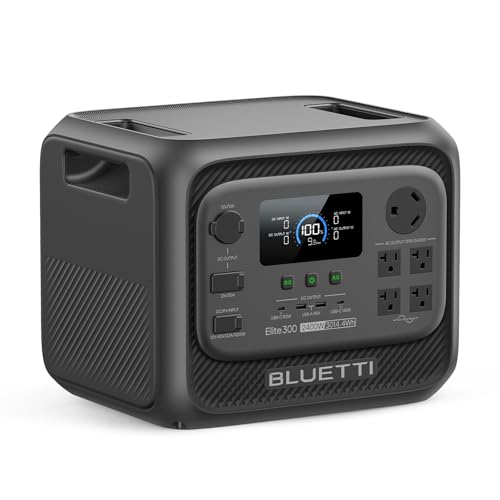 TOP CHOICEBest overallBLUETTI Elite 300 Portable Power Station for RV & Home Backup 3014.4WhView on Amazon
- 2
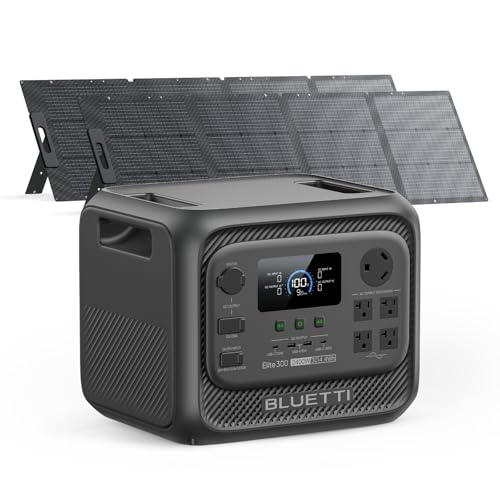 TOP CHOICEBest solar bundle for RVBLUETTI Solar Generator Elite 300 & 2x200W Solar Panel 3014.4Wh LFP BatteryView on Amazon
- 3
 TOP CHOICEBest for weekend tripsBLUETTI Elite 30 V2 Portable Power Station 288Wh 600W LFP Solar GeneratorView on Amazon
- 4
 Best for heavier loadsBLUETTI Elite 200 V2 Portable Power Station 2080Wh 2600W Solar GeneratorView on Amazon
- 5
 Best for compact campingBLUETTI Elite 100 V2 Portable Power Station for Camping 1024Wh 1800WView on Amazon
- 6
 Best budget-minded backupBLUETTI AC180 Portable Power Station 1152Wh 1800W LiFePO4 Solar GeneraView on Amazon
Our Top Picks
Quick Comparison
| Product | Best for | Key feature |
|---|---|---|
| BLUETTI Elite 300 | Overall RV use | TT-30 RV port, 3014Wh |
| BLUETTI Solar Generator Elite 300 bundle | Off-grid charging | Includes two 200W panels |
| BLUETTI Elite 30 V2 | Short trips | 288Wh, fast recharge |
| BLUETTI Elite 200 V2 | Heavier loads | 2080Wh, 2600W output |
| BLUETTI Elite 100 V2 | Compact camping | 1024Wh, 35% smaller |
| BLUETTI AC180 | Backup and outages | 1152Wh, four AC outlets |
BLUETTI Elite 300 Portable Power Station for RV & Home Backup 3014.4Wh
BLUETTI Elite 300 Portable Power Station for RV & Home Backup 3014.4Wh | 2400W (4800W Surge), LiFePO4 Battery, Smallest 3kWh Solar Generator for Emergency, RV Power with TT-30 RV Port & 12V/30A DC
Best for: Overall RV use with a dedicated RV port
This is the unit most RVers with air conditioning or a small fridge will want to look at first. Its 3014Wh capacity and 2400W output cover a wide range of loads, and the TT-30 port and 12V/30A DC output are built for RV use.
Pros
- TT-30 RV port and 12V/30A DC output
- 2400W continuous output with 4800W surge
Cons
- Heavy enough that it is best left in one spot
BLUETTI Solar Generator Elite 300 & 2x200W Solar Panel 3014.4Wh LFP Battery
BLUETTI Solar Generator Elite 300 & 2x200W Solar Panel 3014.4Wh LFP Battery | w/ 2400W AC Outlets (4800W Surge), Smallest 3kWh, Portable Power Station for RV, Home Backup, w/ TT-30 RV Port & 12V/30A D
Best for: Off-grid charging with solar
This bundle suits RVers who want to recharge at camp without a generator. The Elite 300 platform stays the same, and the two 200W panels add daytime charging.
Pros
- Panels included, so the system is ready to charge out of the box
- Same TT-30 port and 12V DC output as the standalone unit
Cons
- Panels need space and a clear sun exposure to perform well
BLUETTI Elite 30 V2 Portable Power Station 288Wh 600W LFP Solar Generator
BLUETTI Elite 30 V2 Portable Power Station 288Wh 600W LFP Solar Generator | Power Lifting 1500W, 10ms UPS, 45 Min 0-80% Fast Charging, Emergency Backup Power for Blackout, Camping, Outage and Road Tri
Best for: Short trips and light loads
Owners who mainly run phones, lights, a laptop and a small fan will find this compact unit enough. It is light and quick to recharge, though it will not carry air conditioning.
Pros
- Light and easy to move between campsite and vehicle
- Fast charging, with 0-80% in about 45 minutes per listing
Cons
- 288Wh capacity runs out quickly under heavier loads
BLUETTI Elite 200 V2 Portable Power Station 2080Wh 2600W Solar Generator
BLUETTI Elite 200 V2 Portable Power Station 2080Wh 2600W Solar Generator | LFP Battery Backup w/ 4 2600W AC Outlets (3900W Power Lifting), 0-80% Fast Charge in 50 Min. for Camping, Off-grid, Emergency
Best for: Heavier loads and longer stays
This model fits RVers who run a microwave, a coffee maker and a fan together, or who stay several days between charges. Four 2600W AC outlets give plenty of room for multiple devices.
Pros
- 2080Wh capacity supports multi-day use with moderate loads
- Four AC outlets for simultaneous devices
Cons
- Noticeably heavier than the smaller V2 models
BLUETTI Elite 100 V2 Portable Power Station for Camping 1024Wh 1800W
BLUETTI Elite 100 V2 Portable Power Station for Camping 1024Wh 1800W | 3600W Surge, 35% Smaller, 0-80% in 45 Min, 10ms UPS, LiFePO4 Battery Solar Generator for Home Backup, Emergency, Outdoor
Best for: Compact camping and weekend use
A good middle option for RVers who want more than a small unit without carrying a large battery. The listing describes it as 35% smaller than earlier models of similar capacity.
Pros
- Compact footprint for tight storage spaces
- 1800W output with 3600W surge for common camp appliances
Cons
- Capacity limits how long it can run an air conditioner
Buying Guide
Daily Energy Needs (Watt-Hours)
Start by adding up the wattage and daily run time of the devices you plan to power, such as a fridge, lights, phone chargers, a fan, or a coffee maker. Multiply each device’s watts by its hours of use to get watt-hours, then total them. A higher watt-hour capacity lets you run more gear for longer between charges.
RV Outlet Compatibility
Check whether the unit includes a TT-30 RV port, which lets you connect directly to a 30-amp RV electrical system. Also look for 12V DC outputs if you want to power low-voltage appliances without converting power, since this can save energy during travel or boondocking.
Surge Power for Motor-Driven Appliances
Appliances with motors, like air conditioners, microwaves, and power tools, need a burst of extra power when they start up. Make sure the continuous output rating covers your running load and the surge rating covers the startup spike of your heaviest device.
Charging Options and Speed
Consider how you plan to recharge: wall outlet, vehicle charging, or solar panels. Faster charging shortens your downtime at campgrounds, while solar compatibility lets you stay off-grid for longer stretches. Solar bundles can be a convenient choice if you want a complete setup from the start. You may also like 7 Best Power Inverters for RV TV Options for Campers (2026).
Portability and Battery Chemistry
Weight and size matter if you will carry the unit in and out of an RV or move it around a campsite. LiFePO4 batteries are generally valued for their long cycle life and stable performance, so they are a practical choice for regular RV use.
FAQ
Can a Bluetti power station run an RV air conditioner?
Some larger models can handle the startup surge of a small RV air conditioner, but running one for long periods requires a lot of capacity. Check the unit’s surge rating against the air conditioner’s startup draw and estimate how long you need it to run before buying.
What does a TT-30 port do?
A TT-30 port is a 30-amp RV connection that lets the power station feed an RV’s electrical system through a standard RV plug. It is useful when you want to power your RV’s built-in outlets from a portable battery source.
How long will a power station run a refrigerator?
Runtime depends on the fridge’s energy use, ambient temperature, and the battery’s watt-hour capacity. A rough estimate is to divide the battery’s watt-hours by the fridge’s average daily watt-hour use, then account for real-world losses.
Do I need solar panels to use these units in an RV?
Solar panels are not required, since the units can be charged from a wall outlet or a vehicle. However, solar makes it possible to recharge while camping off-grid and can extend how long you can stay without hookups.
What is the difference between continuous and surge power?
Continuous power is the steady wattage the unit can supply over time, while surge power is a short burst for startup loads. Motor-driven appliances often need surge power briefly when they first switch on.
Conclusion
For full-time RV living or larger households, the higher-capacity models with RV-ready outlets and solar options are the better fit. Weekend campers with lighter needs can often get by with a smaller, more portable unit that still offers fast charging and standard outlets.
Match the power station to your daily energy use first, then confirm RV port and surge requirements before choosing a solar bundle or a standalone unit.
Related reading
- Using a Portable Power Station in an RV or Camper Van
- Top 5 Portable Power Stations for RV Options Compared (2026)
- Portable Power Station for RV Air Conditioner: Sizing Guide (2026)
- Best Power Station for RV Camping: What to Look For in 2026
About Lauren Holland
Lauren Holland is part of our editorial team and reviews and edits our off-grid power for camping, RV & vanlife guides, checking product details against manufacturer specifications and owner feedback.






