 By Lauren Holland
Updated November 2026
RV air conditioner power requirements come down to three numbers: the running watts, the startup surge, and the amp draw at your RV’s voltage. Once you know those, you can tell whether your campsite hookup, generator, inverter or power station can keep the unit running. This guide walks through how to find each number and how to match it to your setup.
Step 1: Find the Nameplate Rating on Your Unit
Every rooftop RV air conditioner has a data plate, usually on the side or inside the shroud. Look for the voltage (typically 115V AC), the running amps, and sometimes the running watts. Manufacturers specify these values for normal operation at the rated voltage, so treat them as your baseline. If only amps are listed, multiply by voltage to estimate watts: 12 amps at 115V is roughly 1,380 watts.
Shopping for one? See our guide: 4 Best RV Solar Power Air Conditioners for Off-Grid Camping in 2026.
Step 2: Account for Startup Surge
Compressors draw much more current for a moment when they start. This surge can be two to three times the running load, and it is the number that trips breakers and overloads inverters. Soft-start kits reduce this surge considerably and are often recommended for smaller generators or inverters. If you plan to run the AC off a generator or inverter, size for the surge, not just the running watts.
Step 3: Match the Load to Your Power Source
Different power sources handle the load in different ways. Use this table as a rough guide and confirm against your own unit’s data plate:
| Power source | What to check |
|---|---|
| Campground 30A hookup | Usually enough for one rooftop unit, but other appliances share the same circuit budget. |
| Campground 50A hookup | Typically provides enough capacity for one or two units plus other loads. |
| Generator | Rated running watts must exceed the AC’s running load, and the surge must be covered. |
| Inverter | Continuous rating and surge rating both need to clear the compressor’s startup demand. |
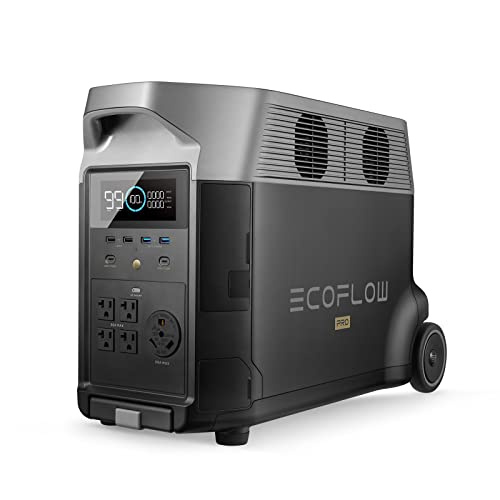
| Portable power station | Check the surge rating and how long the battery capacity lasts at the running load. |
Step 4: Estimate Runtime Before You Commit
To estimate how long a battery-based source will run the AC, divide usable battery energy in watt-hours by the AC’s average running watts. A 2,000 Wh station running a unit that averages 900 watts will last roughly two hours before accounting for losses from the inverter, which typically consume some energy. The compressor cycles on and off, so actual runtime can be longer than this simple math suggests, but the estimate gives you a safe starting point. For a fuller breakdown, see RV Air Conditioner Power Consumption: Watts, Amps and Runtime Explained.
Checklist: What to Gather Before Planning
- Data plate voltage, running amps and running watts
- Startup surge rating or soft-start status
- Campsite hookup amperage (30A or 50A)
- Generator or inverter continuous and surge ratings
- Battery capacity in watt-hours, if using a power station
- Expected daily hours of AC use
Common Mistakes
- Sizing a generator or inverter to running watts alone and ignoring startup surge.
- Assuming a 30A hookup can run the AC and several other high-draw appliances at once.
- Forgetting that inverter conversion losses reduce usable battery energy.
- Using undersized extension cords, which cause voltage drop and strain the compressor.
- Running the AC at full load in hot weather without accounting for the longer cycles it needs.
Recommended Gear
A soft-start device can lower the surge a smaller generator or inverter needs to handle. View on Amazon
A clamp-on meter lets you measure the actual running amps your unit draws, which is more reliable than rough estimates. View on Amazon
If you plan to run from batteries, a power station with a high surge rating is worth comparing against the AC’s data plate. View on Amazon
FAQ
How many watts does an RV air conditioner use?
Most rooftop units list running watts or amps on their data plate, and running load typically falls in the high hundreds to over a thousand watts. The exact figure depends on the model and operating conditions, so check your unit’s label. For typical ranges, see How Much Power Does an RV Air Conditioner Use? Watts, Amps and Runtime.
Can I run an RV air conditioner on a 30-amp hookup?
Often yes, if the AC is the main load on the circuit. Running other large appliances at the same time can overload the hookup, so plan your load accordingly.
Do I need a soft start for my RV air conditioner?
It is not always required, but it can reduce startup surge enough to let smaller generators or inverters run the unit. Consult the manufacturer’s guidance or an RV technician before installing one.
Conclusion
Start with the data plate, add the startup surge, and compare the total against your hookup, generator, inverter or battery bank. Once those numbers line up, you can plan your camping days with confidence. When in doubt, have a qualified RV electrician confirm your electrical setup.
Related reading
- RV Air Conditioner Power Usage: How Many Watts and Amps You Really Need
- RV Air Conditioner Power Draw: How Many Watts You Need (2026)
- RV AC Power Draw: How Many Watts Your Air Conditioner Really Uses
Ready to choose one?
About Lauren Holland
Lauren Holland is part of our editorial team and reviews and edits our off-grid power for camping, RV & vanlife guides, checking product details against manufacturer specifications and owner feedback.