 By Lauren Holland
Updated November 2026
Where does RV thermostat power come from? In most RVs, the thermostat gets its power from the coach’s 12-volt DC system, which is fed by the house battery or the converter. Some thermostats, especially those tied to the air conditioner or heat pump, draw from the 120-volt AC system instead. Knowing which circuit feeds your thermostat tells you what to check when it goes dark.
Step 1: Identify the Thermostat’s Voltage
Start by reading the label on the thermostat or the wiring diagram in your owner’s manual. Most rooftop AC thermostats and many wall-mounted controls run on 12V DC, while some heat pump and furnace controls use 24V AC pulled from a transformer inside the appliance. A thermostat rated for 120V AC is less common but does appear on certain models.
Shopping for one? See our guide: 6 Best 30 Amp RV Power Plugs for Campers and Motorhomes (2026).
Step 2: Trace the Power Source
Once you know the voltage, follow the wire back to its source:
- 12V DC thermostats usually connect to the 12V fuse panel, which is supplied by the converter when shore power is connected and by the house battery when it is not.
- 24V AC thermostats receive power from a low-voltage transformer on the furnace or AC unit, which steps down 120V AC from the main panel or generator.
- 120V AC thermostats are wired into the AC circuit, so they go dark when shore power, a generator or an inverter is not supplying the coach.
Step 3: Check the Likely Sources of Power
The source depends on how you are camped. Consider these cases:
| Setup | Thermostat power source |
|---|---|
| Plugged into shore power | Converter (12V DC) or main panel (120V AC) |
| Boondocking, no hookup | House battery (12V DC) or inverter (for AC models) |
| Running a generator | Generator feeding the 120V AC system |
If your thermostat works on shore power but dies when you unplug, the 12V circuit or battery is the likely issue. For help with that, see No Power to RV Thermostat: How to Diagnose and Fix It (2026).
Step 4: Confirm the Fuse or Breaker
Before assuming a major fault, check the fuse or breaker that feeds the thermostat. A blown 12V fuse is a common and inexpensive fix. For 120V circuits, reset any tripped breaker in the main panel. If you rely on a converter, it is worth knowing how it works; Troubleshooting RV Power Converter: A Step-by-Step Guide for Campers covers that in more depth.
Common Mistakes
- Assuming every thermostat runs on the same voltage. Check the label before you test.
- Replacing the thermostat when the real problem is a blown fuse or a dead house battery.
- Forgetting that AC-powered thermostats need an inverter to work while boondocking.
- Ignoring a weak house battery, which can starve the 12V circuit even when everything else looks fine.
Recommended Gear
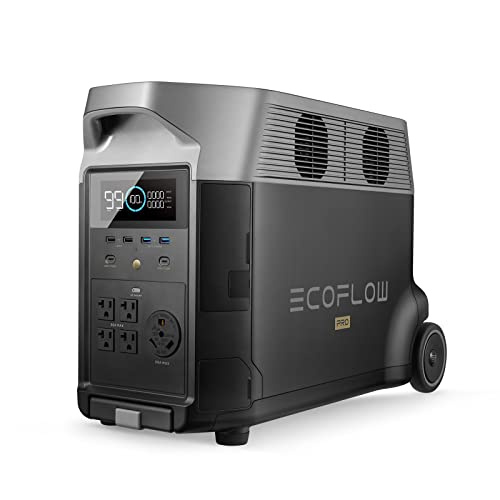
A basic multimeter lets you check whether voltage reaches the thermostat terminals, which tells you whether the problem is upstream or in the unit itself. A portable power station can keep a 120V AC thermostat running while you are away from a hookup. Solar charging can help keep the house battery topped off so the 12V circuit stays reliable.
- A digital multimeter to verify 12V DC and 120V AC at the thermostat connections: View on Amazon
- A portable power station to run AC-rated thermostats off the grid: View on Amazon
- A solar panel kit to keep the house battery charged while boondocking: View on Amazon
FAQ
Does an RV thermostat run on battery power?
Many 12V DC thermostats do run on the house battery when no shore power is connected. Their draw is small, but a weak or discharged battery can still cause them to fail.
Why does my RV thermostat work only when plugged in?
That usually means the thermostat is on the 120V AC circuit or depends on the converter for 12V power. Without shore power, the battery may not be supplying it.
Can I power an RV thermostat with an inverter?
Yes, if the thermostat is designed for 120V AC. An inverter converts battery DC to AC, but check the inverter’s rating and the thermostat’s requirements first. For electrician-level questions, consult a qualified RV technician.
Conclusion
RV thermostat power comes from either the 12V DC system, fed by the battery or converter, or the 120V AC system, fed by shore power, a generator or an inverter. Checking the label, tracing the wiring and confirming the fuse or breaker will usually reveal the source. When in doubt, a licensed RV technician can verify the circuit safely.
Related reading
- Wind Power for RV: 6 Best Turbine Kits for Campers (2026)
- What Size Generator to Power RV AC: A Step-by-Step Guide (2026)
- What Is Shore Power RV? A Clear Guide for Campers (2026)
- What Does a Power Inverter Do on an RV? A Plain-English Guide
Ready to choose one?
About Lauren Holland
Lauren Holland is part of our editorial team and reviews and edits our off-grid power for camping, RV & vanlife guides, checking product details against manufacturer specifications and owner feedback.