By Lauren Holland
Updated November 2026
A portable power station for car camping keeps lights, phones, a small fridge and a CPAP or fan running without a generator. The right size depends on what you plug in and how many nights you stay off the grid. The picks below are ranked by fit against four criteria: usable capacity in watt-hours, continuous AC output in watts, charging options (wall, car and solar), and how the unit handles surge loads from motors and compressors.
Our top picks at a glance
- 1
 TOP CHOICEBest overallBLUETTI Elite 30 V2 Portable Power Station 288Wh 600W LFP Solar GeneratorView on Amazon
- 2
 TOP CHOICEBest for CPAP at nightEnginStar Portable Power Station 300W 296Wh Solar GeneratorView on Amazon
- 3
 TOP CHOICEBest for RV-style loadsJackery Explorer 1000 v2 Portable Power Station, 1024Wh LiFePO4 BatteryView on Amazon
- 4
 Best for fast rechargingAnker SOLIX C1000 Portable Power Station with Car Charging Cable, 1,056WhView on Amazon
- 5
 Best for phones and lightsGENSROCK Portable Power Station 120W, Power Bank with AC Outlet 24000mAhView on Amazon
- 6
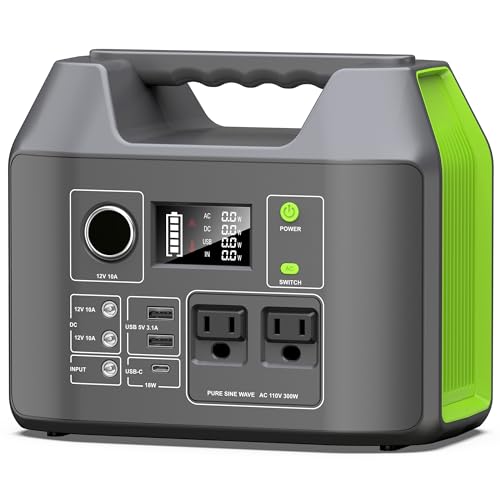 Best for two-outlet weekend tripsEnginStar Solar Generator, 300W Portable Power Station, 296Wh Lithium Battery BackupView on Amazon
Our Top Picks
Quick Comparison
| Product | Best for | Key feature |
|---|---|---|
| BLUETTI Elite 30 V2 | Overall car camping | 288Wh, 600W output |
| EnginStar Portable Power Station 300W | CPAP at night | 296Wh, pure sine wave |
| Jackery Explorer 1000 v2 | RV-style loads | 1024Wh, 1500W output |
| Anker SOLIX C1000 | Fast recharging | 1056Wh, 58-min full charge |
| GENSROCK Portable Power Station 120W | Phones and lights | 24000mAh, eight ports |
| EnginStar Solar Generator 300W | Two-outlet weekend trips | 296Wh, two AC outlets |
BLUETTI Elite 30 V2 Portable Power Station 288Wh 600W LFP Solar Generator
BLUETTI Elite 30 V2 Portable Power Station 288Wh 600W LFP Solar Generator | Power Lifting 1500W, 10ms UPS, 45 Min 0-80% Fast Charging, Emergency Backup Power for Blackout, Camping, Outage and Road Tri
Best for: Overall car camping with a mix of small appliances.
This unit suits campers who want an LFP battery, a 600W output and a compact footprint for a single trip setup.
Pros
- LFP chemistry is rated for many charge cycles.
- Fast recharging from wall or solar input.
Cons
- 288Wh capacity runs out quickly with a fridge.
EnginStar Portable Power Station 300W 296Wh Solar Generator
EnginStar Portable Power Station 300W 296Wh Solar Generator | Pure Sine Wave AC Outlet for Outdoors Camping Travel and Emergency Blackout, 80000mAh Backup Battery Power Supply for CPAP
Best for: CPAP use and overnight sleep gear.
This model fits campers who need clean pure sine wave AC power for a sleep machine and phone charging through the night. 3 Best DeWalt Power Stations for Camping (2026) goes further into this.
Pros
- Pure sine wave output for sensitive electronics.
- Large battery bank for multi-night use on phones and lights.
Cons
- 300W continuous output limits high-draw appliances.
Jackery Explorer 1000 v2 Portable Power Station, 1024Wh LiFePO4 Battery
Jackery Explorer 1000 v2 Portable Power Station, 1024Wh LiFePO4 Battery | 1500W (3000W Peak), 50-Min Fast Charge, 10ms UPS Solar Generator for Home Emergency, Camping & RV.
Best for: RV-style loads such as a small compressor fridge and fans.
This unit is for campers who run motor loads and want headroom above typical surge demands.
Pros
- 1500W continuous output with 3000W peak handling.
- About 1024Wh supports a fridge for a day or two.
Cons
- Heavier than the small units on this list.
Anker SOLIX C1000 Portable Power Station with Car Charging Cable, 1,056Wh
Anker SOLIX C1000 Portable Power Station with Car Charging Cable, 1,056Wh | Full Charge in 58 Min, 1,056Wh LiFePO4 Battery, 1,800W (Peak 2,400W) Solar Generator for Camping and Emergency Use, UPS
Best for: Fast recharging between driving days.
This model suits campers who drive during the day and want the battery full again quickly at the next stop.
Pros
- Owners often report full charges in under an hour on fast input.
- Includes a car charging cable.
Cons
- Costs more than most options here.
GENSROCK Portable Power Station 120W, Power Bank with AC Outlet 24000mAh
GENSROCK Portable Power Station 120W, Power Bank with AC Outlet 24000mAh | 8 Output Ports | 2 110V AC Outlets | Lithium-Ion Portable Power Bank | LED Light | For Home, Camping, Travel, and Emergencies
Best for: Phones, lights and small USB devices.
This compact unit is for campers with light needs who want USB ports and an LED light in one package.
Pros
- Eight output ports cover many devices at once.
- Built-in LED light is handy at camp.
Cons
- 120W output rules out most appliances.
EnginStar Solar Generator, 300W Portable Power Station, 296Wh Lithium Battery Backup
EnginStar Solar Generator, 300W Portable Power Station, 296Wh Lithium Battery Backup w/Two 110V Pure Sine Wave AC Outlet for Camping Road Trip RV, 80000mAh Sufficient Power Supply for Blackout
Best for: Two-outlet weekend trips with a few devices.
This model fits small groups who need two AC outlets for a fan and a charger on a short trip.
Pros
- Two 110V pure sine wave AC outlets.
- Suits short trips and tent-side use.
Cons
- 296Wh is modest for multi-night trips.
Buying Guide
Capacity in watt-hours
Watt-hours show how long a unit runs a given load. Divide capacity by the wattage of your device to estimate runtime, then account for conversion losses of roughly 10 to 20 percent.
Continuous output and surge
Check continuous wattage against your largest device. Motor loads such as compressors briefly draw more than their rated power, so look for headroom above that number.
FAQ
How many watt-hours do I need for car camping?
Add up the wattage of each device you plan to run and multiply by the hours you will use it each day. A phone, a few LED lights and a CPAP typically fit comfortably within the 288Wh to 300Wh range for a weekend, while a small fridge or several devices over multiple nights call for a larger unit around 1,000Wh. Leave some headroom, because real-world output is lower than the rated capacity.
Can a portable power station run a small fridge while camping?
Yes, most of the units in this roundup can run a compact 12V or AC fridge, but runtime depends on the fridge’s power draw and how often its compressor cycles. The higher-capacity models give you noticeably more hours of cooling between charges. Keep the lid closed as much as possible to reduce energy use.
How do I recharge a portable power station on a camping trip?
Most of these units can charge from a wall outlet at home, from a car’s 12V socket or cable while driving, or from solar panels at the campsite. Solar is the most practical option for multi-day trips, but charging speed depends on panel size and weather. Plan to top up during the drive to camp so you start each day with a full battery.
What is the difference between continuous output and surge power?
Continuous output is the wattage the unit can supply steadily over time, which determines what you can run at once. Surge power is the short burst a device needs when it starts, which is important for motors in fridges, pumps and some power tools. A unit with enough surge capacity will start these loads without tripping its protection.
Is a pure sine wave inverter necessary for sensitive electronics?
A pure sine wave inverter produces clean power similar to a household outlet, which is safer for laptops, medical devices like CPAP machines and other sensitive electronics. Simpler modified sine wave units can damage some devices or cause them to run hot or noisily. For anything medical or expensive, choose a pure sine wave model.
Do I need a power station if I already have a car battery?
Running accessories directly off a car battery risks draining it and leaving you unable to start the vehicle, especially when the engine is off. A dedicated portable power station isolates your camping loads from the starting battery and provides proper AC outlets. It also lets you charge devices at the campsite without idling the engine.
Conclusion
For most car campers who need to run a CPAP, lights, phones and a small fan for a few nights, the smaller units such as the BLUETTI Elite 30 V2 or the EnginStar models offer a practical, affordable fit. If you plan longer trips or want to run a fridge and multiple devices at once, the Jackery Explorer 1000 v2 or Anker SOLIX C1000 provide the extra capacity and output you will need.
The GENSROCK unit suits the lightest use, such as charging phones and running a small light on short outings. Match the watt-hour rating and continuous output to your heaviest device, and you will avoid running out of power when you need it most.
Related reading
- Top 5 Portable Power Stations for Camping Picks Compared in 2026
- Top 5 Portable Power Stations for CPAP Camping in 2026
- Anker Portable Power Station for Camping: Which Size Runs Your Gear?
About Lauren Holland
Lauren Holland is part of our editorial team and reviews and edits our off-grid power for camping, RV & vanlife guides, checking product details against manufacturer specifications and owner feedback.