
 By Colin Foster
If you want a cheap 12V compressor fridge for camping, van trips, or RV weekends, the real challenge is balancing price against the things that actually matter once you are off the grid: how well the compressor holds temperature in hot weather, how much current it pulls from your battery, how much food it fits, and whether it can also run on a wall outlet at home. A budget unit that drains a lead-acid battery overnight or cannot cool below 40°F on a summer afternoon is not a bargain. The picks below were chosen by reviewing manufacturer specifications, brand reputation, and the patterns owners commonly describe in their feedback, with a focus on compressor-driven designs that can keep food cold without ice. Every pick here is a real Amazon listing, and each one is grouped by the kind of trip it suits best.
Our Top Picks
Quick Comparison
| Product | Best for | Key feature |
|---|---|---|
| Stopsad 12 Volt Car Fridge, 11QT | Solo trips, day use, and small cooler replacement | Compact 11-quart body with adjustable temperature range |
| EUHOMY 59QT 12 Volt Refrigerator | Families and multi-night camping | Large 59-quart capacity with ECO and MAX modes |
| DC 12-24V Car Refrigeration Air Compressor Fridge Freezer | Builders and DIY installers | Bare compressor unit rated around 74W cooling capacity |
| BD25H 12V/24V DC Car Refrigeration Compressor | Custom fridge boxes and vehicle conversions | Low-noise compressor with temperature control |
| VEVOR 12 Volt Refrigerator, 82.4 QT | Large groups, long trips, and van builds | 82.4-quart capacity with app control and wheels |
Stopsad 12 Volt Car Fridge, 11QT

Stopsad 12 Volt Car Fridge, 11QT Compressor Cooler Adjustable Temp -4℉~68℉ | 10L Portable Refrigerator 12V/24V DC & 110-240V AC Dual Power, Compact Freezer for Vehicle RV Camping Truck Boat Travel
This is the best fit for a solo camper, a day-trip driver, or anyone who wants to swap a basic cooler for a compressor fridge without committing to a large box. Its small footprint fits in a passenger footwell, a rear seat area, or a compact van cabinet.
Key specs
- 11-quart (about 10-liter) capacity
- Adjustable temperature range listed from -4°F to 68°F
- 12V and 24V DC input, plus AC operation for home use
- Compact portable compressor design
Pros
- Small enough for a car or small van without taking over the cargo area
- Dual DC and AC power makes it usable at home or on a campsite with shore power
- Adjustable temperature lets you keep drinks cold without freezing produce
Cons
- Capacity is limited for more than one or two people for a multi-day trip
- Owners who run it in very hot cabins often report it working hard, so ventilation matters
EUHOMY 59QT 12 Volt Refrigerator

EUHOMY 59QT 12 Volt Refrigerator, -4℉~68℉ Portable Fridge for Car | No Ice Needed, 12V&100-240V, Compressor Cooling, ECO/MAX Modes, 3-Level Battery Protection, Truck/Travel/Home Use,Low Noise
For families, couples who cook real meals, or anyone planning three to five nights off grid, a 59-quart unit gives enough room for groceries, drinks, and leftovers without constant restocking. It is a sensible middle ground between a small car fridge and a full RV unit.
Key specs
- 59-quart capacity
- Temperature range listed from -4°F to 68°F
- 12V and 100-240V AC power options
- ECO and MAX cooling modes
Pros
- Large capacity suits multi-night trips and family meals
- ECO mode can reduce battery draw compared with running at full cooling
- Works on AC at home, which keeps it useful beyond camping
Cons
- Its size and weight make it harder to move alone and require a dedicated spot in the vehicle
- Owners often note that fully loaded operation draws meaningful power, so a battery check before long trips is worth doing
DC 12-24V Car Refrigeration Air Compressor Fridge Freezer
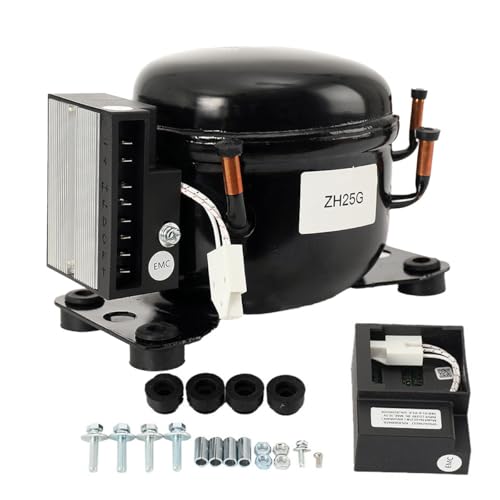
DC 12-24V Car Refrigeration Air Compressor Fridge Freezer Marine Solar | with Controller,Max Cooling Capacity:74W /252.5btu,R134 A refrigerant
This is a component-level compressor rather than a finished cooler box. It suits people building a custom fridge, a marine installation, or a solar-powered cabinet who already have an insulated enclosure and want to control the cooling system directly.
Key specs
- 12-24V DC operation
- Maximum cooling capacity listed at 74W (about 252.5 BTU)
- R134a refrigerant, as stated in the listing
- Includes a controller
Pros
- Good option for DIY builds where a finished fridge does not fit the space
- Works on both 12V and 24V systems
- The included controller helps with temperature management
Cons
- Requires insulation, wiring, and mounting work; it is not plug-and-play
- Installation mistakes such as undersized wire or poor ventilation are common causes of problems, so a qualified installer is worth consulting if you are unsure
BD25H 12V/24V DC Car Refrigeration Compressor

BD25H 12V/24V DC Car Refrigeration Compressor with Temperature Control | Refrigerator Compressor, Fridge Freezer Low Noise, Max 1.86 MPa, Low Back Pressure | -35℃~-10℃ Evap Temp, 45W-74W Cooling Ca
This is a compressor unit for builders who want a quiet, controllable cooling core for a custom box, a camper conversion, or a marine application. It is aimed at users comfortable with refrigeration plumbing and wiring.
Key specs
- 12V and 24V DC operation
- Evaporating temperature range listed as -35°C to -10°C
- Cooling capacity listed from about 45W to 74W
- Maximum pressure listed at 1.86 MPa
Pros
- Listed as low-noise, which matters in a sleeping van
- Includes temperature control for tailored cooling
- Flexible cooling output range suits different enclosure sizes
Cons
- Not a finished appliance, so it demands technical skill and proper refrigerant handling
- Owners building their own systems often report that sizing the compressor to the insulation is the hardest part, so plan the enclosure first
VEVOR 12 Volt Refrigerator, 82.4 QT

VEVOR 12 Volt Refrigerator, 82.4 QT/ 78L Car Fridge, Portable Electric Freezer Compressor with Handle, APP Control and Wheel, 12V/24V DC 100-240V AC, -4℉ to 68℉, for Truck Van RV SUV Travel Camping
For large groups, long-haul van travel, or anyone who wants to keep a full week of food cold, this is the highest-capacity option on the list. Its wheels and handle make it easier to reposition than a fixed cooler.
Key specs
- 82.4-quart (about 78-liter) capacity
- Temperature range listed from -4°F to 68°F
- 12V/24V DC and 100-240V AC power
- App control and wheels, as stated in the listing
Pros
- Largest capacity here, suited to long trips and big families
- Wheels and handle make a heavy unit easier to move
- App control lets you adjust settings from a phone
Cons
- Large footprint and weight may not fit smaller vehicles
- Running a big compressor full time adds meaningful battery load, so a solar setup or larger battery bank is usually needed for extended trips
Buying Guide
Selection criteria
A cheap 12V compressor fridge should be judged on four things: how much cold it actually delivers in heat, how many amp-hours it consumes per day, how much usable space it offers relative to its outside size, and whether the build quality will last through rough roads. Price matters, but a unit that runs your battery flat is more expensive in the long run.
Important features
- Compressor type: Compressor fridges cool more efficiently than thermoelectric (Peltier) models, especially in warm conditions.
- Temperature range: Look for a low setting near 0°F or below if you plan to freeze food, and confirm the listed ambient performance.
- Power options: DC input is essential off grid; AC input is useful at home or at campsites with hookups.
- Battery protection: Low-voltage cutoffs protect your starter battery from being drained.
- Insulation and lid seal: Better insulation reduces compressor run time.
Specs to check
- Rated wattage or current draw at 12V
- Listed capacity in quarts or liters, and usable interior dimensions
- Minimum listed temperature and whether it is measured in a specific ambient condition
- Voltage range (some models accept 12V and 24V, others only 12V)
- Weight and whether handles or wheels are included
Choosing by need
For a solo trip or weekend drive, an 11-quart class fridge is usually enough. For a couple on a three to five night trip, a 50 to 60-quart box gives comfortable room. For large groups, extended van life, or a fridge that also serves as a freezer, the 80-quart class makes sense, but plan for the added battery load. If you are building a custom enclosure, a bare compressor unit lets you size the system to your space, though it requires technical comfort with wiring and refrigerant.
Things to watch out for
- Battery draw: A compressor fridge can run several hours per day. Estimate daily amp-hour use before you leave, and consider a battery monitor.
- Ventilation: Compressors produce heat. Blocking airflow is one of the most common reasons owners report poor performance.
- Voltage drop: Thin or long wire runs cause the compressor to struggle. Use the wire gauge recommended by the manufacturer.
- Heat ratings: Listed cold temperatures often assume a moderate room temperature. Expect reduced performance in a hot car.
If you are wiring a fridge permanently into a vehicle or building a custom system, consult a qualified electrician or RV technician, especially for fuse sizing and battery isolation.
FAQ
Is a cheap 12V compressor fridge worth buying for camping?
Yes, if you choose a model with a true compressor and a clear low-voltage cutoff. Budget units can perform well for short trips, but you should confirm battery capacity and expected daily draw before relying on one for multiple days.
How much battery do I need to run a 12V compressor fridge?
It depends on the fridge’s current draw, the ambient temperature, and how often it cycles. As a rough guide, many owners running a mid-size fridge in warm weather plan for a battery bank with enough capacity to cover roughly 20 to 40 amp-hours per day, and they add solar or a second battery for longer stays. Check the manufacturer’s listed draw and calculate from there.
Can I run a 12V compressor fridge overnight without draining my battery?
Often yes with a healthy battery and a low-voltage cutoff set correctly, but results vary with fridge size, insulation, and outside temperature. Monitoring battery voltage the first night is the most reliable way to learn your setup’s habits.
What is the difference between a compressor fridge and a thermoelectric cooler?
Compressor fridges use a refrigeration cycle similar to a home refrigerator and can reach much lower temperatures, especially in hot weather. Thermoelectric coolers are simpler and cheaper but typically cool only a set amount below the ambient temperature and draw more power relative to output.
Can a cheap 12V fridge also run on household power?
Many models include a built-in AC adapter that works on 100–240V. Check the listing to confirm, since some DC-only units require a separate power supply.
Do 12V compressor fridges make a lot of noise?
Compressors produce a low hum when running, and the level varies by model and mounting. Owners often report that quieter designs and proper mounting on a vibration-damping surface make a noticeable difference.
Should I buy a bare compressor or a finished fridge?
A finished fridge is the right choice for most campers because it is ready to use. A bare compressor suits builders who have a specific enclosure and are comfortable handling refrigerant and wiring. If you are unsure, a finished unit is the safer starting point.
Conclusion
For a solo trip or small vehicle, the Stopsad 11-quart fridge offers the simplest entry point. For families and multi-night camping, the EUHOMY 59-quart model balances capacity with flexible power options. The VEVOR 82.4-quart unit is the choice when you need the most room and can plan for higher battery demand. For builders creating a custom cold box, the DC compressor units from the DC 12-24V listing and the BD25H are better suited, provided you are comfortable with the installation. Whichever you choose, estimate your daily battery draw, confirm ventilation, and test the system before a long trip.
Related reading
- Most Efficient 12v Compressor Fridge (2026): Which Should You Choose?
- Dometic 12V Compressor Fridge Review: Features and Performance
- Cheapest 12V Compressor Fridge: 7 Best Budget Picks for Camping (2026)
- Alpicool 12V Compressor Fridge Review: Features and Performance
About Colin Foster
Colin Foster is part of our editorial team and reviews and edits our off-grid power for camping, RV & vanlife guides, checking product details against manufacturer specifications and owner feedback.





