Some links on this page are affiliate links. If you buy through them, we may earn a commission at no extra cost to you. As an Amazon Associate I earn from qualifying purchases. Learn more ›
Best Hand-Crank Emergency Radios
Need a hand crank emergency radio? These picks were chosen from listing specs, not hands-on testing. Compare NOAA alerts, battery capacity, and charging options.
This post contains Amazon affiliate links. As an Amazon Associate I earn from qualifying purchases, at no extra cost to you.
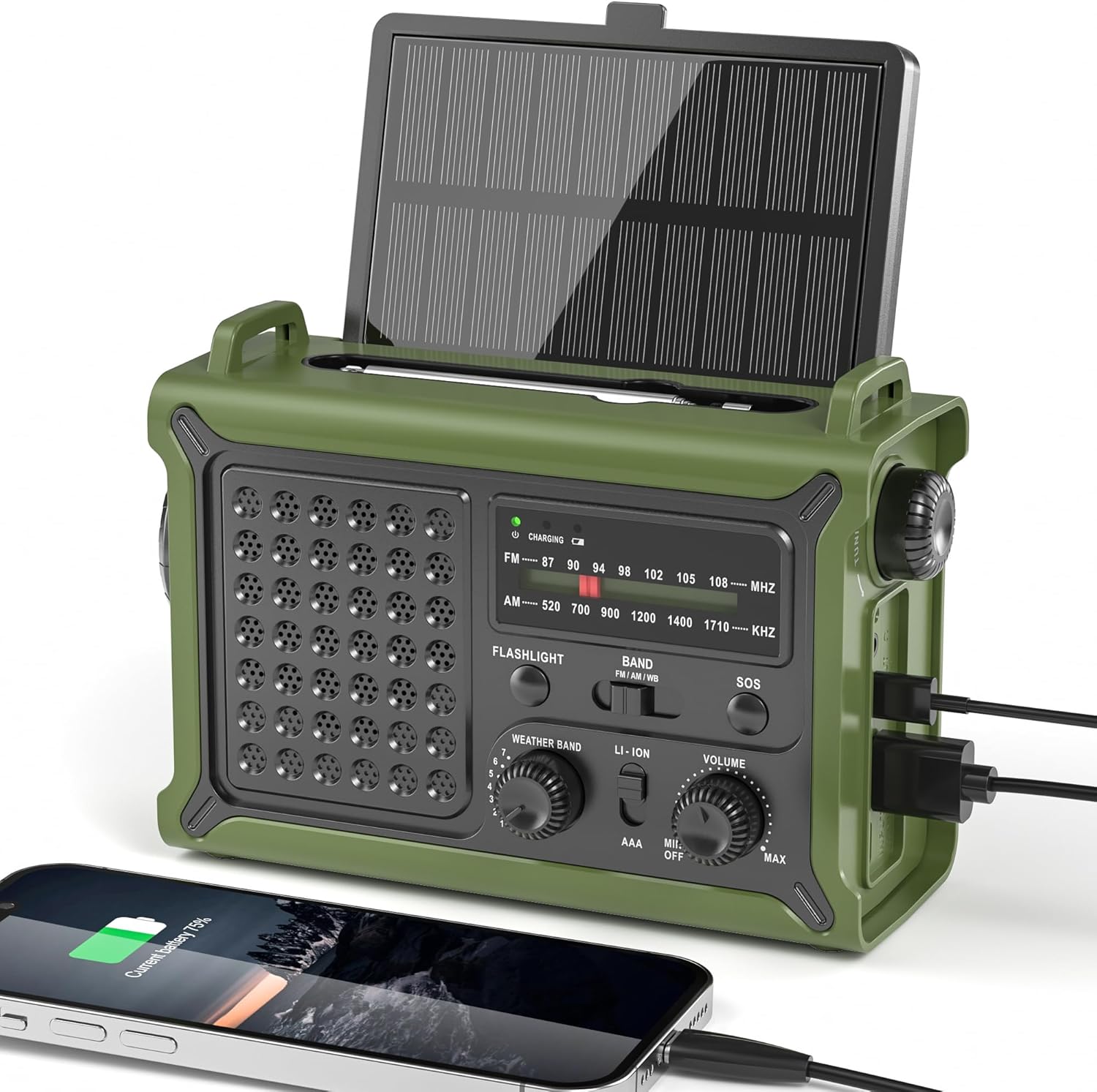
When the power goes out and cell service is down, a hand crank emergency radio gives you access to NOAA weather alerts and local AM/FM broadcasts without relying on wall outlets. Most of these radios also include solar panels, USB ports for phone charging, flashlights, and SOS signals.
The models below were chosen by comparing listing specs and features, not by hands-on testing. Since prices and details change, check each current listing for price, availability, and updated specifications.
The Leaton emergency weather radio packs a massive 10000mAh battery for phone charging, NOAA/AM/FM reception, and multiple charging methods including hand crank and solar. It's an ideal backup radio for hurricane preparedness, camping, and 72-hour emergency kits, though NOAA alerts require manual tuning.
Pros & Cons
Pros
Massive 10000mAh battery capacity for emergency phone charging
Multiple recharging methods including solar, hand crank, and USB-C
Compact, IPX6 water-resistant design with built-in compass
Large buttons and controls for seniors and ease of use
Versatile lighting with flashlight, SOS, and reading lamp
Cons
No automatic NOAA alerts or SAME technology, manual tuning required
Solar charging is slow and not intended as a primary power source
Not designed for immersion or heavy rain despite IPX6 rating
Detailed Review
The Leaton emergency weather radio is a comprehensive survival tool for anyone preparing for hurricanes, winter storms, or outdoor adventures. It combines NOAA/AM/FM reception with a large 10000mAh battery that can provide backup phone charging during power outages.
The standout feature is the massive 10000mAh battery, a significant upgrade from standard emergency radios. It delivers about 1 to 1.5 charges for an iPhone 14, which is realistic for emergency use. Multiple charging options including USB-C input, solar panel, and hand crank ensure you can keep it powered when the grid fails.
Design is compact and weather resistant with an IPX6 rating, meaning it handles splashes and water spray. The built-in compass, three-mode LED flashlight, and reading lamp add practical utility for camping and power outages. Large controls make it accessible for seniors and those with limited dexterity.
One important note is that NOAA reception requires manual tuning. There is no SAME technology or automatic weather alerts, so you need to locate your local NOAA station manually. Solar charging is more of a trickle charge, and the hand crank requires steady effort, though about one minute of cranking gives 15 to 20 minutes of radio time.
Overall, the Leaton emergency radio offers excellent value for its price point. It is not a replacement for a smart weather radio with automatic alerts, but as a reliable backup power source, lighting, and AM/FM/NOAA radio for emergencies, camping, and 72-hour kits, it is a solid choice.
Specifications
Battery: 10000mAh rechargeable polymer battery. USB output: 5V/1A for emergency phone charging. USB-C input for recharging.
Radio: AM 520-1710kHz, FM 87-108MHz, NOAA 162.400-162.550MHz. Requires manual tuning for NOAA stations.
Lighting: 20-LED flashlight with high, low, and SOS modes, plus a 48-LED reading lamp. Additional features include a built-in compass and IPX6 water resistance.
Dimensions: approximately 6.2 inches long, 2.5 inches wide, 3.9 inches high. Weight: about 1.1 pounds.
The Mesqool Solar Emergency Radio is a reliable 5-way powered weather radio with a true 12000mAh battery, large solar panel, and efficient hand crank. It delivers clear NOAA/AM/FM reception and is ideal for emergency preparedness, camping, and off-grid use.
Pros & Cons
Pros
True 12000mAh battery capacity (not inflated)
Fast solar charging with large monocrystalline panel
Efficient hand crank generator with 2x efficiency
Clear NOAA/AM/FM reception with noise reduction
Versatile dual LED lights (flashlight and reading lamp)
Cons
Slightly heavier than some compact radios (1.6 pounds)
Analog display may not be as precise as digital tuners
Solar charging speed depends on sunlight; hand crank requires physical effort
Detailed Review
The Mesqool Solar Emergency Hand Crank Radio is a comprehensive survival tool designed for anyone who needs reliable communication and power during emergencies, camping trips, or off-grid adventures. It combines a true 12000mAh battery, large solar panel, and efficient hand crank to keep you connected and safe.
Its standout feature is the oversized 8500mm monocrystalline solar panel, which charges four times faster than typical panels. The high-torque hand crank with upgraded generator can power your phone in just three minutes. Clear NOAA, AM, and FM reception with noise reduction ensures you hear weather alerts and news loud and clear.
The radio is built with an ergonomic design featuring a large tuning knob, responsive buttons, and a non-slip grip. It includes a powerful flashlight beaming up to 260 feet and a soft reading lamp. The rugged ABS construction is water-resistant, making it suitable for harsh conditions.
One potential drawback is its weight of 1.6 pounds, which is heavier than some pocket-sized radios. The analog display may not be as precise as digital tuners. Solar charging speed varies with sunlight, and hand cranking requires physical effort, but these are acceptable trade-offs for a reliable emergency device.
Overall, the Mesqool Solar Emergency Radio offers exceptional value for emergency preparedness. With its true battery capacity, multiple power sources, and clear reception, it is a top choice for families, campers, and anyone building a survival kit. The 3-year warranty adds peace of mind.
The Raynic Emergency Weather Radio is a versatile NOAA alert radio with a 12000mAh backup battery, solar and hand crank charging, and a built-in power bank for phones. It is a solid choice for campers, hikers, and anyone building an emergency preparedness kit.
Pros & Cons
Pros
Automatic NOAA weather alerts even in standby mode
Six way charging plus a large 12000mAh battery
Can charge USB devices in an emergency
Built-in flashlight, reading lamp, and SOS siren
Compact, water-resistant, and easy to carry
Cons
AAA batteries are not included
Solar charging is slow and best used as a backup
Hand cranking takes effort and time to add meaningful charge
Detailed Review
The Raynic CR1009 emergency weather radio is a compact preparedness tool designed for people who take severe weather seriously. It combines NOAA alerts, AM/FM/SW reception, and multiple charging methods in a rugged, portable shell. Whether you are camping, hiking, or building a home emergency kit, this radio helps you stay informed when the power goes out.
The automatic NOAA alert feature is the standout. In standby mode it scans for emergency warnings and sounds an alert, so you do not need to monitor the broadcast around the clock. The 12000mAh battery also acts as a power bank to charge your phone, and the solar panel and hand crank give you emergency power options when outlets are unavailable.
The olive green, rugged design is water resistant and weighs just over a pound, making it easy to grab on the way out the door. The large HD LCD screen shows battery level and tuning frequency, and the digital tuner makes finding stations simple. A built-in flashlight, reading lamp, and SOS siren add practical safety features in a dark or dangerous situation.
No product is perfect. The radio requires AAA batteries for one of its six charging options and those are not included. Solar and hand crank charging are useful backups, but they are slower than AC or USB charging, so they work best for topping off rather than a full charge.
For the price, the Raynic CR1009 is a well-rounded emergency weather radio with strong battery capacity and NOAA alert capability. It is a smart purchase for anyone who wants reliable weather information and a way to power small devices during an emergency. Keep it in your go bag or by your bedside and you will be ready when severe weather strikes.
The Esky Emergency Hand Crank Radio is a compact, reliable survival tool that combines AM/FM/NOAA weather alerts, a 140-lumen LED flashlight, and SOS alarm in a lightweight, portable design. Ideal for campers, preppers, and anyone seeking dependable emergency preparedness gear.
Pros & Cons
Pros
Multiple charging options ensure you're never without power
Compact and lightweight, easy to store in a go-bag or glove compartment
NOAA weather alerts keep you informed of severe weather
Bright flashlight and SOS alarm enhance safety in emergencies
Long battery life, with up to 20 hours of flashlight use
Cons
Solar charging is slow and requires direct sunlight for effective use
Hand crank charging is manual and can be tiring for extended use
No digital display, making tuning less precise
Detailed Review
The Esky Emergency Hand Crank Radio is a versatile survival companion that combines essential communication tools with practical lighting. Designed for outdoor enthusiasts, preppers, and families preparing for emergencies, this compact device offers AM/FM and NOAA weather bands, a powerful LED flashlight, and an SOS alarm, all powered by a rechargeable 2000mAh battery.
One of its standout features is the triple charging capability: hand crank, solar panel, and USB Type-C. This ensures you can keep the radio operational even when traditional power sources are unavailable. In real-world use, the hand crank provides a quick power boost, while the solar panel is ideal for extended outdoor trips. The battery life is impressive, offering up to 20 hours of flashlight use or 9 hours of radio on a full charge.
Design and build quality are solid for the price point. The radio is lightweight (7.55 ounces) and compact, easily fitting into a pocket or emergency kit. The 140-lumen LED flashlight is surprisingly bright for its size, and the SOS alarm is loud enough to attract attention. The lanyard adds convenience for carrying.
However, there are a few drawbacks. Solar charging is slow and requires direct sunlight, which may not always be available. The hand crank can be tiring if you need to charge the battery fully. Also, the lack of a digital display makes tuning less precise, though this is a minor issue for most users.
Overall, the Esky Emergency Radio is an excellent value for anyone seeking a reliable, multi-functional emergency device. Its combination of weather alerts, lighting, and multiple charging options makes it a must-have for camping, hurricane preparedness, and general emergency readiness. Highly recommended for its affordability and practicality.
The Midland ER310PRO is a versatile emergency radio that doubles as a 10,000 mAh power bank, featuring Bluetooth streaming, solar and hand crank charging, NOAA weather alerts, and a powerful SOS flashlight and siren. Ideal for preppers, campers, and anyone needing reliable communication during outages or outdoor adventures.
Pros & Cons
Pros
Multiple power sources (solar, hand crank, USB) ensure you never run out of battery
Integrated power bank is a lifesaver for charging devices when the grid is down
Bluetooth connectivity adds everyday utility beyond emergency use
NOAA alerts provide critical weather warnings automatically
Bright flashlight and loud siren enhance safety and rescue capabilities
Cons
Plastic enclosure may feel less durable than metal alternatives
Hand crank charging requires effort and time to fully recharge the battery
Solar panel efficiency depends on direct sunlight and may be slow in cloudy conditions
Detailed Review
The Midland ER310PRO is a portable emergency weather radio designed for those who prioritize preparedness without sacrificing everyday convenience. It targets preppers, campers, hikers, and outdoor enthusiasts who need reliable communication and power during power outages, storms or remote trips. With a 10,000 mAh power bank, Bluetooth streaming, and multiple charging options, it stands out as a versatile tool for both emergencies and daily use.
Key features include solar panel and hand crank charging that eliminate reliance on wall outlets. The built-in power bank can charge your phone or tablet quickly, while Bluetooth connectivity lets you stream music from your phone. The NOAA weather scan automatically locks onto the strongest weather channel and alerts with severe alerts. The SOS flashlight with 130 lumens and an ultrasonic rescue dog siren help signal for help. Battery life up to 200 hours in radio mode ensures long lasting performance.
Design and build quality is solid but plastic enclosure may feel less durable than metal. Dimensions 8.1x2.8x3.4 inches, weight unknown. Hand crank requires effort to recharge battery. Solar panel needs direct sunlight. Potential drawbacks include plastic enclosure may feel less durable than metal alternatives. Hand crank charging requires effort to fully recharge battery. Solar panel efficiency depends on direct sunlight and may be slow in cloudy conditions. Overall, Midland ER310PRO is a powerful emergency radio with multiple power sources, Bluetooth streaming and NOAA alerts. It is a versatile tool both emergencies and daily use. It is ideal for preppers campers and anyone needing reliable communication during outages or remote remote trips.
Final verdict recommend if you need a portable emergency weather radio with power bank Bluetooth streaming solar hand crank charging NOAA alerts and SOS flashlight and rescue siren. It is a great choice for those who want everyday utility meets emergency functionality.
The OnLyee Emergency Radio is a reliable, multi-powered weather radio with NOAA alerts, solar and hand crank charging, and a large battery to keep you informed and charged during outages. Ideal for hurricane prep, camping, and emergency kits.
Pros & Cons
Pros
Multiple charging options (solar, hand crank, USB-C) ensure power availability in any situation.
Large 12000mAh battery can charge phones, a critical feature during long outages.
NOAA weather band keeps you informed of severe weather alerts.
IPX6 water resistance adds durability for outdoor use.
High customer rating (4.7/5) indicates reliable performance.
Cons
Hand crank charging is slow and requires effort to fully charge the large battery.
Solar panel efficiency depends on direct sunlight, so cloudy days may limit charging.
The yellow and black color may not appeal to everyone's aesthetic preferences.
Detailed Review
The OnLyee Emergency Radio is a comprehensive survival tool designed for anyone who wants to stay prepared for severe weather, power outages, or outdoor adventures. With NOAA weather band, AM/FM, and multiple power sources, it ensures you're never left in the dark or out of touch.
Its standout feature is the 12000mAh battery, which not only powers the radio and lights but also serves as a power bank for your smartphone. The large 8500mm² solar panel and hand crank provide backup charging, making it a true off-grid companion. The DSP signal processing and 57mm speaker deliver clear audio, so you can hear weather alerts and news crisply.
Design-wise, the radio is compact and rugged, with an IPX6 water-resistant shell that handles rain and splashes. The 5W flashlight and reading lamp are surprisingly bright, and the 120dB SOS alarm adds an extra layer of safety. It's easy to use with intuitive controls and a clear LCD/LED display.
One drawback is that hand crank charging is labor-intensive and slow, and solar charging requires direct sunlight. However, these are common limitations of such devices. Also, the yellow/black color may not match everyone's taste, but it's a practical choice for visibility in emergencies.
Overall, the OnLyee Emergency Radio is a reliable, feature-packed device that offers excellent value for its price. It's a must-have for hurricane season, camping trips, or any emergency preparedness kit. Highly recommended for families, outdoor enthusiasts, and anyone who values peace of mind.
This iRonsnow solar hand crank weather radio is a compact, reliable emergency companion with NOAA alerts, a bright LED flashlight, and a 2000mAh backup charger. Ideal for camping, outdoor adventures, and emergency preparedness, its multiple power sources ensure you stay informed and connected when it matters most.
Pros & Cons
Pros
Reliable NOAA weather alerts keep you informed during emergencies.
Multiple power sources (solar, hand crank, USB-C) ensure you're never without power.
Built-in 2000mAh battery can charge your phone in a pinch.
Compact and lightweight design is easy to pack or carry.
Bright LED flashlight with SOS mode enhances safety and visibility.
Cons
Solar charging is slow; it's best as a backup, not a primary power source.
Hand crank charging requires effort and time to get a meaningful charge.
Some users may find the sound quality of the radio speaker to be average.
Detailed Review
The iRonsnow Solar Emergency Hand Crank Weather Radio is a versatile and reliable companion for anyone who values preparedness. Whether you're an avid camper, a hiker, or simply want to be ready for unexpected weather events, this device combines essential communication tools with practical power solutions. Its compact size and lightweight build make it easy to slip into a backpack or emergency kit, ensuring you're never caught off guard.
At the heart of this radio is its ability to keep you informed. With AM/FM and NOAA weather band reception, you can tune into local forecasts and emergency alerts, which is crucial during severe weather like thunderstorms, floods, or hurricanes. The integrated LED flashlight is surprisingly bright, offering three levels of illumination, and the long-press SOS mode provides a flashing beacon to signal for help, adding an extra layer of safety.
The 2000mAh battery is a standout feature, allowing you to charge your smartphone via USB-C when you're away from wall outlets. The hand crank and solar panel offer alternative ways to regenerate power, though these methods require time and effort. The battery level indicator is a thoughtful addition, so you always know how much juice you have left, preventing unexpected power loss.
Build quality is solid for the price, with a durable plastic housing that's water-resistant and dust-resistant. The controls are straightforward, and the compact design makes it easy to operate even with gloves on. One minor drawback is that solar charging is quite slow, so it's best used as a backup rather than a primary charging method. Additionally, the speaker quality is adequate for news and alerts but not for music enthusiasts.
Overall, the iRonsnow emergency weather radio offers excellent value for its price. It's a dependable tool for emergency preparedness, outdoor adventures, and everyday peace of mind. If you're looking for a portable, multi-functional radio that can keep you connected and informed, this is a worthy investment.
Specifications
Brand: iRonsnow Model: IR-088 Color: Red Dimensions: 5" L x 1.8" W x 2.4" H Weight: 7.84 ounces Battery: 2000mAh Li-Polymer (included) Power Sources: USB-C, hand crank, solar Radio Bands: AM, FM, NOAA/Weather (7-band) Flashlight: 1W LED, 3 brightness levels + SOS mode Charging Output: USB-C for smartphones Water Resistance: Water-resistant Warranty: 2-year exchange
Buyer Guide
When choosing an emergency weather radio, consider the following factors:
Power Options: Look for multiple ways to power the radio, such as solar, hand crank, and USB. This ensures you can recharge even when the grid is down.
NOAA Alerts: Ensure the radio receives NOAA weather bands for critical alerts in your area.
Battery Capacity: A higher mAh rating means more phone charges. The 2000mAh in this model is sufficient for a single emergency charge.
Portability: Compact and lightweight designs are easier to store and carry.
Extra Features: A flashlight and SOS alarm add significant value for safety.
This iRonsnow radio ticks all these boxes, making it a great choice for emergency kits, camping, and outdoor use.
The Nitigo Emergency Weather Radio is a reliable, multi-powered NOAA weather alert radio with a 4000mAh battery, solar and hand crank charging, and AM/FM bands. Its standout quality is the combination of multiple power sources and a high-gain antenna for clear reception, making it an essential survival gear for families and outdoor enthusiasts.
High-gain antenna provides excellent signal reception and clear audio.
4000mAh battery can charge smartphones, adding extra utility.
Built-in flashlight, reading lamp, and SOS alarm enhance safety.
Compact and lightweight design for easy portability.
Cons
The hand crank can be somewhat stiff initially, requiring some effort to generate power.
The plastic construction may feel less durable compared to premium models.
The AM/FM reception may vary in areas with weak signals, though the antenna helps.
Detailed Review
The Nitigo Emergency Weather Radio is a versatile and reliable device designed for disaster preparedness and outdoor adventures. It is perfect for families living in areas prone to severe weather, campers, hikers, and anyone who wants a dependable backup during power outages.
Its standout features include the ability to charge via solar panel, hand crank, or USB, ensuring it never runs out of power. The adjustable high-gain antenna provides exceptional reception for NOAA, AM, and FM bands, delivering clear audio even in remote locations. The built-in 4000mAh battery can also charge your smartphone, adding critical connectivity during emergencies.
The radio is compact and lightweight, making it easy to pack in a bug-out bag or glove compartment. It includes a bright LED flashlight, a 180-degree rotating reading lamp, and a loud SOS alarm with flashing light for safety. The red ABS plastic construction feels sturdy enough for regular use, though it is not indestructible.
One potential drawback is that the hand crank requires some effort to generate a full charge, and the plastic build may not withstand extreme drops. Additionally, AM/FM reception can be weaker in deep valleys or urban areas, but the antenna helps mitigate this.
Overall, the Nitigo Emergency Weather Radio offers excellent value for its price, combining multiple power sources, clear reception, and essential safety features. It is a smart addition to any emergency kit or outdoor gear collection.
The Sony ICF-B300 is a versatile emergency radio with three charging methods: hand crank, solar, and USB, plus a bright LED light and IPX4 water resistance. Ideal for outdoor and emergency use.
Pros & Cons
Pros
Multiple charging methods: hand crank, solar, and USB Type-C.
Water-resistant IPX4 rated for splashes.
Bright LED flashlight with spotlight function.
Easy electronic tuning with FM/AM bands.
Includes internal rechargeable battery included.
Cons
Only AM/FM bands, no NOAA weather alerts.
Price may be high for basic radio features.
VFD display may be hard to read in bright light.
Detailed Review
The Sony ICF-B300 is a portable emergency radio designed for disaster preparedness. It uses hand crank, solar, and USB charging, making it versatile for emergencies. Outdoor enthusiasts, campers, and families will find it reliable radio communications.
The triple charging system works well in real world. The LED light provides a bright beam for night. IPX4 water resistance adds durability.
The compact black body is rugged and easy to hold. The electronic tuning is simple to use. It fits in a small bag.
The radio only receives AM and FM frequencies. There is no NOAA weather band. The price is a bit high compared to similar models.
Overall the Sony ICF-B300 is a reliable emergency radio with multiple power options. It is a solid choice for those prioritizing preparedness.
For charging a phone, the Leaton lists a USB output of 5V/1A. The vokida, Esky, Nitigo, and iRonsnow also include USB ports for connecting small devices, but output specifications are not always listed. Check the product listing to see whether a model lists the amperage for its USB output.
NOAA Weather Reception and Alerts
NOAA weather band reception tells you what weather warnings are active, but alert behavior differs. The Raynic automatically scans for emergency and weather alerts when the device is on or in standby. The vokida automatically scans through seven weather band channels. The Midland NOAA Weather Scan locks onto the strongest weather channel. The OnLyee receives 7 NOAA weather broadcasts but says it must be powered on and tuned to a NOAA station. The Leaton offers NOAA reception with manual tuning and does not support automatic alerts, so you need to rotate the tuning knob to find the clearest station.
If you plan to rely on NOAA alerts while sleeping, look for a model that mentions automatic scanning. For radios that require manual tuning, you will need to check the local NOAA frequency before an emergency.
Charging Methods and Hand Crank Output
Most of these radios combine a built-in rechargeable battery with hand crank, solar, and USB input. The Raynic lists six ways to charge: AC adapter, DC 5V USB input, hand crank, solar panel, internal battery, and 3 AAA batteries (not included). The Mesqool also lists 3 AAA batteries as a backup alongside its Type-C input, solar panel, and hand crank. The Sony ICF-B300 Sony ICF-B300 disaster prevention radio supports hand-crank, USB AC, and solar charging. The vokida lists three charging methods: hand crank, solar panel, and internal lithium-ion battery.
Crank efficiency varies. The Leaton states that about 1 minute of steady hand cranking provides 15 to 20 minutes of radio listening, with actual runtime depending on use and cranking speed. The Mesqool states that its high-torque crank can power up the radio or a phone in about 3 minutes. The Midland includes a USB charging cable for its power bank feature and can be recharged by solar panel or hand crank.
Emergency lighting is a key part of these radios. The Leaton includes a 3-mode LED flashlight and a 1.3W reading lamp, plus a compass. The Mesqool lists a flashlight that casts a beam up to 260 feet and a frosted reading lamp with two brightness levels. The OnLyee lists a 5W LED flashlight, a 12-LED reading lamp, and a 120dB SOS alarm. The Raynic has a built-in 3W flashlight and a 2.5W reading lamp. The vokida adds a built-in flashlight, headphone jack, and SOS alarm; it also includes an emergency thermal blanket and a survival paracord bracelet with a compass, blade, whistle, and fire rod. The Esky’s 140-lumen 3-LED flashlight is bright for its compact size, and the Nitigo has a flashlight and a retractable 180-degree rotating reading lamp. The iRonsnow offers an SOS alarm mode and a power level indicator with four lights that show 25, 50, 75, and 100 percent.
Size, Water Resistance, and Portability
Water resistance ratings range from splash-proof to waterproof. The Leaton and OnLyee list IPX6 water resistance, which means protection against water spray and splashing. The Raynic lists IPX3 water resistance, and the vokida is listed as water resistant. The Nitigo is listed as waterproof in its specs. The Esky is small enough to fit in a pocket and measures 5 x 1.8 x 2.4 inches; the iRonsnow lists the same dimensions. The Raynic weighs 1.2 lb and measures 6.8 x 3.7 x 2.9 inches.
If portability is a priority, compare dimensions and weight before buying. Larger batteries and added accessories such as the vokida’s thermal blanket and paracord bracelet make a radio less compact but more useful in a survival kit. For more on building a kit, see How to Build a Preparedness Power Kit.
Turning the crank spins a small generator that charges the internal battery. Some listings give crank time estimates. For example, the Leaton states about 1 minute of steady cranking provides 15 to 20 minutes of radio listening. Check each listing for its own figures.
Do these radios automatically alert me to NOAA weather warnings?
It depends on the model. The Raynic, vokida, and Midland list automatic NOAA scanning features, while the Leaton requires manual tuning and does not support automatic alerts. Read the listing carefully to see if automatic alarms are included.
Can I use a hand crank emergency radio to charge my phone?
Many of these radios include USB ports for charging small devices. The Leaton lists a USB output of 5V/1A, and the vokida, Esky, Nitigo, and iRonsnow list USB connectivity. Output amperage is not always listed, so verify the listing before relying on it.
Are these radios waterproof?
Ratings differ. The Leaton and OnLyee list IPX6 water resistance, the Raynic lists IPX3, and the vokida and Nitigo are listed as water resistant or waterproof in their specs. The Leaton’s listing specifically says it is not intended for heavy rain, immersion, or underwater use, so check the exact wording for each model.
About Rowan Calloway
Rowan researches and writes buying guides and how-to articles on off-grid power for camping, rv & vanlife. Picks are based on product specifications, brand reputation and patterns in owner feedback, and are updated as new models come out.
Learn how to choose and power a ceiling fan for camping, with wattage math, battery runtime examples, mounting tips and common mistakes to avoid on your next tr
Learn how RV power surge protection works, what to look for in a 30 amp surge protector, and how to install one to guard your RV electronics at campsites.
Shopping for a power cord for RV use? Compare five extension and plug-in cords by amperage, length, and build so you can connect safely at any campsite.
Learn how to choose and run a 12V upright fridge freezer in a caravan. Compare sizes, power draw, battery needs and placement to keep food cold off-grid.

 By Rowan Calloway