 By Lauren Holland
Updated November 2026
Choosing a power inverter for car amplifier use is less about the highest wattage on the box and more about matching the inverter’s continuous output, surge handling and wiring to the amp you actually run. Most car inverters convert 12-volt DC from the battery into 110–120-volt AC, which is what a household-style device expects. A car audio amplifier, however, runs on 12-volt DC already, so the inverter is usually a workaround for a bench or portable setup rather than a direct fit. The six picks below were selected on published specifications, brand reputation and common owner feedback patterns. We did not test these units ourselves, and every listing should be checked against the amplifier’s own power label before you buy.
Our top picks at a glance
- 1
 TOP CHOICEBest overallVANSOET 400W Power Inverter for Vehicles 12V to 110V Inverter[Black]View on Amazon
- 2
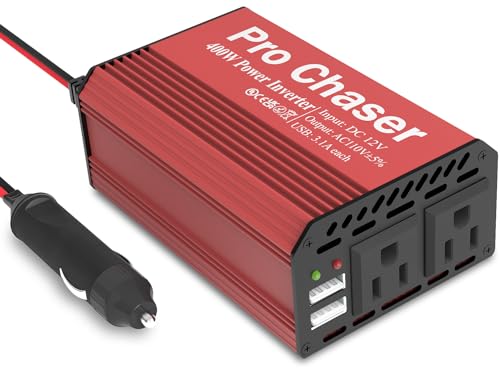 TOP CHOICEBest for dual-device chargingPro Chaser 400W Power Inverters for Vehicles DC 12v to AC 110v Car InvView on Amazon
- 3
 TOP CHOICEBest budget pickiSaddle AC to DC Car Cigarette Lighter Socket Adapter Converter 12V 50View on Amazon
- 4
 Best for higher wattage1000W Power Inverter 12V to 110V/120V,Power Inverters for Vehicles | 1View on Amazon
- 5
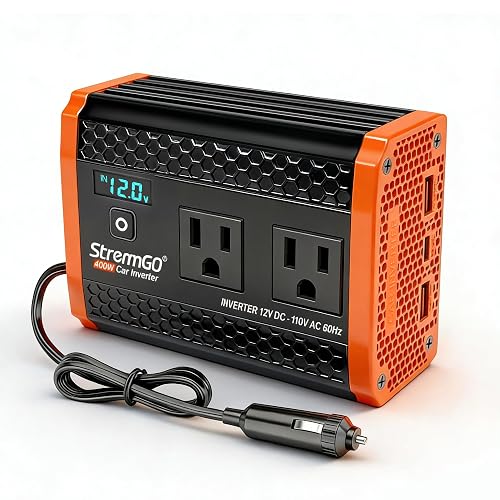 Best for camping setupsUSB 24W/30W Fast Charge, Inverter 12V to110V, Cigarette Lighter AdapteView on Amazon
- 6
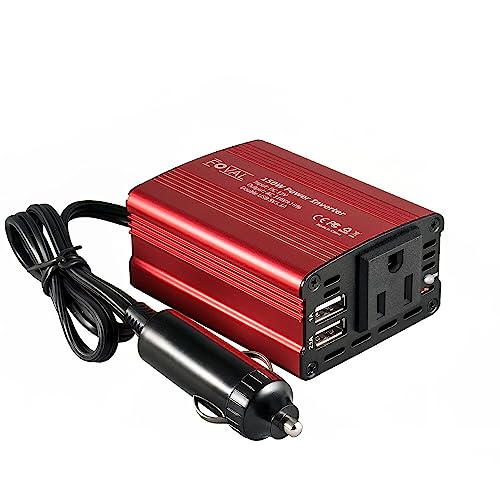 Best for light loadsFOVAL 150W Car Power Inverter 12V DC to 110V AC Converter Vehicle AdapView on Amazon
Our Top Picks
Quick Comparison
| Product | Best for | Key feature |
|---|---|---|
| VANSOET 400W Power Inverter for Vehicles | General-purpose use | 400W rated output, 12V to 110V |
| Pro Chaser 400W Power Inverter for Vehicles | Dual-device charging | 400W output with 6.2A dual USB ports |
| iSaddle AC to DC Car Cigarette Lighter Adapter | Budget setups | Low-wattage 12V socket adapter |
| 1000W Power Inverter 12V to 110V/120V | Higher wattage loads | 1000W output, three AC outlets |
| 400W Power Inverters Dual AC Car Plug Adapter | Camping and road trips | Dual AC outlets with USB-C PD |
| FOVAL 150W Car Power Inverter | Light, small loads | 150W output with dual USB |
VANSOET 400W Power Inverter for Vehicles 12V to 110V Inverter[Black]
VANSOET 400W Power Inverter for Vehicles 12V to 110V Inverter[Black]
VANSOET 400W Power Inverter for Vehicles 12V to 110V Inverter[Black]
Best for: General-purpose low-to-mid power use in a vehicle
This suits someone who wants a single, straightforward inverter for a small amplifier, a pump or a few electronics on a road trip. It is a good starting point if you are not yet sure how many watts your gear draws.
Key specs
- Rated output: 400W
- Input: 12V DC
- Output: 110V AC
Pros
- Simple 12V to 110V design
- 400W rating covers many small loads
- Compact black housing
Cons
- Limited headroom for high-surge amplifiers
- Owners often recommend a heavy-gauge wiring kit for steady use
Bottom line: A sensible first inverter for light, mixed loads. Choose it if your amplifier’s real draw is well under 400W.
View on Amazon
Pro Chaser 400W Power Inverters for Vehicles DC 12v to AC 110v Car Inverter | Car Converter, 6.2A Dual USB Charging Ports, Dual AC Adapter for Laptops Air Compressor
Pro Chaser 400W Power Inverters for Vehicles DC 12v to AC 110v Car Inverter | Car Converter, 6.2A Dual USB Charging Ports, Dual AC Adapter for Laptops Air Compressor
Pro Chaser 400W Power Inverters for Vehicles DC 12v to AC 110v Car Inverter
Best for: Dual-device charging alongside a small audio load
This fits someone running a small amp or subwoofer while also charging phones or a laptop. The added USB ports reduce the need for a separate charger.
Key specs
- Rated output: 400W
- USB charging: 6.2A dual ports
- AC outputs: dual adapter
Pros
- Dual USB ports useful for phones and tablets
- Dual AC outlets for multiple devices
- Clear 400W rating on the listing
Cons
- Shares the 400W budget across all outlets
- Owners report it runs warm under sustained load
Bottom line: Good for a mixed setup where charging matters as much as power. Keep total draw well under 400W.
View on Amazon
iSaddle AC to DC Car Cigarette Lighter Socket Adapter Converter 12V 500mA | US Plug 110V AC to 12V DC, Universal Vehicle Power Inverters Vehicle Amplifier Power Car Refrigerator
iSaddle AC to DC Car Cigarette Lighter Socket Adapter Converter 12V 500mA | US Plug 110V AC to 12V DC, Universal Vehicle Power Inverters Vehicle Amplifier Power Car Refrigerator
iSaddle AC to DC Car Cigarette Lighter Socket Adapter Converter 12V 500mA
Best for: Budget setups with very small loads
This is best for someone who only needs to run a tiny accessory or a low-draw device. It is a converter adapter rather than a high-output inverter, so it fits light use only.
Key specs
- Output: 12V DC, 500mA
- Input: 110V AC
- Plugs into a cigarette lighter socket
Pros
- Low cost of entry for light use
- Small and easy to stow
- Simple plug-in operation
Cons
- Output is far too low for most amplifiers
- Not a true high-wattage inverter
Bottom line: Only suitable for very small accessories. Pick a larger inverter for any real amplifier work.
View on Amazon
1000W Power Inverter 12V to 110V/120V,Power Inverters for Vehicles | 1000W Car Power Inverter, 2 Cigarette Lighter Ports, 3 AC Outputs, 2 USB-A 24W, 1 USB-C PD 30W, Flameproof, LED Display
1000W Power Inverter 12V to 110V/120V,Power Inverters for Vehicles | 1000W Car Power Inverter, 2 Cigarette Lighter Ports, 3 AC Outputs, 2 USB-A 24W, 1 USB-C PD 30W, Flameproof, LED Display
1000W Power Inverter 12V to 110V/120V, Power Inverters for Vehicles
Best for: Higher wattage loads and multiple outlets
This suits a user who needs more headroom, such as a larger amplifier, a small appliance or several devices at once. The higher rating gives more margin for startup surges.
Key specs
- Rated output: 1000W
- Input: 12V DC
- Output: 110–120V AC, three AC outlets
- USB-A 24W x2, USB-C PD 30W x1
Pros
- 1000W rating for demanding loads
- Multiple AC and USB outputs
- LED display for monitoring
Cons
- Heavier and bulkier than 400W units
- Requires heavy-gauge cabling and a robust battery connection
Bottom line: The right pick when your amplifier and accessories need real headroom. Make sure your wiring can carry the current.
View on Amazon
USB 24W/30W Fast Charge, Inverter 12V to110V, Cigarette Lighter Adapter for Laptop/Camping/Road Trippers 400W Power Inverters for vehicle Dual AC Car Plug Adapter Outlet
USB 24W/30W Fast Charge, Inverter 12V to110V, Cigarette Lighter Adapter for Laptop/Camping/Road Trippers 400W Power Inverters for vehicle Dual AC Car Plug Adapter Outlet
400W Power Inverters for Vehicle Dual AC Car Plug Adapter Outlet
Best for: Camping and road trip setups
This fits a camper who wants dual AC outlets plus fast USB charging for a laptop or phone while parked. The 400W rating suits lights, fans and small electronics.
Key specs
- Rated output: 400W
- USB: 24W/30W fast charge
- Input: 12V DC, output: 110V AC
Pros
- Dual AC outlets for camping gear
- USB-C fast charging
- Good match for light campsite loads
Cons
- 400W is not enough for large amplifiers
- Owners recommend running it with the engine on
Bottom line: A practical choice for campers with light electronics. Pair it with a battery monitor to avoid draining the starting battery.
View on Amazon
FOVAL 150W Car Power Inverter 12V DC to 110V AC Converter Vehicle Adapter Plug Outlet with 3.1A Dual USB Car Charger for Laptop Computer (Classic Red)
FOVAL 150W Car Power Inverter 12V DC to 110V AC Converter Vehicle Adapter Plug Outlet with 3.1A Dual USB Car Charger for Laptop Computer (Classic Red)
FOVAL 150W Car Power Inverter 12V DC to 110V AC Converter Vehicle Adapter
Best for: Light, small loads and laptop charging
This suits someone who mainly charges a laptop or runs a small device and wants a compact unit. It is too small for a serious amplifier but works for minor needs.
Key specs
- Rated output: 150W
- USB: 3.1A dual ports
- Input: 12V DC, output: 110V AC
Pros
- Compact and lightweight
- Dual USB charging
- Low power draw from the battery
Cons
- 150W cap rules out most amplifiers
- Limited for multiple high-draw devices
Bottom line: Best for light charging and small accessories. Not the right tool for powering an amplifier.
View on AmazonBuying Guide
Match the Inverter Wattage to Your Amplifier
Check the amplifier’s RMS power rating and its current draw at your listening volume. An inverter should have a continuous rating comfortably above that draw. Many people size up by about 20–25 percent to leave room for surges.
Good picks for this: 1000W Power Inverter 12V to 110V/120V, VANSOET 400W Power Inverter for Vehicles
Check Surge Capacity
Amplifiers and motors draw more power at startup than during steady operation. Look for a surge rating in the spec sheet, and confirm it is listed in addition to the continuous rating.
Good picks for this: 1000W Power Inverter 12V to 110V/120V, Pro Chaser 400W Power Inverter for Vehicles
Wiring Gauge and Fuse Protection
High-current inverters need short, thick cables and an inline fuse close to the battery. Undersized wire causes voltage drop and heat. Refer to the manufacturer’s recommended gauge for the rated output.
Good picks for this: 1000W Power Inverter 12V to 110V/120V, 400W Power Inverters for Vehicle Dual AC Car Plug Adapter Outlet
Use Case and Outlet Needs
Decide how many devices you will run at once and whether you need AC outlets, USB ports or both. Dual-outlet and USB-equipped units are convenient for camping, while single-purpose units suit bench work.
Good picks for this: 400W Power Inverters for Vehicle Dual AC Car Plug Adapter Outlet, Pro Chaser 400W Power Inverter for Vehicles
Size and Installation Fit
Measure the space where the inverter will sit. Compact units fit under seats or in cargo areas, while larger units may need a fixed mounting location with ventilation.
Good picks for this: FOVAL 150W Car Power Inverter 12V DC to 110V AC, VANSOET 400W Power Inverter for Vehicles
Cooling and Heat Management
Inverters generate heat under load. Choose a unit with adequate ventilation and avoid sealing it inside a cabinet. Owners often report higher temperatures during sustained high-wattage use.
Good picks for this: Pro Chaser 400W Power Inverter for Vehicles, 1000W Power Inverter 12V to 110V/120V
Battery Drain and Runtime
An inverter running an amplifier can drain a starting battery quickly. Estimate runtime from battery amp-hours and the inverter’s draw, and consider a dedicated auxiliary battery for longer sessions.
Good picks for this: 400W Power Inverters for Vehicle Dual AC Car Plug Adapter Outlet, FOVAL 150W Car Power Inverter 12V DC to 110V AC
FAQ
Can I run a car amplifier from a power inverter?
Yes, but it is an indirect setup. The car amplifier already runs on 12V DC, so an inverter is usually used to power an AC-input amplifier or a bench setup. Confirm the amplifier’s input requirements first.
How many watts do I need for a car amplifier?
Use the amplifier’s measured current draw at your typical volume, then add margin for surges. For most mid-size amplifiers, a continuous rating of at least 400W to 1000W is a common starting point, depending on the load.
Will an inverter drain my car battery?
It can, especially with the engine off. Running the engine during heavy use and monitoring battery voltage helps prevent a dead starting battery. A battery monitor is a practical addition.
Do I need heavy-gauge wire for a power inverter?
For higher-wattage inverters, yes. Thin cables cause voltage drop and overheating. Follow the manufacturer’s recommended gauge and include an inline fuse close to the battery.
Can I plug an inverter into the cigarette lighter socket?
Low-output units often do, but a cigarette lighter socket is typically limited to around 10–15 amps. High-output inverters should connect directly to the battery terminals, not a fuse-limited socket.
Is a power inverter safe to use in a car?
It can be, when sized correctly, fused properly and kept ventilated. Avoid overloading the unit. For wiring and installation questions, consult a qualified automotive electrician.
Conclusion
For most people, the VANSOET 400W Power Inverter for Vehicles is a sensible general-purpose starting point, while the 1000W Power Inverter 12V to 110V/120V fits users who need more headroom for demanding loads. The Pro Chaser 400W and 400W Dual AC Car Plug Adapter suit mixed charging and camping setups. The iSaddle adapter and FOVAL 150W unit are best reserved for light accessories rather than amplifiers. Match the continuous rating and surge capacity to your real load, and wire it properly.
Sources
- Basic information on battery types, energy storage and safe electrical practices for vehicle power systems (energy.gov)
- Electrical safety standards and guidance relevant to inverter use and fire-prevention practices (nfpa.org)
- Consumer product safety information on electrical devices and overheating risks (cpsc.gov)
Related reading
- Wiring Power Inverter to Car Battery: A Step-by-Step Guide for Camping
- Will a Power Inverter Kill a Car Battery? How to Prevent It (2026)
- Will a Power Inverter Hurt My Car? How to Avoid Battery Drain (2026)
- What Is a Car Power Inverter Used For? Uses, Limits and Safe Tips
- USB Power Inverter for Car: How to Choose, Wire and Use One Safely
- Top 7 Car Power Inverters for TV Options for Road Trips and Camping
About Lauren Holland
Lauren Holland is part of our editorial team and reviews and edits our off-grid power for camping, RV & vanlife guides, checking product details against manufacturer specifications and owner feedback.