 By Lauren Holland
Updated November 2026
Choosing a 30 amp RV power converter charger comes down to three things: how much DC output you need, whether your house batteries are lead-acid or lithium, and how much AC load your trailer or motorhome will pull from shore power. This list compares four units across those criteria. We looked at manufacturer specifications, brand reputation for RV electrical gear, and the patterns owners tend to describe in their feedback, including charging behavior, fan noise, and how well the unit handles a 30 amp pedestal. None of these picks have been bench-tested by us, so treat the details as a starting point and check the specs against your own system.
Our top picks at a glance
- 1
 TOP CHOICEBest overallWF-8735-AD 30 Amp RV Converter Charger Power CenterView on Amazon
- 2
 Best for smart chargingVEVOR RV Power Converter 35 AmpView on Amazon
- 3
 Best for a full power centerPowerMax PPC-30-55LK RV Power CenterView on Amazon
- 4
 Best budget pickPowerMax PM4-35LK 35A 12V RV Converter ChargerView on Amazon
Our Top Picks
Quick Comparison
| Product | Best for | Key feature |
|---|---|---|
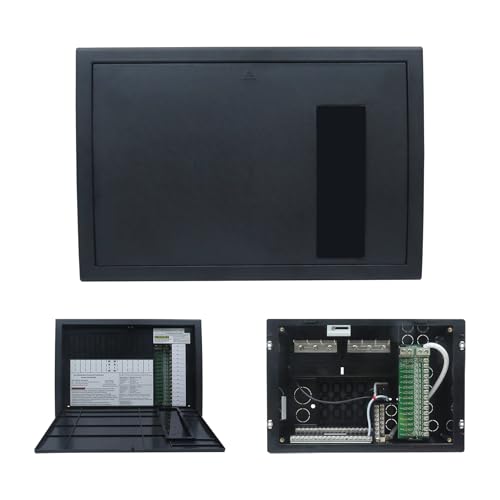
| WF-8735-AD 30 Amp RV Converter Charger Power Center | Most 30 amp trailers with a mixed battery setup | Auto-detect 30 amp input with 35 amp DC output |
| VEVOR RV Power Converter 35 Amp | Owners who want automatic charge profiles | 4-stage smart charging with a 13V to 16.5V range |
| PowerMax PPC-30-55LK RV Power Center | Rigs that need AC distribution and DC charging in one unit | 30A AC panel with a 55A converter and 11 DC fuse circuits |
| PowerMax PM4-35LK 35A 12V RV Converter Charger | Budget-conscious upgrades and lithium-compatible setups | Smart or fixed 13–16.5V output selectable by the user |
WF-8735-AD 30 Amp RV Converter Charger Power Center
WF-8735-AD 30 Amp RV Converter Charger Power Center Support Auto Detect,WF-8735 Battery Charger Suitable for RV,Camper,Caravans,Travel Trailer, 35 Amp DC Output
Best for: Most 30 amp trailers with a mixed battery setup
This unit suits owners who want a straightforward converter that detects a 30 amp shore connection and feeds a 12V DC system without a lot of configuration. It is aimed at travel trailers, campers and caravans of typical size.
Key specs
- Input: 30 amp shore power
- DC output: 35 amp
- Auto-detect function on the listing
Pros
- Auto-detect simplifies setup on a standard 30 amp pedestal.
- Output rating is suitable for recharging a typical house battery bank.
- Listed as suitable for RVs, campers and caravans, covering a range of rigs.
Cons
- Owners who run lithium banks should confirm charge profile compatibility before installing.
- Installation is a wiring job that most owners hand to a technician.
Bottom line: A solid pick for owners who want a direct replacement or upgrade on a 30 amp trailer and do not need extra panel features.
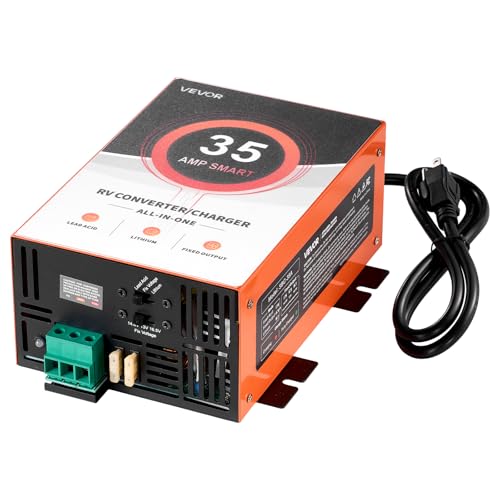
View on AmazonVEVOR RV Power Converter 35 Amp
VEVOR RV Power Converter, 35 Amp, 110V AC to 12V DC RV Converter Battery Charger, 4 Stage Smart Charging, 13V to 16.5V Operating Range, Compatible with Lithium Lead Acid Battery, for Camper Trailer
Best for: Owners who want automatic charge profiles
This converter fits campers who prefer a charger that adjusts its output to the battery state rather than running a fixed voltage. It is listed for lithium and lead-acid batteries, which makes it a flexible choice for mixed systems.
Key specs
- Input: 110V AC
- Output: 12V DC, 35 amp
- Operating range: 13V to 16.5V
- 4-stage smart charging
Pros
- Four-stage charging is well suited to lead-acid batteries that benefit from absorption and float phases.
- Listed compatibility with lithium and lead-acid chemistries.
- Wide 13V to 16.5V operating range gives flexibility.
Cons
- Owners sometimes mention that fan noise is noticeable in quiet campsites.
- Lithium users should match the charge curve to their battery manufacturer’s recommendation.
Bottom line: Best for campers who want automatic charging across different battery types and are comfortable setting the profile correctly.
View on AmazonPowerMax PPC-30-55LK RV Power Center
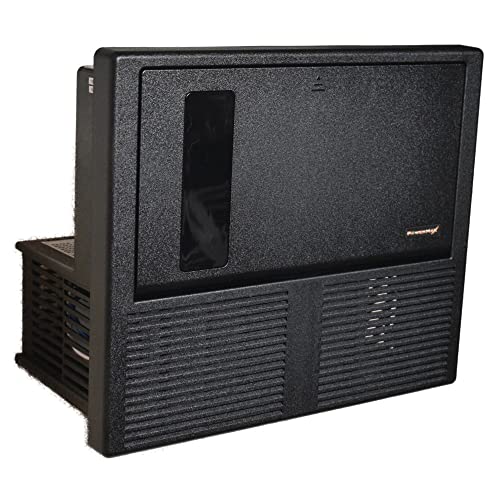
PowerMax PPC-30-55LK RV Power Center, 30A AC Panel & 55A Converter Charger | 30A AC distribution, 55A converter charger, 11 DC fuse circuits, and user-selected fixed-voltage charging for lithium batte
Best for: Rigs that need AC distribution and DC charging in one unit
This is a power center rather than a converter alone. It suits owners who want a single panel handling 30 amp AC distribution along with a 55 amp converter charger and multiple DC circuits.
Key specs
- AC panel: 30A distribution
- Converter charger: 55A
- DC fuse circuits: 11
- User-selected fixed-voltage charging for lithium batteries
Pros
- Combines AC distribution and DC charging, reducing separate components.
- Eleven DC fuse circuits help organize 12V loads.
- Higher 55A output suits larger battery banks.
Cons
- Installation is more involved than a standalone converter and usually needs a qualified installer.
- Larger footprint may not fit tight compartments.
Bottom line: The right choice for owners replacing an entire power panel who want AC and DC management in one upgrade.
View on AmazonPowerMax PM4-35LK 35A 12V RV Converter Charger
PowerMax PM4-35LK 35A 12V RV Converter Charger, Lithium Compatible, 120V AC | 35 Amp, 510W Deck-Mount RV Converter Charger, 120V AC to 12V DC, Smart Charging or Adjustable 13–16.5V Fixed Output
Best for: Budget-conscious upgrades and lithium-compatible setups
This deck-mount converter fits owners who want a compact unit with user-adjustable output. It is a good match for lithium owners who need a fixed voltage setting rather than a lead-acid charge profile.
Key specs
- Input: 120V AC
- Output: 12V DC, 35 amp (510W listed)
- Smart charging or adjustable 13–16.5V fixed output
Pros
- User-selectable fixed output is useful for lithium batteries.
- Deck-mount design suits a compact installation.
- Smart charging mode is available if you prefer automatic behavior.
Cons
- Output is lower than the 55A center above, so it may charge slowly on very large banks.
- Owners should verify the 30 amp input setup and wiring match their pedestal.
Bottom line: A practical option for owners who want lithium compatibility and a deck-mount form factor without the cost of a full power center.
View on AmazonBuying Guide
Output amperage and battery bank size
Match DC output to your battery capacity. A 35 amp converter can recharge a typical bank in a reasonable time, while very large banks benefit from higher output. Divide your amp-hour capacity by the converter output to get a rough recharge estimate, then add margin for real-world losses.
Good picks for this: PowerMax PPC-30-55LK RV Power Center, WF-8735-AD 30 Amp RV Converter Charger Power Center
Battery chemistry compatibility
Lead-acid and lithium batteries want different charge profiles. Confirm whether the unit offers a multi-stage charge or a selectable fixed voltage, and check your battery manufacturer’s recommended voltage before connecting anything.
Good picks for this: VEVOR RV Power Converter 35 Amp, PowerMax PM4-35LK 35A 12V RV Converter Charger
Input configuration and auto-detect
Check whether the unit requires manual setup for a 30 amp input or detects it automatically. Auto-detect reduces setup errors, but confirm the shore connection matches the unit’s rating.
Good picks for this: WF-8735-AD 30 Amp RV Converter Charger Power Center
Physical size and mounting
Measure your compartment before you buy. Deck-mount units are compact, while full power centers take more room and often need a dedicated panel location with clearance for airflow.
Good picks for this: PowerMax PM4-35LK 35A 12V RV Converter Charger, PowerMax PPC-30-55LK RV Power Center
Number of DC circuits and load management
If you run several 12V loads, count the circuits you need. A center with multiple fused DC outputs makes it easier to isolate faults and add accessories later.
Good picks for this: PowerMax PPC-30-55LK RV Power Center
Cooling and noise
Converters with cooling fans can be audible at night. If you camp in quiet sites, check owner comments about fan noise and consider where the unit is mounted relative to sleeping areas.
Good picks for this: VEVOR RV Power Converter 35 Amp, WF-8735-AD 30 Amp RV Converter Charger Power Center
Installation and safety
Wiring a converter involves high-voltage AC and high-current DC connections. Use correctly sized wire and fuses, and have a licensed electrician or RV technician handle the work if you are not confident. Consult a professional before modifying your electrical system.
Good picks for this: PowerMax PPC-30-55LK RV Power Center, PowerMax PM4-35LK 35A 12V RV Converter Charger
FAQ
What does a 30 amp RV power converter charger do?
It converts 120V AC shore power into regulated 12V DC to run your RV’s lights, pumps and fans and to recharge the house batteries. It also powers the 12V side of the rig when you are plugged into a campground pedestal.
Can I use a lithium battery with a standard converter?
Some converters allow a fixed-voltage setting that suits lithium, while others use a lead-acid charge profile. Check the unit’s settings and your battery manufacturer’s voltage recommendations before connecting.
How long does it take to recharge house batteries?
It depends on battery capacity, converter output and how much load is running. Divide amp-hour capacity by converter output as a rough estimate, then allow extra time for absorption charging.
Do I need a professional to install a converter?
Many owners install simple units themselves, but wiring involves high-current and high-voltage connections. Consult a licensed RV technician or electrician if you are unsure.
Will a 30 amp converter run my air conditioner?
No. A converter supplies 12V DC, while air conditioners run on 120V AC and draw far more current than a 30 amp shore connection can supply alongside other loads. Check your AC requirements separately.
Why does my converter make noise?
Many converters use internal cooling fans that run when the unit is working hard, such as during bulk charging. Noise is normal, but a new or unusual sound can indicate a fault and should be checked.
How do I know if my converter is failing?
Signs include batteries that will not hold a charge, flickering 12V lights, or a unit that overheats. Test output voltage with a multimeter and consult a technician if readings fall outside the manufacturer’s range.
Conclusion
For a straightforward replacement on a 30 amp trailer, the WF-8735-AD 30 Amp RV Converter Charger Power Center is a practical starting point. Owners who want automatic charging across battery types should look at the VEVOR RV Power Converter 35 Amp, while those replacing a whole panel will find the PowerMax PPC-30-55LK RV Power Center covers more ground. The PowerMax PM4-35LK 35A 12V RV Converter Charger suits lithium owners who want adjustable fixed output in a compact deck-mount form. Match your choice to your battery chemistry, load and installation space before you buy.
For wider context on RV power planning, see Top 5 55 Amp Power Converters for RV Options Compared (2026), Rv Power Converter Installation: A Step-by-Step Guide for Campers, RV Trailer Power Requirements: How Many Amps You Really Need (2026), and RV Power Converter Problems: 6 Common Faults and How to Fix Them.
Sources
- General guidance on electrical safety and battery energy storage basics (energy.gov)
- Consumer safety information on electrical products and recalls (cpsc.gov)
- Electrical safety codes and standards relevant to RV and shore-power connections (nfpa.org)
Related reading
About Lauren Holland
Lauren Holland is part of our editorial team and reviews and edits our off-grid power for camping, RV & vanlife guides, checking product details against manufacturer specifications and owner feedback.