
 By Lauren Holland
Updated November 2026
An RV battery charger power supply, usually called a converter charger, is the part of your camper’s electrical system that turns 120V shore power into regulated 12V DC. It keeps your house batteries topped up and runs the 12V loads in your rig when you are plugged into a campground outlet. Choosing one comes down to a few practical factors: output amperage, battery chemistry compatibility, charging stages, and how it mounts in your coach. The six units below were compared on manufacturer specifications, brand reputation, and the patterns owners tend to report, not on hands-on testing.
Our top picks at a glance
- 1
 TOP CHOICEBest overallPowerMax PM4-100LK 100A 12V RV Converter Charger, Lithium CompatibleView on Amazon
- 2
 TOP CHOICEBest for lithium house banksWAVLINK 55 Amp RV Power Converter, 120V AC to 12V DC Battery ChargerView on Amazon
- 3
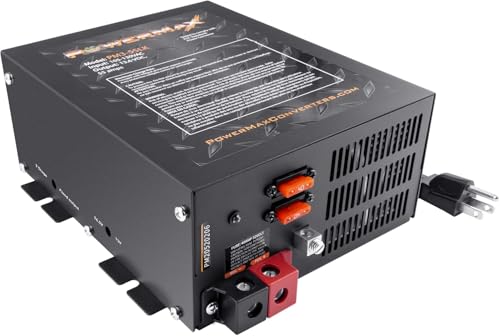 TOP CHOICEBest budget pickPowerMax PM3-55LK 55A 12V RV Converter Charger, Lithium Compatible, 120V ACView on Amazon
- 4
 Best for larger battery banksWAVLINK 80A RV Power Converter, 120V AC to 12V DC Battery ChargerView on Amazon
- 5
 Best for replacement jobsPM4 100 Amp RV Power Converter with Built-in 4 Stage Smart Battery ChargerView on Amazon
- 6Best high-output deck mountPowerMax PM3-100LK 100A 12V RV Converter Charger, Lithium Compatible, AC-DCView on Amazon
Our Top Picks
Quick Comparison
| Product | Best for | Key feature |
|---|---|---|
| PowerMax PM4-100LK 100A 12V RV Converter Charger | Large coaches with mixed battery types | 4-stage smart charging with adjustable lithium mode |
| WAVLINK 55 Amp RV Power Converter | Lithium house banks in mid-size rigs | 3 smart charging modes, 13V–16.5V adjustable range |
| PowerMax PM3-55LK 55A 12V RV Converter Charger | Budget-minded campers with moderate battery needs | Deck-mount design with adjustable 13–16.5V output |
| WAVLINK 80A RV Power Converter | Rigs with larger battery banks | 80A output with multi-stage charging |
| PM4 100 Amp RV Power Converter | Owners replacing an aging converter | 100A output with built-in 4-stage charger |
| PowerMax PM3-100LK 100A 12V RV Converter Charger | Heavy-duty battery banks and high 12V loads | 100A deck-mount with 3-stage smart charging |
PowerMax PM4-100LK 100A 12V RV Converter Charger, Lithium Compatible
PowerMax PM4-100LK 100A 12V RV Converter Charger, Lithium Compatible | 4-Stage Lead-Acid Smart Charging & 13–16.5V Adjustable Fixed Mode for Compatible Lithium/LiFePO4 Batteries
Best for: Overall capacity with flexible battery chemistry support
This unit suits owners who run large lead-acid or lithium battery banks and want one converter that can handle both. It is a good fit for full-timers whose 12V loads, such as residential fridges, water pumps, and slide motors, draw heavily while plugged in.
Key specs
- 100A rated output at 12V DC
- 120V AC input from shore power
- 4-stage smart charging
- Adjustable 13–16.5V range for compatible lithium batteries
Pros
- High output for large battery banks
- Adjustable settings suit both lead-acid and lithium chemistries
- Four charging stages help extend battery life on lead-acid setups
Cons
- Higher output means more heat, so ventilation matters
- Lithium setup requires checking your battery manufacturer’s voltage specs
Bottom line: A strong choice for campers who want maximum capacity and plan to keep both battery options open.
View on AmazonWAVLINK 55 Amp RV Power Converter, 120V AC to 12V DC Battery Charger
WAVLINK 55 Amp RV Power Converter, 120V AC to 12V DC Battery Charger | 3 Smart Charging Modes, 13V-16.5V Adjustable Range, Multi-Stage Charging
Best for: Lithium house banks in mid-size rigs
Owners with a lithium battery bank of moderate size who want adjustable voltage and smart charging modes will find this a practical match. It is also suited to rigs where a 100A unit would be more output than the battery bank can use.
Key specs
- 55A output at 12V DC
- 120V AC input
- 3 smart charging modes
- Adjustable 13V–16.5V range
Pros
- Adjustable voltage range suits lithium charge profiles
- Multi-stage charging protects batteries during bulk and float phases
- Output is sized well for mid-size battery banks
Cons
- Output may be limiting for very large battery banks
- Owners should confirm wiring and fusing match the unit’s rating
Bottom line: A sensible pick for lithium users with a mid-size bank who want adjustable charging without oversizing.
View on AmazonPowerMax PM3-55LK 55A 12V RV Converter Charger, Lithium Compatible, 120V AC
PowerMax PM3-55LK 55A 12V RV Converter Charger, Lithium Compatible, 120V AC | 55A Deck-Mount RV Converter Charger, 3-Stage Smart Charging, Adjustable 13–16.5V Fixed Output, Lithium Compatible Setup
Best for: Budget-minded campers with moderate battery needs
This deck-mount unit is aimed at owners who want a dependable 55A converter without paying for capacity they will not use. It fits well in rigs with a single group of batteries and typical weekend camping loads.
Key specs
- 55A output at 12V DC
- 120V AC input
- 3-stage smart charging
- Adjustable 13–16.5V fixed output setting
Pros
- Right-sized output for common battery banks
- Deck-mount design suits many RV layouts
- Adjustable output supports lithium setups
Cons
- Lower output can lengthen recharge times on large banks
- Lithium use still requires matching settings to your battery’s spec sheet
Bottom line: A practical choice for owners balancing budget and reliable charging on modest battery systems.
View on AmazonWAVLINK 80A RV Power Converter, 120V AC to 12V DC Battery Charger
WAVLINK 80A RV Power Converter 120V AC to 12V DC Battery Charger | 3 Smart Charging Modes, 13V-16.5V Adjustable Range, Multi-Stage Charging
Best for: Rigs with larger battery banks
Campers with two or more group-31 lead-acid batteries or a sizable lithium bank will benefit from the extra headroom of an 80A unit. It also suits owners who run multiple 12V appliances at once while plugged in.
Key specs
- 80A output at 12V DC
- 120V AC input
- 3 smart charging modes
- Adjustable 13V–16.5V range
Pros
- Strong output for larger battery banks
- Adjustable range supports multiple battery chemistries
- Multi-stage charging supports battery health
Cons
- Heavier output generates more heat during long charge cycles
- Installation should be checked against your coach’s circuit ratings
Bottom line: A good middle-to-upper option for owners who need more capacity than a 55A unit provides.
View on AmazonPM4 100 Amp RV Power Converter with Built-in 4 Stage Smart Battery Charger
PM4 100 Amp RV Power Converter – Power Converter with Built-in 4 Stage Smart Battery Charger – Multiple Capacities 100A 110V AC to 12V DC 100 Amp Battery Charger RV Power Converter Replacement
Best for: Owners replacing an aging converter
This replacement-style unit is aimed at owners who need to swap out a worn converter and want a similar high-output profile. It suits those who already know their wiring and mounting layout and want a direct swap.
Key specs
- 100A output at 12V DC
- 110V AC input
- Built-in 4-stage smart battery charger
Pros
- High output for demanding 12V loads
- Four charging stages support lead-acid battery care
- Positioned as a replacement for common converter sizes
Cons
- Fit and wiring should be verified against your existing unit before ordering
- Lithium compatibility should be confirmed with the seller’s listing details
Bottom line: Best for owners doing a like-for-like replacement who have already confirmed fit and wiring.
View on AmazonPowerMax PM3-100LK 100A 12V RV Converter Charger, Lithium Compatible, AC-DC
PowerMax PM3-100LK 100A 12V RV Converter Charger, Lithium Compatible, AC-DC | 100A Deck-Mount RV Converter Charger, 3-Stage Smart Charging, Adjustable 13–16.5V Fixed Output, Lithium Compatible Setup
Best for: Heavy-duty battery banks and high 12V loads
This deck-mount 100A unit suits owners with large battery banks or rigs that run heavy 12V draws while plugged in. It is a fit for those who want high output with a simpler three-stage charge profile.
Key specs
- 100A output at 12V DC
- 120V AC input
- 3-stage smart charging
- Adjustable 13–16.5V fixed output
Pros
- High output for large battery banks and heavy loads
- Deck-mount design suits many coach layouts
- Adjustable output supports lithium configurations
Cons
- Three charging stages offer fewer steps than a 4-stage unit
- High output means careful attention to cable gauge and fusing
Bottom line: A solid high-output choice for owners who need 100A capacity and a deck-mount design.
View on AmazonBuying Guide
Output amperage
Converter output is rated in amps at 12V DC. A common approach is to match output to your battery bank’s capacity and your typical 12V draw. Many owners aim for a charge rate roughly 10–30% of their battery amp-hour rating as a starting point, but the battery manufacturer’s charging guidance should always take priority. A 55A unit suits modest banks, while 80A to 100A units suit larger systems.
Good picks for this: WAVLINK 55 Amp RV Power Converter, PowerMax PM3-100LK 100A 12V RV Converter Charger
Battery chemistry compatibility
Lead-acid and lithium batteries accept charge differently. Lead-acid batteries generally benefit from multi-stage charging with bulk, absorption, and float stages. Lithium batteries, especially LiFePO4, typically require a specific voltage range, often in the 13–14.6V area depending on the manufacturer. Check whether the converter’s output range can be set to match your battery’s spec sheet before buying.
Good picks for this: PowerMax PM4-100LK 100A 12V RV Converter Charger, WAVLINK 55 Amp RV Power Converter
Charging stages
Smart chargers typically offer three or four stages. Three-stage units usually cover bulk, absorption, and float. Four-stage units add an equalization or maintenance step on some models. More stages can help with battery longevity, especially on lead-acid banks that sit partially discharged between trips.
Good picks for this: PM4 100 Amp RV Power Converter, PowerMax PM3-55LK 55A 12V RV Converter Charger
Size and mounting fit
Converters are often deck-mounted, wall-mounted, or installed in a compartment. Measure the available space before ordering, and check the dimensions of the unit against your existing bay or the one you plan to use. Replacement units often need matching bolt patterns and wire terminal positions.
Good picks for this: PM4 100 Amp RV Power Converter, PowerMax PM3-100LK 100A 12V RV Converter Charger
Wiring and fusing
Higher output means heavier wire and proper fusing. Use cable gauge recommended by the converter manufacturer and the wire run length. Undersized wire can overheat. Work with a qualified RV technician or electrician if you are unsure about wiring; this is not a task to guess at.
Good picks for this: WAVLINK 80A RV Power Converter, PowerMax PM4-100LK 100A 12V RV Converter Charger
Heat and ventilation
Converters generate heat, especially at high output. Confirm the mounting location has airflow and is not enclosed in a way that traps heat. Owners often report that higher-output units run warmer during long bulk charge cycles, so clearance and ventilation matter.
Good picks for this: PowerMax PM3-100LK 100A 12V RV Converter Charger, WAVLINK 80A RV Power Converter
Durability and build
Look for sturdy housings, clear labeling of terminals, and manufacturer warranties. Owners generally value units with clear documentation and accessible terminals for future service.
Good picks for this: PowerMax PM4-100LK 100A 12V RV Converter Charger, PowerMax PM3-55LK 55A 12V RV Converter Charger
FAQ
What does an RV battery charger power supply do?
It converts 120V AC shore power into regulated 12V DC. It charges your house batteries and powers 12V appliances and lights while you are plugged in.
How do I know what amperage I need?
Start with your battery bank’s amp-hour rating and your typical 12V draw. Many owners choose a converter sized so the battery can accept a useful charge rate without overheating the unit. Confirm with your battery manufacturer’s charging recommendations.
Can I use a converter with lithium batteries?
Some converters offer adjustable voltage ranges that can be set for lithium. Confirm the unit’s range covers your battery manufacturer’s charge voltage and that the charging profile is appropriate for your chemistry.
Why does my converter run hot?
Heat is normal under heavy load, but it should not be excessive. Check ventilation, make sure the cooling area is clear, and confirm wiring is correctly sized. If the unit overheats repeatedly, have it inspected by a qualified technician.
Do I need a converter if I have solar?
Solar can charge batteries on its own, but a converter is still useful for shore power days and for running 12V loads when sunlight is limited. Many rigs use both.
Should I replace my converter with a higher-amp unit?
Only if your battery bank and wiring can handle the higher output. A larger converter on a small battery bank does not speed charging safely, and wiring and fusing must be upgraded to match. A qualified RV technician can help you decide.
Conclusion
Choosing an RV battery charger power supply comes down to matching output, battery chemistry, and charging stages to your rig. For larger lead-acid or mixed battery setups, the PowerMax PM4-100LK 100A 12V RV Converter Charger and PowerMax PM3-100LK 100A 12V RV Converter Charger offer high output and adjustable settings. For lithium house banks of moderate size, the WAVLINK 55 Amp RV Power Converter provides adjustable voltage and smart modes in a sensible size. Budget-minded campers with modest banks may prefer the PowerMax PM3-55LK 55A 12V RV Converter Charger, while owners with larger banks may look at the WAVLINK 80A RV Power Converter. The PM4 100 Amp RV Power Converter suits direct replacement jobs once fit and wiring are confirmed. Always verify specifications against your battery manufacturer and consult a qualified RV technician before installing or upgrading.
Sources
- Background on battery types, charging basics and energy storage considerations (energy.gov)
- Electrical safety standards and guidance relevant to wiring and fusing practices (nfpa.org)
- Product safety certification and standards for electrical equipment (ul.com)
Related reading
- 6 Best RV Power Converter Battery Charger Picks for Campers (2026)
- RV Solar Power Basics: Panels, Controllers and Batteries
- Rv Power Hookup Voltage: How to Check and Read Your RV's 120V Supply
- Rv 12 Volt Power Supply: How to Size and Wire One for Your Camper (2026)
- RV Power Supply System: How to Plan, Wire and Size Yours (2026)
About Lauren Holland
Lauren Holland is part of our editorial team and reviews and edits our off-grid power for camping, RV & vanlife guides, checking product details against manufacturer specifications and owner feedback.






