By Lauren Holland
Updated November 2026
A power inverter car cigarette lighter plug is the quickest way to run a laptop, phone charger or small fan from your vehicle without any installation. Direct wiring to the battery, by contrast, handles bigger loads and stays on the job for longer runs. The plug-in option wins for occasional short use; direct wiring wins for regular camp power and higher wattage.
| Criterion | Cigarette lighter inverter | Direct-wired inverter |
|---|---|---|
| Setup time | Minutes; plug into the socket | An hour or more with fuse and cable work |
| Typical output range | Usually 75 to 150 watts | Often 300 watts and up |
| Socket fuse limit | Commonly 10 to 15 amps | Set by the fuse you install at the battery |
| Battery drain risk | Higher if the engine is off | Manageable with a battery monitor and cutoff |
| Portability | Moves between vehicles | Stays with one vehicle |
Setup and Installation
The cigarette lighter inverter wins here. You plug it in, switch it on and you are running a device within a minute. Owners often report that the socket is the only connection, so there is nothing to mount or wire.
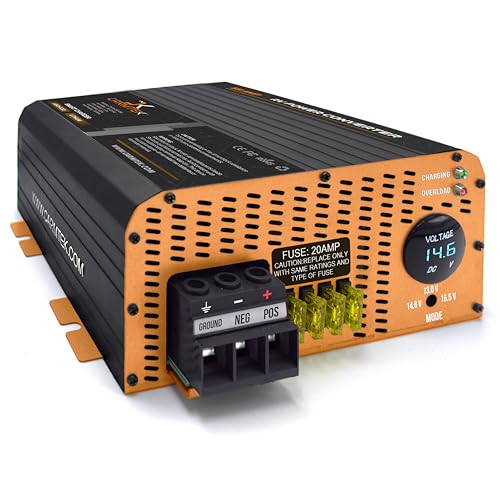
Direct wiring takes real work. You run cable from the battery through a fuse holder, mount the inverter and check every connection. For camp setups this is worth the effort, but it is a clear step up in complexity.
Power Capacity and Runtime
Direct wiring wins for capacity. Socket outlets are fused, so a plug-in unit is held to modest wattage, and a device pulling more than that will trip the fuse. A direct-wired inverter sized to your battery and cable can run a small microwave or a coffee maker, which a lighter-socket unit cannot.
For short runs on a phone or a laptop, the plug-in unit is enough. Check the fuse rating in your vehicle before you buy, since that number sets your real ceiling.
Battery Safety and Drain
Direct wiring wins again, because you can add a fuse at the battery and a low-voltage cutoff. A plug-in unit draws from the same socket that your vehicle uses for other accessories, so leaving it running with the engine off can drain the starting battery faster than you expect. Running the engine during use is the simplest protection. For more on this, see Will a Power Inverter Kill a Car Battery? How to Prevent It (2026).
Portability and Ongoing Use
The plug-in option wins for portability. You can move it between vehicles or use it on a rental car without changes. Direct wiring stays with the vehicle it was installed in, which suits a dedicated camp rig better. If you want to know more about the plug-in route, read Car Lighter Power Inverter: How to Plug In Safely and Size It Right.
Pros & Cons
Cigarette lighter inverter
- Pro: No tools or wiring needed.
- Pro: Moves easily between vehicles.
- Con: Limited wattage and socket fuse ceiling.
Direct-wired inverter
- Pro: Higher wattage and longer runtime.
- Pro: Can include fuse and low-voltage protection.
- Con: Installation takes time and basic wiring skill.
Which Should You Choose?
- Choose a plug-in unit if you only charge phones, tablets or a laptop now and then. View on Amazon
- Choose direct wiring if you run a fridge, fan or other camp gear for hours each day. View on Amazon
- Choose a plug-in unit if you rent vehicles or switch between cars often.
- Choose direct wiring if you want a permanent setup on one vehicle.
For a broader look at how these units are used, see What Is a Car Power Inverter Used For? Uses, Limits and Safe Tips.
FAQ
Can I run a space heater from a cigarette lighter inverter?
Usually not. Space heaters draw far more than a socket-fed inverter can supply, and the fuse will likely blow. Check the device’s wattage label before trying.
Does a plug-in inverter drain the battery?
It can, especially with the engine off. Running the engine during use lowers the risk. Consult your vehicle manual for accessory-power guidance.
Is direct wiring safe for a beginner?
It can be, if you use the correct fuse and cable gauge. Because mistakes around a battery can cause fire or injury, consider having a qualified auto electrician check the work.
Conclusion
A power inverter car cigarette lighter setup is the right pick for light, occasional use and for drivers who change vehicles. Direct wiring suits anyone who needs more power, longer runtime and stronger battery protection. Match the choice to your load and how often you camp.
Related reading
- Power Inverter for Car Cigarette Lighter Nearby: A Practical Guide (2026)
- Wiring Power Inverter to Car Battery: A Step-by-Step Guide for Camping
About Lauren Holland
Lauren Holland is part of our editorial team and reviews and edits our off-grid power for camping, RV & vanlife guides, checking product details against manufacturer specifications and owner feedback.