By Lauren Holland
Updated November 2026
Choosing a portable solar power system for RV camping comes down to three things: how much energy you need each day, whether the unit fits an RV’s electrical setup, and how fast it recharges from the sun. This list compares three portable power stations that bundle a battery, inverter and solar input, with attention to capacity, RV-friendly outlets and expansion options. The picks below are based on manufacturer specifications, product listings and common owner feedback patterns, not on our own testing.
Our top picks at a glance
- 1
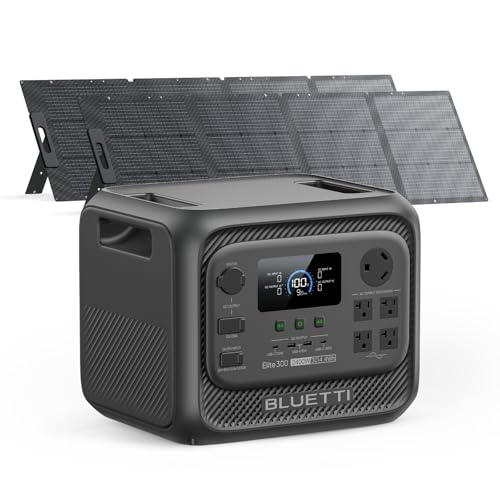 TOP CHOICEBest overallBLUETTI Solar Generator Elite 300 & 2x200W Solar Panel 3014.4Wh LFP BatteryView on Amazon
- 2
 Best for expanding capacityABOK Ark3600 Portable Power Station with 3×200W Solar PanelsView on Amazon
- 3
 Best for fast rechargingEF ECOFLOW Portable Power Station DELTA Pro 3600WhView on Amazon
Our Top Picks
Quick Comparison
| Product | Best for | Key feature |
|---|---|---|
| BLUETTI Solar Generator Elite 300 | Compact, all-in-one setups | Smallest 3kWh, TT-30 RV port |
| ABOK Ark3600 | Growing energy needs | Expandable to 11520Wh |
| EF ECOFLOW DELTA Pro | Fast daily recharging | 2.7-hour fast charge |
BLUETTI Solar Generator Elite 300 & 2x200W Solar Panel 3014.4Wh LFP Battery
BLUETTI Solar Generator Elite 300 & 2x200W Solar Panel 3014.4Wh LFP Battery | w/ 2400W AC Outlets (4800W Surge), Smallest 3kWh, Portable Power Station for RV, Home Backup, w/ TT-30 RV Port & 12V/30A D
Best for: Compact, all-in-one setups
This suits RV owners who want a complete kit with panels included and a small footprint for storage. It is aimed at weekend campers and those running fridges, lights and phone charging off the grid.
Pros
- Listed at about 3kWh capacity in a compact body
- Includes a TT-30 RV port and 12V/30A DC output
Cons
- Limited capacity for high-draw appliances like air conditioners
ABOK Ark3600 Portable Power Station with 3×200W Solar Panels
ABOK Ark3600 Portable Power Station with 3×200W Solar Panels, 3840Wh 3600W | 2H Fast Charge, 15 Ports, TT-30 RV Port, Expandable to 11520Wh, Solar Generator for Home Backup, RV, Camping
Best for: Growing energy needs
This fits campers who expect to add batteries or panels over time, or who want a larger reserve for home backup. It works well for longer stays where daily consumption is higher.
Pros
- Listed at 3840Wh with a 3600W AC output rating
- Expandable to 11520Wh with additional battery units
Cons
- Heavier and bulkier than compact units
EF ECOFLOW Portable Power Station DELTA Pro 3600Wh
EF ECOFLOW Portable Power Station 3600Wh DELTA Pro, 120V 3600W AC Output | 2.7H Fast Charge Power Station, Expandable up to 25kWh, Solar Generator for Home Use, Power Outage, Camping, RV, Emergencies
Best for: Fast daily recharging
This is a practical choice for RV users who move often and have limited sun hours at each stop. Owners commonly mention quick recharging from wall power as a benefit between drives.
Pros
- Listed with a 2.7-hour fast charge time
- Can be expanded up to 25kWh with additional batteries
Cons
- Premium pricing tier compared with smaller units
Buying Guide
Calculate your daily watt-hours
Add up the watts of each device and multiply by hours of use to get daily watt-hours. A battery rated in watt-hours should cover that total with some margin for inverter losses.
Check RV outlet compatibility
Many RVs use a 30-amp TT-30 plug or a 12V DC system. Confirm which outlets your RV uses so the power station can connect without adapters that reduce output.
Match solar input to your sun hours
Panel wattage determines how fast you recharge, but actual output depends on sun angle, shade and weather. Plan for fewer effective hours than the rated figure.
Consider expansion and weight
If you may add capacity later, look for models that accept extra battery packs. Remember that larger batteries add weight and require secure mounting in the RV.
Good picks for this: BLUETTI Solar Generator Elite 300 and ABOK Ark3600 For a deeper look, 3 Best Solar Powers for RV: Top Picks Compared (2026) covers this in detail.
FAQ
Can a portable solar power system run an RV air conditioner?
Most portable units can run an air conditioner only for limited periods, because AC compressors draw high surge loads. Check the surge rating and your daily watt-hour budget before relying on one.
How long does it take to recharge with solar?
Recharge time depends on panel wattage, sun intensity and battery size. Your actual time may be longer than the listed figure on cloudy days.
Do I need a professional to install a portable system?
Portable units generally plug in without permanent wiring, but if you connect them to RV circuits, consult a qualified RV technician to avoid overloading wiring.
Conclusion
The BLUETTI Elite 300 suits campers who want a compact, complete kit. The ABOK Ark3600 is the better choice if you expect your energy needs to grow. The EF ECOFLOW DELTA Pro fits users who prioritize fast recharging between stops.
Sources
- Background on solar energy basics and system components (energy.gov)
- Research on photovoltaic performance and sun-hour variability (nrel.gov)
- Safety certification standards for portable electrical equipment (ul.com)
Related reading
- Using a Portable Power Station in an RV or Camper Van
- Top 7 Solar Powers for RV Living Options Compared (2026)
- Solar Power for RV Air Conditioning: How Many Panels You Really Need
- Solar Power RV for Sale: 7 Best Options for Campers (2026)
- Solar Power AC for RV: 6 Best Options for Off-Grid Campers (2026)
About Lauren Holland
Lauren Holland is part of our editorial team and reviews and edits our off-grid power for camping, RV & vanlife guides, checking product details against manufacturer specifications and owner feedback.