
 By Lauren Holland
Updated November 2026
Converting an RV to solar power usually means adding panels, a charge controller, a battery bank and an inverter that turns the battery’s 12V DC into the 120V AC your appliances need. This list focuses on the inverter and converter side of that job, since it decides which appliances you can run and how much load your system can handle. Our selection criteria were continuous wattage, surge capacity, output waveform, built-in protection, display and control features, and the pattern of feedback owners tend to share about each model. None of these products were tested by us; the comparisons below are based on manufacturer specifications and common owner reports.
Our top picks at a glance
- 1
 TOP CHOICEBest overallBELTTT 1500W Pure Sine Wave Inverter 12V to 110V ConverterView on Amazon
- 2
 TOP CHOICEBest for high-load setups4000 Watt Power Inverter 12V DC to 120V/110V AC Vehicles Car ConverterView on Amazon
- 3
 TOP CHOICEBest for a dedicated RV converterWF-9855 55 Amp Power Converter Rv Power ConverterView on Amazon
- 4
 Best budget pick2000W Power Inverter 12V DC to 110V/120V AC Converter with LCD DisplayView on Amazon
- 5
 Best for compact off-grid useBELTTT 1000Watt Pure Sine Wave Inverter 12V DC to 120V ACView on Amazon
- 6
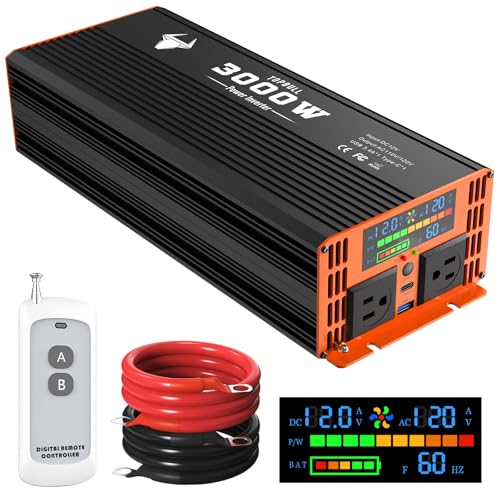 Best for mid-size loads with remote control3000 Watt Power Inverter 12V DC to 120V/110V AC Vehicles Car ConverterView on Amazon
Our Top Picks
Quick Comparison
| Product | Best for | Key feature |
|---|---|---|
| BELTTT 1500W Pure Sine Wave Inverter | Overall balance of power and clean output | Pure sine wave, 3000W surge, LCD display |
| 4000 Watt Power Inverter (8000W Surge) | High-load setups and larger appliances | Four AC outlets and remote control |
| WF-9855 55 Amp Power Converter | Dedicated RV converter and battery charging | 55-amp output with a 5-year warranty listed |
| 2000W Power Inverter (4000W Peak) | Budget-conscious builds | LCD display and two AC outlets |
| BELTTT 1000Watt Pure Sine Wave Inverter | Small loads and compact off-grid setups | Pure sine wave with dual AC outlets |
| 3000 Watt Power Inverter (6000W Surge) | Mid-size loads with remote convenience | Remote control and LCD display |
BELTTT 1500W Pure Sine Wave Inverter 12V to 110V Converter
BELTTT 1500W Pure Sine Wave Inverter 12V to 110V Converter, 3000W Surge | LCD Display, Dual AC Outlets, 5V 2.1A USB, Power Inverter 12V to 120V AC for Solar, Off-Grid, Truck, RV, 12V Inverter
Best for: Overall balance of power and clean output
This model suits RV owners who want enough continuous power for a microwave, coffee maker or small air fryer while keeping a pure sine wave output that most electronics prefer.
Key specs
- 1500W continuous output, 3000W surge
- 12V DC input to 110/120V AC output
- Pure sine wave waveform
- LCD display, dual AC outlets, 5V 2.1A USB port
Pros
- Pure sine wave output suits sensitive electronics
- LCD display shows input voltage and load at a glance
- Dual outlets and USB port cover common RV needs
Cons
- Continuous draw above 1500W will shut the unit down
- Thick 12V cable and proper fusing are needed at high loads
Bottom line: A strong first choice for RVers who want a single inverter that handles most kitchen and entertainment loads.
View on Amazon4000 Watt Power Inverter 12V DC to 120V/110V AC Vehicles Car Converter
4000 Watt Power Inverter 12V DC to 120V/110V AC for Vehicles Car Converter | RV, Truck, Solar, Home, Off-Grid Surge 8000W with 4 AC Outlet, 2 USB-A Port, 200ft Remote Control and 3 AC Terminal Blocks
Best for: High-load setups
Owners running multiple appliances or planning a larger battery bank often look at this class of inverter, provided their battery and wiring can deliver the current it demands.
Key specs
- 4000W rated output, 8000W surge
- 12V DC input to 120/110V AC output
- Four AC outlets, two USB-A ports
- Remote control with 200 ft range listed
Pros
- Large headroom for air conditioners and power tools
- Four AC outlets reduce the need for power strips
- Remote control allows switching from inside the cabin
Cons
- Requires heavy-gauge cable and a large battery bank to deliver rated output
- Higher idle draw than smaller units
Bottom line: Best for owners with a robust 12V battery bank who need serious capacity.
View on AmazonWF-9855 55 Amp Power Converter Rv Power Converter
𝟐𝟎𝟐𝟔 𝐔𝐩𝐠𝐫𝐚𝐝𝐞 WF-9855 55 Amp Power Converter, Rv Power Converter, WF-9855-AD, Replace for RV Trailer Camper 9800 Series, WF-9855-AD, 55 Amp Power Converter for Rv, 5 Years Warranty
Best for: Dedicated RV converter and battery charging
This is a converter rather than an inverter. It turns shore power into 12V DC to run RV lights and water pumps and charge the house batteries, so it pairs with a solar setup rather than replacing one.
Key specs
- 55-amp converter output
- Designed as a replacement for 9800-series RV converters
- Listed with a five-year warranty
Pros
- Keeps house batteries charged when shore power is available
- Direct replacement option for many 9800-series setups
- Warranty period is longer than many converter listings
Cons
- Does not provide AC power when off-grid on solar alone
- Compatibility should be confirmed against your existing converter
Bottom line: Choose this if your RV still relies on a converter for 12V loads and battery charging.
View on Amazon2000W Power Inverter 12V DC to 110V/120V AC Converter with LCD Display
2000W Power Inverter 4000W (Peak). 12V DC to 110V/120V AC Converter with LCD Display, 2 AC outlets, 2 USB, 2000w Inverter for Camping RV Travel Outdoor Truck Off-Grid Solar inverters
Best for: Best budget pick
Campers building a modest solar system for lights, phone charging and a small appliance will find this a practical entry point.
Key specs
- 2000W rated output, 4000W peak
- 12V DC to 110/120V AC
- LCD display, two AC outlets, two USB ports
Pros
- Lower entry point than higher-wattage units
- LCD display helps monitor input voltage
- Two USB ports cover device charging
Cons
- Waveform type should be confirmed in the listing before buying for sensitive electronics
- Peak rating is brief; sustained loads need the rated figure
Bottom line: A sensible choice for light, intermittent loads on a tight build budget.
View on AmazonBELTTT 1000Watt Pure Sine Wave Inverter 12V DC to 120V AC
BELTTT 1000Watt Pure Sine Wave Inverter 12V DC to 120V AC, 2000W Peak | LCD Display, Dual AC Outlets, 5V 2.1A USB, Power Inverter for RV, Truck, Off-Grid Solar Inverter 12V to 110V Converter
Best for: Best for compact off-grid use
Van and small trailer owners who mainly run laptops, LED lights and a fan will appreciate the smaller footprint and clean output.
Key specs
- 1000W continuous output, 2000W surge
- Pure sine wave output
- LCD display, dual AC outlets, USB port
Pros
- Compact enough for tight storage spaces
- Pure sine wave output suits laptops and chargers
- Simple display and controls
Cons
- Limited headroom for microwaves or larger appliances
- Needs careful load management on modest battery banks
Bottom line: Ideal for lighter off-grid use where appliance count stays low.
View on Amazon3000 Watt Power Inverter 12V DC to 120V/110V AC Vehicles Car Converter
3000 Watt Power Inverter 12V DC to 120V/110V AC for Vehicles Car Converter | RV, Truck, Solar, Home, Off-Grid Surge 6000W with 2 AC Outlet, USB-A Port, LCD Display, Remote Control and Cable Included
Best for: Best for mid-size loads with remote control
RVers who want more capacity than a 1500W unit but do not need the full 4000W class will find this a middle path.
Key specs
- 3000W rated output, 6000W surge
- 12V DC to 120/110V AC
- Two AC outlets, USB-A port, LCD display
- Remote control included
Pros
- Good middle capacity for mixed loads
- Remote control adds convenience
- LCD display aids monitoring
Cons
- Only two AC outlets, which may require a power strip
- Heavy draw still requires adequate battery and cabling
Bottom line: A balanced choice for RVers stepping up from a small inverter.
View on AmazonBuying Guide
Continuous wattage versus surge rating
Continuous wattage is what the inverter can supply indefinitely. Surge rating is the short burst it can handle when a motor starts, such as a fridge compressor or air conditioner. Size your inverter so your running total stays under the continuous rating, with the surge figure covering the startup spike.
Good picks for this: BELTTT 1500W Pure Sine Wave Inverter, 4000 Watt Power Inverter
Pure sine wave versus modified sine wave
Pure sine wave output closely matches grid power and is generally better for laptops, medical devices, variable-speed motors and modern electronics. Modified sine wave units cost less but can cause humming or reduced efficiency in some devices. Check the listing for the waveform type before purchase.
Good picks for this: BELTTT 1000Watt Pure Sine Wave Inverter, BELTTT 1500W Pure Sine Wave Inverter
Battery bank and wiring capacity
An inverter is only as capable as the battery and cables feeding it. High-wattage inverters draw very large currents at 12V, so undersized cable can overheat. Owners commonly report that inverters underperform when wiring is thin or the battery sags under load. Match cable gauge and fusing to the inverter’s maximum current draw.
Good picks for this: 4000 Watt Power Inverter, 3000 Watt Power Inverter
Outlets, USB ports and controls
Count how many devices you will run at once. Two AC outlets may be enough for a laptop and a fan, while four outlets help when charging several items. Remote control and an LCD display make monitoring easier when the inverter is mounted out of reach.
Good picks for this: 4000 Watt Power Inverter, 3000 Watt Power Inverter
Converter versus inverter
An inverter changes 12V DC into household AC. A converter changes shore AC into 12V DC to run RV systems and charge batteries. Many RVs need both, and mixing them up leads to purchases that do not solve the actual problem.
Good picks for this: WF-9855 55 Amp Power Converter
Physical size and mounting
Inverters generate heat and need ventilation. Mount them in a dry, ventilated location close to the battery, using short, heavy-gauge cable runs. Leave clearance for airflow and avoid storage compartments that trap heat.
Good picks for this: BELTTT 1000Watt Pure Sine Wave Inverter, 2000W Power Inverter
Protection features and durability
Look for built-in protection against overload, over-temperature, low voltage and short circuit. Protection features help prevent damage when the system is pushed beyond its limits. Check the manufacturer’s warranty terms before buying.
Good picks for this: WF-9855 55 Amp Power Converter, BELTTT 1500W Pure Sine Wave Inverter
FAQ
Can an inverter run my RV air conditioner?
Some large inverters can start a small air conditioner, but most RV air conditioners need far more energy than a typical solar-and-battery setup provides. Check the unit’s starting and running amps before attempting it, and consult a qualified installer for sizing.
Do I need a pure sine wave inverter?
Not always, but pure sine wave output is safer for laptops, medical equipment, variable-speed motors and most modern electronics. Modified sine wave units can work for simple resistive loads like incandescent lights or heaters.
What size battery do I need for a 1500W inverter?
A 1500W inverter at full load can draw well over 100 amps from a 12V battery. Owners typically pair inverters of this size with a substantial lithium or multi-battery lead-acid bank and heavy-gauge cable. The exact requirement depends on runtime and load.
Can I run my RV fridge on an inverter?
Many 12V RV fridges run directly on DC from the battery and do not need an inverter. Absorption fridges running on propane are a separate case. Check your fridge’s manual for its power requirements.
Is a converter the same as an inverter?
No. A converter changes AC to DC, typically from shore power to 12V for your RV. An inverter changes DC to AC so you can run household appliances from your battery or solar system.
How do I know if my wiring is adequate?
Wiring should be sized for the inverter’s maximum current draw and kept as short as practical. If you are unsure, have a qualified electrician or RV technician review the installation before you rely on it.
Do solar panels charge the battery or the inverter?
Solar panels charge the battery through a charge controller. The inverter draws from the battery and does not charge it, so the battery and controller are essential parts of the system.
Conclusion
For most RVers converting to solar, the BELTTT 1500W Pure Sine Wave Inverter offers a practical balance of output and clean waveform. Owners with large battery banks and heavy loads may look to the 4000 Watt Power Inverter, while those who only need a 12V converter for charging and lighting should consider the WF-9855 55 Amp Power Converter. Smaller off-grid setups may be better served by the BELTTT 1000Watt model, and budget-focused builds can start with the 2000W unit. Confirm battery capacity, wiring and warranty terms before purchase, and consult a qualified installer for any permanent wiring.
For more context on sizing a complete system, see How Much Solar Power Do I Need for RV: A Step-by-Step Sizing Guide and RV Solar Power Basics: Panels, Controllers and Batteries.
Sources
- Background on solar energy basics and how photovoltaic systems work (energy.gov)
- Electrical safety standards and guidance for installing electrical equipment (nfpa.org)
- Safety certification standards that apply to power conversion equipment (ul.com)
Related reading
- Top 7 Solar Powers for RV Living Options Compared (2026)
- Solar Power for RV Air Conditioning: How Many Panels You Really Need
About Lauren Holland
Lauren Holland is part of our editorial team and reviews and edits our off-grid power for camping, RV & vanlife guides, checking product details against manufacturer specifications and owner feedback.






