
 By Lauren Holland
Updated November 2026
If you are shopping for a solar power RV for sale, the first thing to understand is that solar is rarely a single purchase. Some rigs ship from the factory with a panel array and a lithium bank, while others need a panel kit, a charge controller and a power station added later. This list covers seven solar-ready products and kits that campers and RVers commonly consider, judged on whether they actually fit a real rig, how much usable power they deliver, expandability, portability, and the patterns owners tend to report after months of use.
Our top picks at a glance
- 1
 TOP CHOICEBest overallJackery HomePower 3600 Plus & 2x200W Solar PanelsView on Amazon
- 2
 TOP CHOICEBest for whole-home backup and RV useJackery HomePower 3000 and 2x200W Solar PanelsView on Amazon
- 3
 TOP CHOICEBest for small budgetsPortable Solar Generator 300W Portable Power Station with 60W Solar PanelView on Amazon
- 4
 Best for high-capacity expansionEF ECOFLOW DELTA 3 Ultra 3072Wh Solar Generator with 2X220W Solar PanelsView on Amazon
- 5
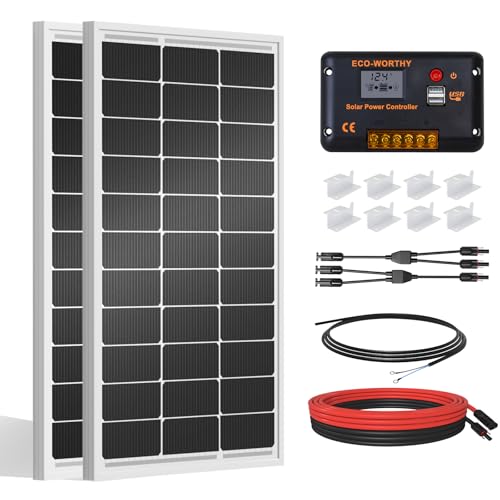 Best for permanent roof installsECO-WORTHY 200 Watts 12 Volt/24 Volt Solar Panel KitView on Amazon
- 6
 Best for portable add-on chargingEBL 200W Portable Solar Panel for Power StationView on Amazon
- 7
 Best for battery maintenanceSUNER POWER 20W 12V Solar Panel Battery Trickle Charger MaintainerView on Amazon
Our Top Picks
How We Selected These Options
Each product was assessed against four criteria: how well it fits an RV or camper electrical setup, usable capacity and output, expandability or portability, and the consistency of owner feedback on setup and long-term performance. Specifications come from manufacturer listings. Owner feedback patterns are summarized where they are commonly reported. We did not bench-test any of these products.
Quick Comparison
| Product | Best for | Key feature |
|---|---|---|
| Jackery HomePower 3600 Plus | Overall capacity and expansion | 3584Wh LFP battery, expandable |
| Jackery HomePower 3000 | Backup power with RV use | 3072Wh LFP battery, 3600W AC output |
| Portable Solar Generator 300W | Small budgets and light loads | 280Wh battery with 60W panel |
| EF ECOFLOW DELTA 3 Ultra | Large loads and home backup | 3072Wh, 3600W output, 7200W surge |
| ECO-WORTHY 200W Solar Panel Kit | Permanent roof-mounted systems | 12V/24V kit with 30A PWM controller |
| EBL 200W Portable Solar Panel | Add-on charging for power stations | Foldable, IP65 waterproof |
| SUNER POWER 20W 12V Trickle Charger | Keeping batteries topped off | MPPT controller, multiple protections |
Jackery HomePower 3600 Plus & 2x200W Solar Panels
Jackery HomePower 3600 Plus & 2x200W Solar Panels, 3584Wh, 3600W AC Output | LFP Battery, Expandable to 21kWh, Solar Generator, Essential Home Backup for Home Use, Emergencies, RV
Best for: Overall capacity and expansion
This bundle suits owners who want the most stored energy in a single, portable-enough package and may later add more batteries. It is a strong match for an RV that needs to run a fridge, lights, electronics and occasional air conditioning from solar.
Key specs
- 3584Wh LFP battery capacity
- 3600W AC output
- Two 200W solar panels included
- Expandable battery capacity as listed by the manufacturer
Pros
- Large usable capacity for multi-day off-grid stays
- LFP chemistry is generally associated with long cycle life
- Expansion path for heavier future loads
Cons
- Heavy and bulky for a single person to move easily
- Full capacity needs a full day of decent sun to recharge
Bottom line: Best for campers who want the most capacity and plan to grow their system over time.
View on AmazonJackery HomePower 3000 and 2x200W Solar Panels
Jackery HomePower 3000 and 2x200W Solar Panels, 3072Wh, 3600W AC Output | 7200W Surge, LFP Battery, Solar Generator, Essential Backup for Home Use, Power Outage, RV, Emergencies
Best for: Backup power with RV use
This is a slightly smaller sibling of the 3600 Plus, aimed at users who want serious output and surge capability without the top-tier capacity. It works well for an RV that also serves as a backup power source at home.
Key specs
- 3072Wh LFP battery capacity
- 3600W AC output
- 7200W surge rating as listed
- Two 200W solar panels included
Pros
- Good surge capability for motor-start loads
- Lower capacity can mean a lighter, more manageable unit
- Solid fit for both RV and emergency backup roles
Cons
- Less stored energy than the 3600 Plus for long off-grid stays
- Still heavy compared with small portable stations
Bottom line: A balanced choice for owners who split time between camping and home backup.
View on AmazonPortable Solar Generator 300W Portable Power Station with 60W Solar Panel
Portable Solar Generator 300W Portable Power Station with 60W Solar Panel | 110V Pure Sine Wave 280Wh Battery Solar Power Pack with USB QC3.0 DC AC Outlet for Camping Smart Device RV Van Outdoor-Orang
Best for: Small budgets and light loads
This is a compact entry point for campers whose needs are limited to phones, lights, a small fan or a laptop. It is best treated as a supplement to a rig’s existing electrical system rather than a replacement for it.
Key specs
- 280Wh battery capacity
- 300W rated output with 110V pure sine wave AC outlet
- 60W solar panel included
- USB QC3.0 and DC outputs
Pros
- Light and easy to carry
- Covers basic device charging and small lighting needs
- Low barrier to trying solar before committing more money
Cons
- Limited capacity cannot run a fridge or AC for long
- A 60W panel recharges slowly in anything but strong sun
Bottom line: Suited to weekend campers and van owners who only need modest backup for electronics and lights.
View on AmazonEF ECOFLOW DELTA 3 Ultra 3072Wh Solar Generator with 2X220W Solar Panels
EF ECOFLOW DELTA 3 Ultra 3072Wh Solar Generator with 2X220W Solar Panels | Portable Power Station with 3600W (Surge 7200W) Output, Solar Generator for Home Use, RV, Camping Accessories
Best for: Large loads and home backup
This kit targets users who need substantial output for heavier appliances, either in an RV that runs a larger air conditioner or in a home backup scenario. Its panel array is sized to shorten recharge times compared with smaller kits.
Key specs
- 3072Wh battery capacity
- 3600W output with 7200W surge as listed
- Two 220W solar panels included
Pros
- High output for demanding appliances
- Larger panel array improves daily recharge potential
- Strong surge rating for motor loads
Cons
- Heavy and not especially compact for storage
- Full benefit depends on panel placement and sun exposure
Bottom line: Best for owners who need higher power draw and faster solar recharging than smaller kits provide.
View on AmazonECO-WORTHY 200 Watts 12 Volt/24 Volt Solar Panel Kit
ECO-WORTHY 200 Watts 12 Volt/24 Volt Solar Panel Kit with High Efficiency Monocrystalline Solar Panel and 30A PWM Charge Controller for RV, Camper, Vehicle, Caravan and Other Off Grid Applications
Best for: Permanent roof-mounted systems
Unlike the portable options above, this is a fixed panel kit intended to be mounted on a roof and wired to a battery bank. It suits a DIYer building a solar system into a van, trailer or caravan, provided the installer understands wiring and charge controller setup.
Key specs
- 200W monocrystalline panel kit
- 12V/24V system compatibility as listed
- 30A PWM charge controller included
Pros
- Permanent mounting frees up interior space
- Works with standard 12V battery systems
- Includes controller, reducing separate purchases
Cons
- Requires mounting hardware, wiring and roof work
- PWM controllers are less efficient than MPPT in many conditions
Bottom line: A practical choice for an RV owner comfortable with installation who wants a fixed, low-maintenance solar array.
View on AmazonEBL 200W Portable Solar Panel for Power Station
EBL 200W Portable Solar Panel for Power Station, Foldable IP65 Waterproof | 200 Watt Solar Panel with MC-4 Anderson Output Connector, w/ 4 Kickstands for RV, Camping, Blackout, Outdoor
Best for: Add-on charging for power stations
This foldable panel is designed to pair with a compatible power station rather than work as a standalone system. Owners who already have a battery and want a portable recharge option may find it a useful addition.
Key specs
- 200W rated panel output
- Foldable design with kickstands
- IP65 waterproof rating as listed
- MC-4 Anderson output connector
Pros
- Foldable and easy to position at camp
- Weather rating suits outdoor placement
- Good output for the panel’s size
Cons
- Requires a compatible power station or controller
- Output depends on sun angle and shading
Bottom line: Best for owners who already have a power station and want a portable panel for flexible charging.
View on AmazonSUNER POWER 20W 12V Solar Panel Battery Trickle Charger Maintainer
SUNER POWER 20W 12V Solar Panel Battery Trickle Charger Maintainer Ultra | Smart MPPT Charge Controller, Waterproof, 8-Safety Protections, Charge Level, 3 Battery Modes, for Car Boat RV Trailer Marine
Best for: Battery maintenance
This small panel is aimed at keeping an RV or vehicle battery charged during storage rather than powering appliances. It fits owners who park a rig for long periods and want to prevent a flat starter or house battery.
Key specs
- 20W 12V solar panel
- Built-in MPPT charge controller
- Multiple battery modes and safety protections as listed
Pros
- Low cost to keep a stored battery healthy
- MPPT controller is efficient for its size
- Simple setup with no wiring to the house system
Cons
- Far too small to run appliances or power a fridge
- Only useful for maintenance-level charging
Bottom line: A useful accessory for storage, not a primary power source.
View on AmazonBuying Guide
Match the System to Your Electrical Needs
Start with a list of what you actually run and for how many hours. A 12V fridge, LED lights and phone charging require far less energy than an air conditioner. Compare daily watt-hour use against the usable capacity of the battery, not its nominal rating.
Good picks for this: Jackery HomePower 3600 Plus, Portable Solar Generator 300W
Check Battery Chemistry and Lifespan
Lithium iron phosphate (LFP) batteries are commonly associated with more charge cycles than older lithium chemistries, and they tolerate heat better. Confirm the chemistry on the spec sheet before buying.
Good picks for this: Jackery HomePower 3000, EF ECOFLOW DELTA 3 Ultra
Panel Wattage and Recharge Time
Panel wattage determines how quickly a battery recharges under good sun. Divide battery watt-hours by realistic panel output after losses to estimate recharge time. Real-world output is usually well below the rated figure.
Good picks for this: EF ECOFLOW DELTA 3 Ultra, EBL 200W Portable Solar Panel
Controller Type: PWM vs. MPPT
MPPT controllers generally extract more power from panels than PWM controllers, especially when panel voltage is higher than battery voltage. PWM is simpler and less expensive but less efficient in many conditions.
Good picks for this: ECO-WORTHY 200W Solar Panel Kit, SUNER POWER 20W Trickle Charger
Size, Weight and Mounting
Portable stations are easier to move, while roof-mounted kits free interior space but require secure mounting and wiring. Measure your storage space and roof area before committing.
Good picks for this: EBL 200W Portable Solar Panel, ECO-WORTHY 200W Solar Panel Kit
Surge Rating and Motor Loads
Motors, compressors and some appliances draw a brief surge at startup, often several times their running wattage. Check the surge rating against the highest-draw appliance you plan to run.
Good picks for this: Jackery HomePower 3000, EF ECOFLOW DELTA 3 Ultra
Weather Resistance and Care
Look for a waterproof or IP-rated panel for outdoor exposure, and keep battery connections clean and dry. Store batteries according to the manufacturer’s temperature guidance.
Good picks for this: EBL 200W Portable Solar Panel, SUNER POWER 20W Trickle Charger
FAQ
Can I buy an RV that already has solar power?
Yes. Many newer RVs and camper vans are sold with factory-installed panels and lithium batteries. Ask the seller for the panel wattage, battery capacity, controller type and whether the system was professionally installed.
How many solar panels does an RV need?
It depends on daily energy use and sun exposure. A rough planning approach is to divide daily watt-hour needs by the usable sun hours at your location, then add margin for losses. A qualified installer can refine this figure.
Can a portable power station run an RV air conditioner?
Some larger stations can run a small air conditioner for limited periods, but it draws heavily and drains batteries quickly. Check the running and surge requirements of the unit carefully before attempting it.
Is it safe to install solar panels on an RV roof myself?
Roof mounting involves sealing penetrations, securing mounts and wiring high-current circuits. If you are not experienced with electrical work and roof sealing, consult a qualified RV technician or electrician.
Do I need a charge controller?
For fixed panel systems that charge batteries directly, a charge controller is needed to prevent overcharging. Many portable power stations have controllers built in, so check before buying a separate one.
How long do RV solar batteries last?
Lifespan depends on chemistry, depth of discharge, temperature and charging habits. Manufacturers typically publish cycle ratings, which are useful for comparison but are not guarantees of real-world life.
Conclusion
For most campers shopping for a solar power RV for sale, the right choice depends on load, mobility and installation tolerance. Larger expandable stations such as the Jackery HomePower 3600 Plus suit owners who want the most capacity. Owners who also need home backup may prefer the Jackery HomePower 3000 or the EF ECOFLOW DELTA 3 Ultra for high output. Campers with modest needs can start with the Portable Solar Generator 300W, while those planning a permanent install may look at the ECO-WORTHY kit. The EBL panel is best as an add-on, and the SUNER POWER trickle charger is a maintenance tool. Verify specifications against the manufacturer’s listing before purchase, and consult a professional for any permanent electrical work.
Sources
- Background on solar energy basics, system components and how panels generate electricity (energy.gov)
- Research on photovoltaic performance, efficiency and factors that affect real-world output (nrel.gov)
- Consumer safety guidance on batteries, charging equipment and product recalls (cpsc.gov)
Related reading
- RV Solar Power Basics: Panels, Controllers and Batteries
- Using a Portable Power Station in an RV or Camper Van
- RV Power Surge Protectors: How to Choose and Install One (2026)
- RV Power Surge Protection: How to Choose and Install One Safely
- RV 2026 Watt Power Inverter: How to Size, Wire and Use One (2026)
- Power Cord for RV: 5 Best Options for Campers (2026)
About Lauren Holland
Lauren Holland is part of our editorial team and reviews and edits our off-grid power for camping, RV & vanlife guides, checking product details against manufacturer specifications and owner feedback.






