
 By Colin Foster
Updated November 2026
An rv power supply 12v converter is the part of your camper’s electrical system that turns shore power or generator output into the 12-volt DC current that runs lights, water pumps, fans, slide-outs and the house battery. Choosing the right one comes down to a few measurable things: output amperage, charging profile for your battery type, input voltage compatibility, and whether it has protection features. The six models below are compared on those criteria using manufacturer specifications, brand reputation and common owner feedback patterns. This is a research-based selection; none of these units were tested in a lab or on our own rigs.
Our top picks at a glance
- 1
 TOP CHOICEBest overallPM4 100 Amp RV Power ConverterView on Amazon
- 2
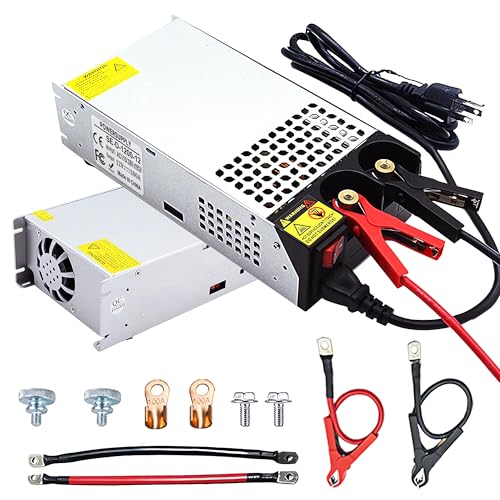 TOP CHOICEBest for high-draw rigsSUMANEP 12V Power Supply 100A 1200WView on Amazon
- 3
 TOP CHOICEBest for smart multi-stage chargingWAVLINK 80A RV Power ConverterView on Amazon
- 4
 Best mid-size upgradeWAVLINK 55 Amp RV Power ConverterView on Amazon
- 5
 Best budget pickPM4 55Amp RV Power ConverterView on Amazon
- 6
 Best for LED and accessory loadsYaheeda New Version Converter 12V 600W 50AView on Amazon
Our Top Picks
Before comparing models, it helps to know what the number on the box means. A 55 amp converter can supply up to 55 amps of 12V DC to your loads and battery combined. In practice, the converter’s rated output is a ceiling, and your real headroom depends on how much current your appliances draw at the same time. Manufacturers specify the maximum output, the battery charging voltage range and the input voltage, so check those three numbers first. Remember that a converter is not a substitute for a battery: it powers 12V loads and charges the house battery, but a battery bank still handles the moments when shore or generator power is off.
Quick Comparison
| Product | Best for | Key feature |
|---|---|---|
| PM4 100 Amp RV Power Converter | Large rigs with heavy 12V loads | 100A output with 4-stage smart charging |
| Yaheeda 12V 600W 50A Converter | LED strips, pumps and accessories | 600W switching power supply, 50A output |
| WAVLINK 80A RV Power Converter | Owners wanting adjustable charging | 3 smart modes, 13V–16.5V adjustable range |
| WAVLINK 55 Amp RV Power Converter | Mid-size rigs and battery upgrades | 3 smart modes, 13V–16.5V adjustable range |
| PM4 55Amp RV Power Converter | Budget-minded RV owners | 4-stage built-in smart charger, 55A |
| SUMANEP 12V Power Supply 100A 1200W | High-draw DC loads and heaters | 1200W, 110/120V AC input to 12V DC output |
PM4 100 Amp RV Power Converter
PM4 100 Amp RV Power Converter – Power Converter with Built-in 4 Stage Smart Battery Charger – Multiple Capacities 100A 110V AC to 12V DC 100 Amp Battery Charger RV Power Converter Replacement
Best for: Owners who want the highest converter output in a common RV replacement format and a built-in battery charger.
This is a good fit for larger motorhomes and fifth-wheels running several 12V loads at once, or for owners who plan to add lithium or a larger lead-acid bank later and want a converter that can keep up.
Key specs
- 100 amp rated output (per the listing name)
- 110V AC input to 12V DC output
- Built-in 4-stage smart battery charger
Pros
- High output ceiling for heavy simultaneous loads
- Multi-stage charging helps extend battery life
- Designed as a replacement unit for common RV setups
Cons
- Larger footprint and more heat than smaller converters
- Overkill for rigs with light 12V demand
Bottom line: Pick this if you run many 12V appliances and want headroom. Smaller rigs will not need the extra capacity.
View on AmazonYaheeda New Version Converter 12V 600W 50A
Yaheeda New Version Converter, 110V AC to 12V DC Converter Power Supply 12V 600W 50A DC Switch Transformer for RV,Pump,LED Strip, LCD Monitor
Best for: LED lighting, water pumps and accessory loads in a compact switching power supply format.
Owners who need a stand-alone 12V DC supply for LED strips, a monitor or a pump, rather than a full RV converter with battery charging, often look at units like this.
Key specs
- 600W output, 50A (per the listing name)
- 110V AC input to 12V DC output
- Switch-mode transformer design
Pros
- Compact and suited to accessory circuits
- Straightforward 12V DC output for common loads
- Useful as a secondary supply alongside a main converter
Cons
- Not a full RV converter with battery charge management
- Verify wiring and fusing carefully before connecting to a house battery
Bottom line: A practical accessory supply for lighting and pumps, not a replacement for a dedicated battery charger.
View on AmazonWAVLINK 80A RV Power Converter
WAVLINK 80A RV Power Converter 120V AC to 12V DC Battery Charger | 3 Smart Charging Modes, 13V-16.5V Adjustable Range, Multi-Stage Charging
Best for: Owners who want adjustable charging voltage and three smart charging modes for their battery type.
This suits owners with lead-acid or AGM batteries who want to tune the charging profile, or who run an 80-amp-class rig with frequent boondocking.
Key specs
- 80A class output (per the listing name)
- 120V AC input to 12V DC output
- 3 smart charging modes, 13V–16.5V adjustable range
Pros
- Adjustable charging voltage range
- Three smart modes cover several battery chemistries
- Good output headroom for mid-to-large rigs
Cons
- Settings require matching to your battery manufacturer’s specs
- Less brand history in the RV aftermarket than long-established names
Bottom line: A strong choice for owners who want control over charging. Check your battery’s voltage specs before setting the mode.
View on AmazonWAVLINK 55 Amp RV Power Converter
WAVLINK 55 Amp RV Power Converter, 120V AC to 12V DC Battery Charger | 3 Smart Charging Modes, 13V-16.5V Adjustable Range, Multi-Stage Charging
Best for: Mid-size rigs that want the same smart charging features as the 80A model at a moderate output level.
A 55-amp unit covers most travel trailers and smaller motorhomes with typical loads of lights, a fridge control board, a water pump and a few fans.
Key specs
- 55 amp output (per the listing name)
- 120V AC input to 12V DC output
- 3 smart charging modes, 13V–16.5V adjustable range
Pros
- Right-sized for many travel trailers
- Same adjustable charging features as the larger model
- Lower output means less heat in tight compartments
Cons
- May be undersized for rigs with many simultaneous 12V loads
- Requires checking battery compatibility before setting the mode
Bottom line: A sensible middle ground for owners who want smart charging without paying for capacity they will not use.
View on AmazonPM4 55Amp RV Power Converter
PM4 55Amp RV Power Converter – Power Converter with Built-in 4 Stage Smart Battery Charger – Multiple Capacities 55A 110V AC to 12V DC 55Amp Battery Charger RV Power Converter Replacement
Best for: Budget-minded owners who want a 4-stage built-in charger in a 55-amp replacement unit.
This suits owners replacing a failed converter on a travel trailer or fifth-wheel who want a like-for-like swap with modern charging.
Key specs
- 55 amp output (per the listing name)
- 110V AC input to 12V DC output
- Built-in 4-stage smart battery charger
Pros
- Lower-capacity option for typical RV loads
- 4-stage charging supports healthier battery maintenance
- Same brand family as the 100A unit
Cons
- Less headroom for heavy simultaneous loads
- Fitment should be confirmed against your existing converter’s mounting and wiring
Bottom line: A practical replacement choice for owners who need reliable charging without the highest output class.
View on AmazonSUMANEP 12V Power Supply 100A 1200W
SUMANEP 12V Power Supply, 110V to 12V 100A 1200W AC to DC Converter | 120v to 12V Switching Power Supply for Diesel Heaters,RV, LED Strips, Car Stereos,110V/120V AC Input,12V DC Output
Best for: High-draw DC loads such as diesel heaters, LED arrays and car stereo systems.
Owners adding a diesel heater or a large LED load to a camper may need a dedicated high-wattage 12V supply rather than a full converter.
Key specs
- 1200W, 100A class output (per the listing name)
- 110V/120V AC input to 12V DC output
- Switching power supply design
Pros
- High wattage for demanding DC loads
- Accepts common US AC input voltages
- Useful for dedicated accessory circuits
Cons
- Does not manage battery charging the way an RV converter does
- Requires careful fusing and wire sizing for 100A loads
Bottom line: A strong accessory supply for high-draw loads. Have a qualified RV technician review wiring before installation.
View on AmazonBuying Guide
Output Amperage and Your Real Load
Add up the current draw of everything you run on 12V at the same time: lights, pump, fans, fridge control board, slide motor and charging current for the battery. Compare that sum to the converter’s rated output with a safety margin. Converters rarely run best at their absolute maximum for long periods.
Good picks for this: PM4 100 Amp RV Power Converter, PM4 55Amp RV Power Converter
Battery Chemistry and Charging Profile
Lead-acid, AGM, gel and lithium batteries each have different charging voltage requirements. Multi-stage and adjustable converters let you match the profile to your battery. Always confirm the setpoints with your battery manufacturer’s documentation.
Good picks for this: WAVLINK 80A RV Power Converter, WAVLINK 55 Amp RV Power Converter
Input Voltage Compatibility
Most US RVs run on 120V AC shore power, but some converters are listed for 110V or 120V input. Both are common in the US, but confirm the input range on the spec sheet and check that your hookup and generator produce compatible output.
Good picks for this: SUMANEP 12V Power Supply 100A 1200W, Yaheeda 12V 600W 50A Converter
Size, Mounting and Fit
Measure the existing converter’s footprint, mounting holes and wire terminal layout before ordering a replacement. Many RV converters are installed in tight compartments with limited airflow, so check ventilation clearances as well.
Good picks for this: PM4 55Amp RV Power Converter, WAVLINK 55 Amp RV Power Converter
Heat and Ventilation
Converters produce heat under load. Mount the unit where air can move freely and avoid enclosing it in a sealed cabinet. Higher-output units generate more heat, so plan airflow accordingly.
Good picks for this: PM4 100 Amp RV Power Converter, WAVLINK 55 Amp RV Power Converter
Protection Features
Look for overcurrent, overvoltage and short-circuit protection in the specs. Pair the converter with a fuse or breaker sized to the wiring. A surge protector on the shore power input adds another layer of defense.
Good picks for this: PM4 55Amp RV Power Converter, WAVLINK 80A RV Power Converter
Use Case: Converter vs. Accessory Supply
A full RV converter manages battery charging and powers the 12V distribution panel. A stand-alone switching supply is better suited to specific loads such as LED strips or a heater. Decide which role you need before buying.
Good picks for this: Yaheeda 12V 600W 50A Converter, SUMANEP 12V Power Supply 100A 1200W
FAQ
What does a 12V RV power supply do?
It converts 120V AC from shore power or a generator into 12V DC. That current powers 12V appliances and charges the house battery, which then supplies power when shore or generator power is unavailable.
Can a converter replace my RV batteries?
No. A converter powers loads and charges the battery while plugged in. Batteries are needed to run 12V systems when you are off-grid or unplugged.
How do I know what size converter I need?
Total the amperage of your simultaneous 12V loads and add charging current for your battery bank. Choose a converter whose rated output comfortably exceeds that sum.
Do all batteries use the same charging voltage?
No. Lead-acid, AGM, gel and lithium batteries have different charging profiles. Check your battery manufacturer’s recommended voltage settings.
Is it safe to replace my converter myself?
Working with 120V AC and high-current DC wiring carries real shock and fire risk. Consult a qualified RV technician or electrician for installation.
Why does my converter get hot?
Heat is normal under heavy load, but the unit should have clear airflow. Overheating can signal an undersized unit, poor ventilation or a failing component.
Should I add a surge protector?
A surge protector on the shore power input helps guard the converter and other electronics against voltage spikes at the campground pedestal.
Conclusion
For most campers, the right rv power supply 12v converter starts with an honest count of your 12V loads and your battery type. Owners with large rigs and heavy simultaneous demand should look at the 100-amp class, such as the PM4 100 Amp RV Power Converter. Those wanting adjustable charging for lead-acid or AGM batteries may prefer the WAVLINK 80A or 55 Amp models. The PM4 55Amp suits budget-minded replacements, while the Yaheeda and SUMANEP supplies fit accessory and high-draw DC circuits rather than full battery management. Match the unit to the job, verify specs against your battery and wiring, and have a professional handle installation.
Sources
- Background on battery types, charging basics and efficient electrical system design (energy.gov)
- Electrical safety codes and standards relevant to wiring and fusing 12V and AC systems (nfpa.org)
- Certification standards and safety testing information for electrical power equipment (ul.com)
Related reading
- 12V DC Power Supply for Mini Fridge: A Step-by-Step Guide for Camping
- Wind Power for RV: 6 Best Turbine Kits for Campers (2026)
- Using a Portable Power Station in an RV or Camper Van
- Top 7 Solar Powers for RV Living Options Compared (2026)
About Colin Foster
Colin Foster is part of our editorial team and reviews and edits our off-grid power for camping, RV & vanlife guides, checking product details against manufacturer specifications and owner feedback.

